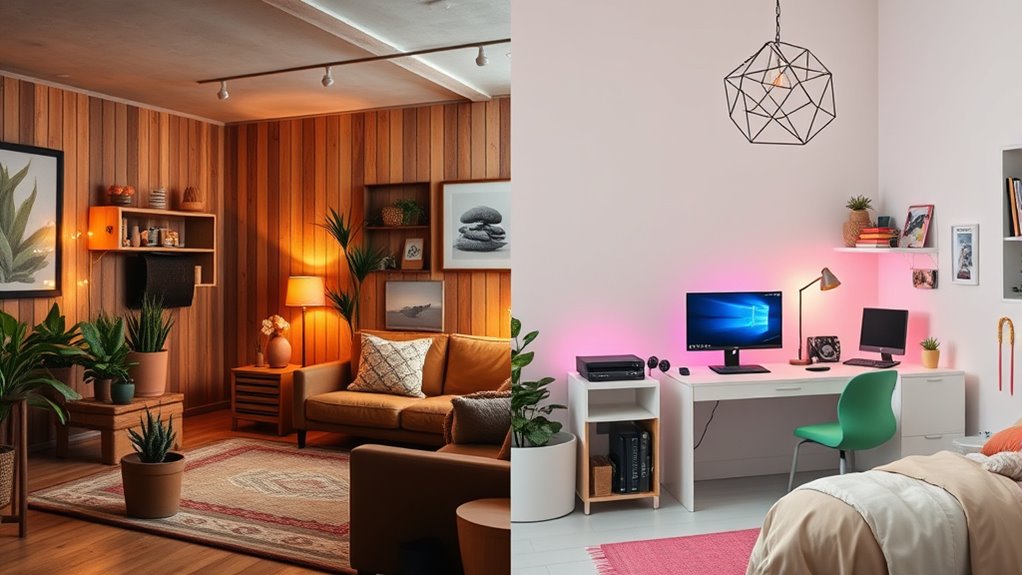

Millennials tend to prefer open floorplans with versatile furniture that create social, cozy spaces, using warm neutrals and vintage-modern decor. They enjoy smart home tech like voice control and automated lighting for convenience. Gen Z, meanwhile, favors minimalist or eclectic styles with bold colors, natural elements, and customizable smart systems for self-expression. Both value sustainability but focus on different eco-practices. Exploring further, you’ll uncover how these trends shape their unique approaches to home living.

Get decor and gifts delivered free with Prime
- Fast, free delivery on millions of items
- Prime Video, Amazon Music and more included
- Member-only deals all year
Key Takeaways
- Millennials prefer open floorplans with versatile, multi-purpose furniture, while Gen Z favors minimalist or eclectic styles with bold accents.
- Millennials integrate smart home tech for convenience; Gen Z emphasizes customizable, social-ready smart systems.
- Millennials lean towards cozy, vintage-modern decor with warm neutrals; Gen Z showcases daring textures and natural elements.
- Both generations prioritize sustainability, but Gen Z incorporates more eco-friendly practices like green walls and renewable energy.
- Millennials focus on functionality and affordability; Gen Z emphasizes individuality, bold design, and innovative home features.
Priorities in Home Functionality and Space Utilization
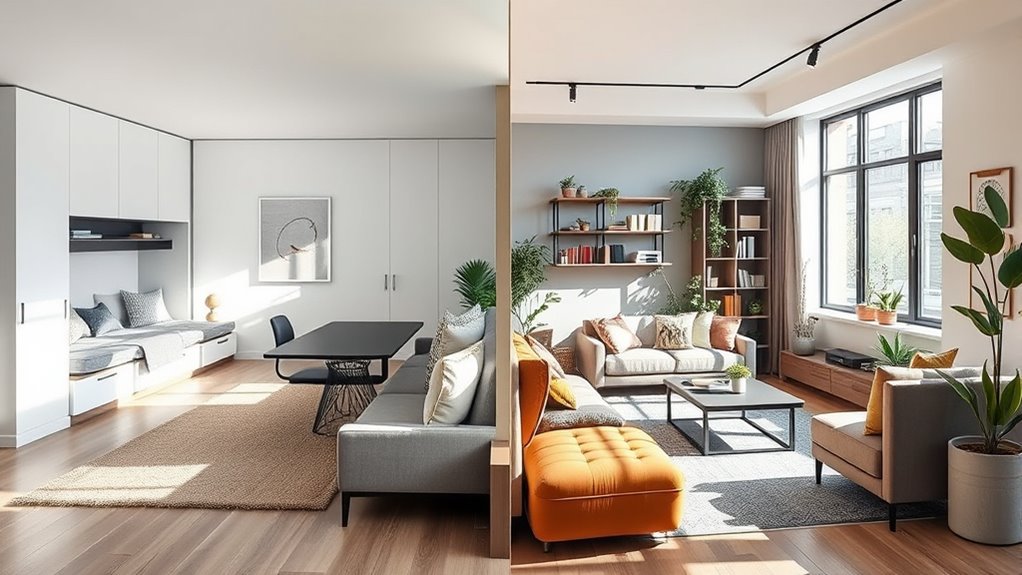
When it comes to home priorities, Millennials and Gen Zs have different focuses on functionality and space. Millennials often favor open floorplans that create a sense of spaciousness and facilitate socializing. They prefer versatile layouts that blend living, dining, and kitchen areas, making the home feel larger and more connected. Modular furniture appeals to them because it offers flexibility—allowing you to customize and adapt your space as needed. For Millennials, maximizing space through open designs and adaptable furniture is key, helping them balance functionality with a modern aesthetic. This approach makes their homes more efficient, social, and suited to their dynamic lifestyles. Additionally, incorporating multi-purpose furniture can further enhance space utilization by providing storage and seating solutions in a single piece.
Style Preferences and Aesthetic Choices
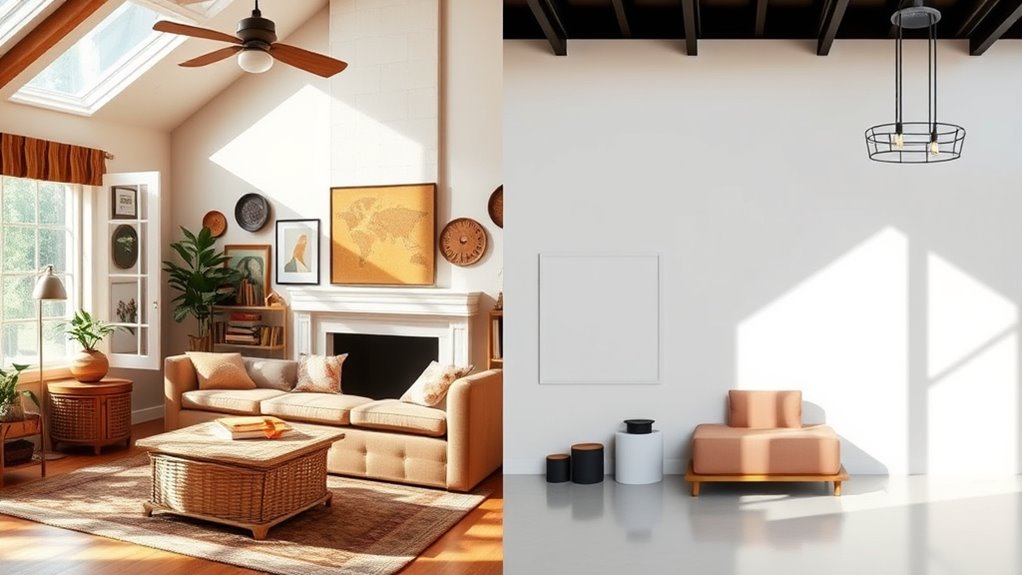
Millennials and Gen Zs have distinct style preferences that reflect their unique aesthetic sensibilities. You’ll notice Millennials often favor a decor style that’s cozy, with a mix of vintage and modern pieces, emphasizing comfort and personal expression. Their color palettes tend to include warm neutrals, soft pastels, and earthy tones, creating inviting and timeless spaces. On the other hand, Gen Z prefers bolder decor styles like minimalism with a twist or eclectic looks that showcase individuality. Their color palettes lean toward vibrant hues, contrasting blacks and whites, or daring combinations that make a statement. You’ll see Gen Z gravitate toward clean lines and statement pieces, often mixing textures and patterns to craft a highly personalized environment. These aesthetic choices reflect their desire for authenticity and self-expression. Additionally, Gen Z’s interest in essential oils for health and well-being influences their interior decor choices, incorporating natural elements and wellness-focused accents into their living spaces.
Technological Integration and Smart Home Features
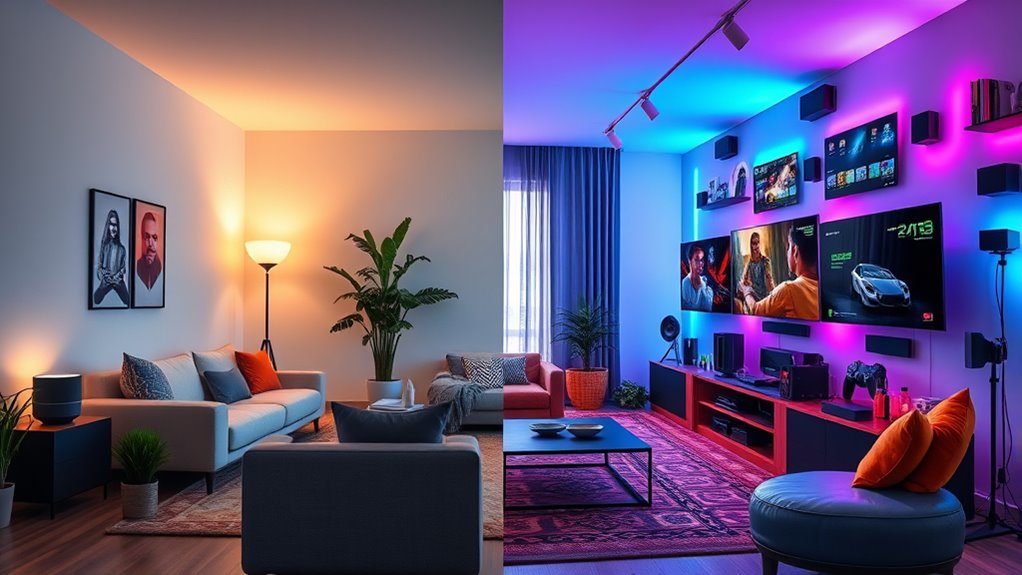
As aesthetic preferences evolve, so does the way you incorporate technology into your living space. Millennials tend to favor smart home features like voice control and automated lighting that enhance convenience without cluttering their environment. They appreciate the seamless integration of devices that can be managed through simple commands, making daily routines more efficient. Gen Z, on the other hand, often seeks more advanced and customizable smart systems, valuing tech that allows personal expression and social sharing. For both generations, voice control is essential for hands-free operation, while automated lighting creates ambiance effortlessly. These features reflect a desire for smarter, more connected homes that prioritize ease of use and personalization, shaping how you design and interact with your space. Additionally, integrating home technology like projectors and sound systems can elevate entertainment experiences and cater to their evolving preferences.
Sustainability and Eco-Friendly Home Practices

Sustainability and eco-friendly home practices are becoming increasingly important as both Millennials and Gen Z seek to reduce their environmental impact. You might choose homes with eco conscious materials like reclaimed wood, bamboo, or recycled steel, which lower your carbon footprint. Installing renewable energy sources such as solar panels or wind turbines allows you to generate clean power and cut energy costs. You could also incorporate smart thermostats to optimize energy use, use low-VOC paints to improve indoor air quality, or install rainwater harvesting systems. Advanced fraud detection techniques like geolocation verification help ensure transaction legitimacy. Imagine a home with:
- Solar panels gleaming on the roof
- Reclaimed wood furniture
- Energy-efficient LED lighting
- Composting and recycling stations
- Green roofs or walls
These practices help you live sustainably while creating a healthier environment.
Budgeting, Affordability, and Investment Approaches

Budgeting and choosing affordable investment options are essential steps when buying a home today. You need solid financial planning to navigate rising costs and ensure your goals are realistic. Start by evaluating your income, expenses, and long-term savings strategies to determine what you can comfortably afford. Prioritize building an emergency fund before diving into property investments. Consider options like low down payments, government assistance programs, or first-time buyer incentives that make homeownership more accessible. Being strategic with your savings and understanding market trends helps you make smarter decisions. Remember, affordability isn’t just about the purchase price—it’s about sustainable payments and long-term value. By focusing on financial planning and smart investment approaches, you set yourself up for a stable, affordable path to homeownership.
Frequently Asked Questions
How Do Generational Differences Influence Homeownership Timelines?
Your homeownership timeline is influenced by various factors, including financing challenges and neighborhood preferences. Generational differences play a role, as younger generations might face more hurdles securing loans or may prioritize different communities. You might delay buying due to economic concerns or opt for areas that align with your lifestyle. Understanding these influences helps you navigate the process, making informed decisions that fit your financial situation and preferred neighborhood environment.
What Role Does Social Media Play in Shaping Home Trends?
Imagine social media as a vibrant gallery where you curate your home’s style. Its influence shapes your choices, offering endless inspiration and access to trending ideas. Trend curation becomes a shared experience, as you scroll through images, videos, and tips, making your home reflect current tastes. Social media’s rapid updates guarantee you’re always in the know, transforming your space into a modern, stylish expression of your personality.
How Do Family Planning Priorities Impact Home Design Choices?
Family planning priorities influence your home design choices considerably. If you’re planning a family, you might prioritize nursery decor and create versatile spaces for children. Considering multi-generational living, you’ll design areas that accommodate different generations comfortably, like separate entrances or shared communal spaces. These choices help you balance needs for functionality, comfort, and future growth, ensuring your home adapts as your family evolves.
Are There Regional Variations in Millennial vs. Gen Z Housing Preferences?
You’ll notice regional preferences and cultural influences shape housing choices differently across areas. In urban centers, Millennials often favor modern, tech-friendly spaces, while Gen Z prefers affordable, flexible layouts. Rural regions may see more traditional designs. These preferences reflect local cultures and economic factors. By understanding these regional differences, you can better tailor home features to meet specific community needs and preferences, ensuring your space aligns with local trends.
How Has Remote Work Evolved Home Space Requirements Across Generations?
You might think remote work affects everyone equally, but it actually transforms home space needs differently across generations. You’ll prioritize interior customization and smart home integration more now, creating functional work zones at home. For Gen Z, flexible spaces matter most, while Millennials focus on seamless tech integration. As remote work evolves, adapting your home to include personalized, tech-savvy areas becomes essential, making your living space both comfortable and productive.
Conclusion
Think of your home as a garden—nurture it with your unique preferences, values, and dreams. Whether you’re a millennial or a Gen Z, your choices shape a space that reflects who you are and what you cherish. Embrace your journey of growth and change, knowing each decision is a seed planted for a future filled with comfort, style, and sustainability. Your home is your story—make it vibrant, intentional, and truly yours.
Fall Picks
fall essentials
As an affiliate, we earn on qualifying purchases.