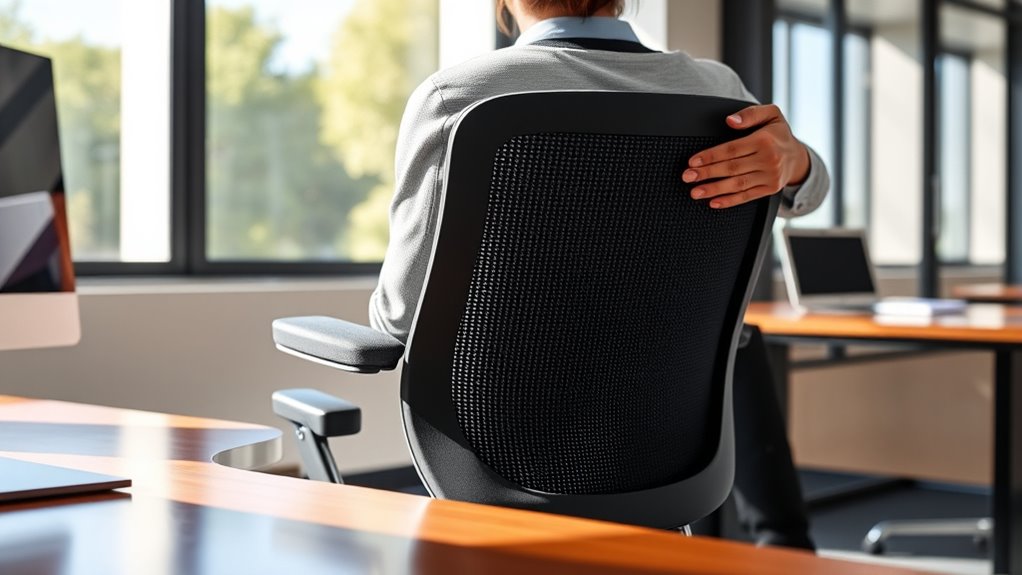

Ergonomics of furniture focuses on designing pieces that support your body’s natural posture, reducing strain and improving comfort. Key factors include adjustable features like lumbar support and seat height, which help customize your workspace. The materials used—breathable fabrics, supportive padding, and durable frames—also play a crucial role in overall health and comfort. Prioritizing these elements can boost your productivity and well-being. Keep exploring to discover how thoughtful design and materials enhance your ergonomic environment.
Key Takeaways
- Proper ergonomic furniture supports natural spinal alignment, reducing strain and preventing discomfort during extended use.
- Adjustable features like lumbar support and seat height allow customization for optimal comfort and posture correction.
- Material selection, including breathable fabrics and supportive padding, enhances comfort and maintains long-term support.
- Durable, high-quality materials ensure furniture maintains its ergonomic benefits over time, promoting sustained health and posture.
- Integrating ergonomic design with suitable materials reduces physical stress, improves circulation, and minimizes injury risks.
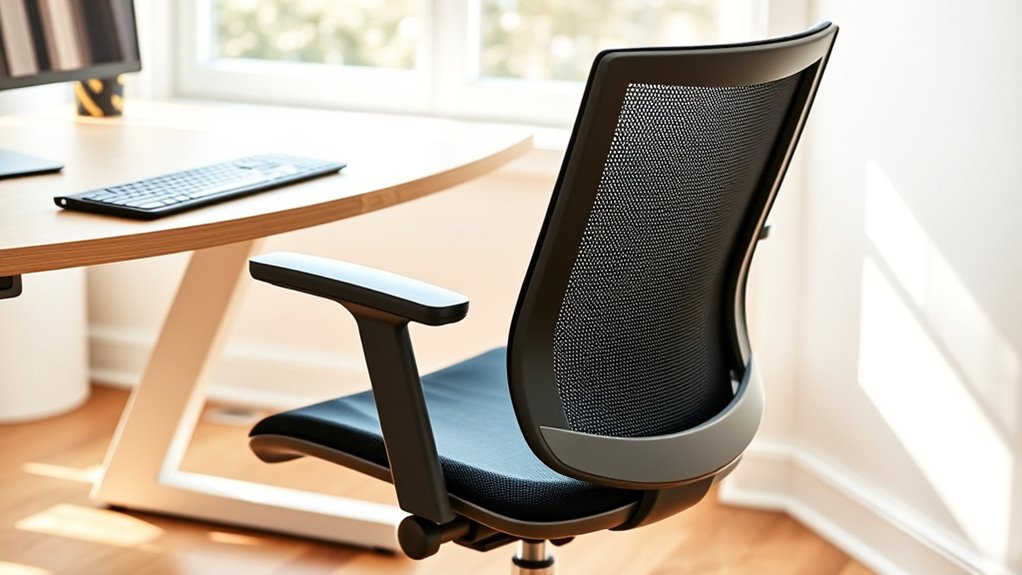
Ergonomics of furniture focuses on designing and selecting pieces that support your body comfortably and reduce strain during prolonged use. When choosing chairs, desks, or any workspace furniture, your goal should be to prioritize posture correction. Proper support encourages a natural spinal curve, preventing slouching or awkward positioning that can lead to discomfort or injury over time. Adjustable features, like lumbar support or seat height, allow you to tailor the furniture to your body’s unique needs, ensuring you maintain a healthy posture throughout your day. Correct posture isn’t just about comfort; it also enhances productivity and reduces fatigue, making ergonomic furniture a worthwhile investment.
Material impact is another critical aspect to weigh when aiming for ergonomic furniture. The materials used in a piece influence not only durability but also comfort and health. For example, breathable fabrics help regulate temperature and prevent sweating, which can cause discomfort during long sitting sessions. Meanwhile, the quality of foam or padding affects how well a chair conforms to your body, offering consistent support without flattening or losing shape over time. The structural integrity of the frame, often made from sturdy metals or high-quality plastics, ensures stability and safety. Choosing materials that minimize chemical emissions, such as low-VOC finishes, contributes to a healthier indoor environment, especially if you spend hours at your desk.
The material impact extends to tactile feedback, which can influence your overall comfort and focus. Soft-touch surfaces might feel more inviting, but they also need to be durable enough to withstand daily use. Conversely, harder surfaces can sometimes cause pressure points or discomfort, especially if they lack adequate padding or ergonomic design. When selecting furniture, consider how the materials interact with your skin and body during extended periods. The right combination of supportive design and suitable materials helps reduce the physical stress placed on muscles and joints, promoting better circulation and decreasing the risk of repetitive strain injuries.
Ultimately, the ergonomic design of furniture hinges on understanding how posture correction and material impact work together. Properly designed pieces encourage healthy sitting habits, while thoughtfully chosen materials enhance comfort and support. You should look for furniture that aligns with your body’s needs, offers adjustability, and uses quality, safe materials. Doing so allows you to create a workspace that not only feels comfortable but also promotes long-term health. When you pay attention to these details, you’re less likely to experience discomfort, and you’ll be able to focus more effectively on your tasks, knowing your furniture supports your well-being every step of the way. Additionally, staying informed about industry trends can help you select the most innovative and effective ergonomic solutions.
Frequently Asked Questions
How Do Ergonomic Chairs Prevent Back Pain Effectively?
Ergonomic chairs prevent back pain effectively by providing lumbar support that maintains the natural curve of your spine, reducing strain. They also feature seat height adjustments, allowing you to set the chair so your feet rest flat on the floor and your knees are at a 90-degree angle. This customization helps you maintain proper posture, decrease pressure on your lower back, and promote overall comfort during long sitting periods.
What Materials Are Best for Ergonomic Furniture Durability?
Think of durable materials as the backbone of your furniture, holding up your daily comfort. Steel frames, high-quality plastics, and dense foam cushions offer excellent surface durability and material longevity. These materials resist wear and tear, ensuring your ergonomic furniture stays supportive over time. By choosing sturdy fabrics like leather or performance textiles, you further protect against rips and stains, making your investment last longer while maintaining comfort and health.
Can Ergonomic Furniture Improve Productivity in the Workplace?
Yes, ergonomic furniture can boost your productivity by promoting comfort and reducing fatigue. When your office layout includes ergonomic accessories like adjustable chairs and desks, you stay focused longer and work more efficiently. Proper ergonomic design supports your posture, minimizes discomfort, and helps you stay engaged throughout the day. By investing in ergonomic furniture and accessories, you create a workspace that encourages better performance and overall well-being.
How Often Should Ergonomic Furniture Be Adjusted?
Think of ergonomic furniture as a trusted companion that needs regular check-ins. You should adjust it at least once a month, or whenever you notice discomfort or changes in posture. Following ergonomic scheduling helps maintain comfort and health, preventing strain. Keep an eye on your body’s signals and tweak your setup accordingly. Regular adjustment guarantees your workspace stays a well-oiled machine, supporting your well-being every step of the way.
Are There Ergonomic Options for Small or Irregular Spaces?
Yes, you can find ergonomic options for small or irregular spaces by choosing space-saving solutions and modular furniture. These designs allow you to customize and optimize your area, ensuring comfort and proper support without sacrificing functionality. Look for adjustable features and compact forms that fit your unique layout. Modular pieces can be reconfigured as your needs change, making them perfect for maximizing comfort and health even in limited or awkward spaces.
Conclusion
Remember, your furniture is more than just objects—it’s the foundation of your well-being. When you choose ergonomic designs, you’re planting seeds of comfort and health that grow into a thriving, balanced life. Think of your furniture as a steady compass guiding you toward better posture and vigor. By embracing thoughtful design, you’re not just sitting; you’re nurturing your future self, creating a sanctuary where comfort and health bloom side by side.