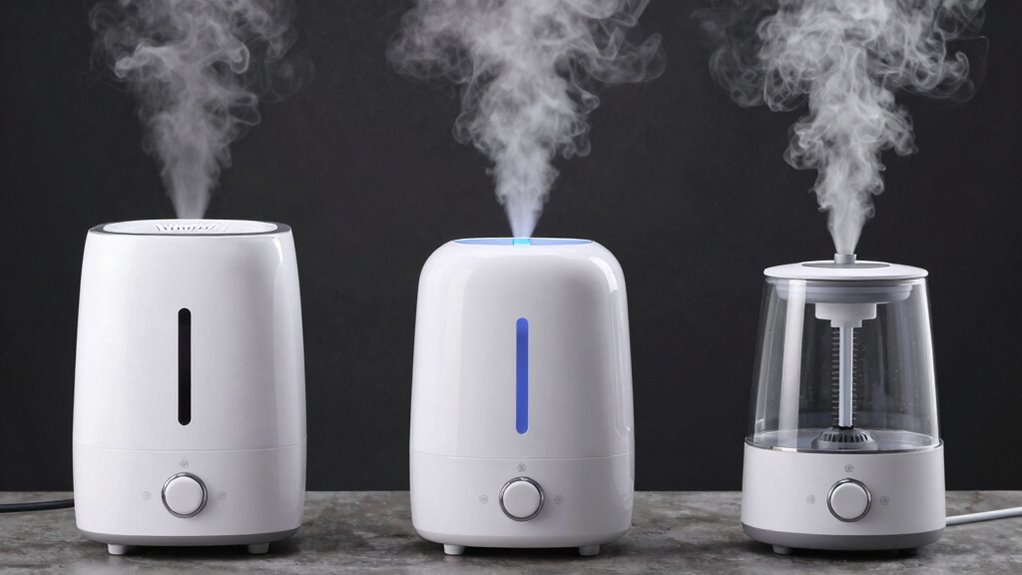

Choosing the right humidifier depends on your needs and maintenance willingness. Evaporative models are simple, affordable, and produce cleaner air with less upkeep. Ultrasonic units are quiet and energy-efficient but may disperse mineral dust if you use tap water. Steam humidifiers quickly increase humidity and reduce germs but require caution around children and pets. Understanding these differences helps you pick the best fit for your space—continue to explore for more detailed insights.

Get decor and gifts delivered free — and shop member deals
- Fast, free delivery on millions of items
- Access to Prime Big Deal Days deals on October 6–7
- Prime Video, Amazon Music and more included
Key Takeaways
- Evaporative humidifiers naturally regulate humidity and produce cleaner air with minimal mineral dust.
- Ultrasonic models are quiet, energy-efficient, but may disperse mineral dust without distilled water.
- Steam humidifiers rapidly increase humidity and can reduce germs but involve hot steam and higher energy use.
- Regular maintenance, including cleaning and filter replacement, is essential for all types to ensure air quality and device longevity.
- Choose based on your environment, maintenance capacity, safety needs, and whether you prefer natural regulation or rapid humidification.

Humidifiers come in various types, each designed to suit different needs and preferences. When choosing the right one, it’s important to understand how they work and what benefits they offer. Evaporative, ultrasonic, and steam humidifiers are the most common options, and each has unique features that can impact your air quality improvement efforts and maintenance routines.
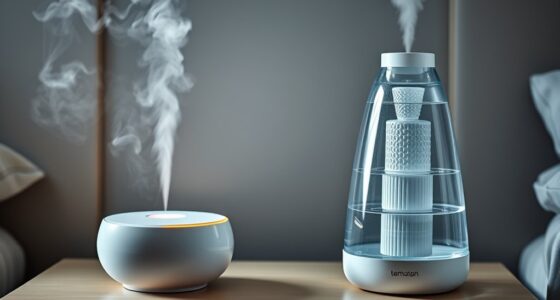
Evaporative humidifiers operate by using a wick filter soaked in water. A fan blows air through the moistened filter, causing water to evaporate into the room’s air. These units are self-regulating because as the air becomes more humid, evaporation slows down naturally, preventing over-humidification. They’re generally reliable, require minimal maintenance beyond regular wick replacement, and are less likely to produce white dust or mineral deposits. Their design makes air quality improvement straightforward, as they tend to emit cleaner, moistened air without the need for added chemicals or heat. However, you’ll need to keep the wick filter clean and replace it periodically to prevent mold or bacteria buildup, which could compromise air quality.
Ultrasonic humidifiers use high-frequency vibrations to turn water into a fine mist. These units are popular because they’re quiet, energy-efficient, and can quickly add moisture to a room. They don’t require a wick filter, which reduces ongoing maintenance, but you should still clean them regularly to prevent mold and bacteria growth. Ultrasonic models are known for producing a cool mist, which is safe for children and pets, but they can sometimes disperse minerals from tap water, leading to white dust settling on nearby surfaces. To improve air quality and minimize this issue, it’s best to use distilled or filtered water. Proper humidifier maintenance, including frequent cleaning, keeps the mist pure and helps prevent bacteria, ensuring your air remains healthy and comfortable. Additionally, choosing models with built-in water quality sensors can help monitor and maintain optimal humidity levels effectively.
Steam humidifiers, also called warm-mist units, boil water to produce steam that’s released into the room. They tend to be the most effective at quickly increasing humidity and can help reduce airborne germs due to the boiling process. While they do require more energy and regular cleaning to prevent mineral buildup, they’re excellent for spaces needing rapid humidity boosts and can help with air quality improvement by killing germs. Because they produce heat, they’re considered safer around children and pets, but you should always exercise caution with the hot steam. Regular descaling of the unit is necessary to prevent mineral deposits, which can impair function and potentially release unwanted particles into the air.
Choosing the right humidifier depends on your specific needs, maintenance willingness, and air quality goals. Each type offers distinct advantages, so consider how much ongoing upkeep you’re willing to handle and what kind of moisture output suits your environment. Proper humidifier maintenance not only prolongs the life of your device but also ensures you’re effectively improving air quality without risking mold, bacteria, or mineral dust. By understanding these differences, you can select the best humidifier to keep your indoor air healthy and comfortable.
evaporative humidifier with wick filter
As an affiliate, we earn on qualifying purchases.
As an affiliate, we earn on qualifying purchases.
Frequently Asked Questions
Which Humidifier Type Is Best for Allergy Sufferers?
For allergy sufferers, an evaporative humidifier is your best choice because it improves air quality and naturally filters allergens. It pulls in dry air, adds moisture, and uses a wick filter to trap dust, pollen, and other allergens. This helps reduce airborne irritants and promotes cleaner, healthier air. Ultrasonic and steam humidifiers can spread bacteria if not maintained properly, so evaporative models are safer and more effective for allergy relief.
How Energy-Efficient Are Different Humidifier Types?
Energy efficiency varies among humidifier types, with evaporative models typically using less power, acting like a cautious gardener conserving resources. Ultrasonic humidifiers are more power-efficient but can consume more if not maintained properly. Steam humidifiers generally use the most energy, like a roaring fire. Your choice depends on balancing energy consumption and performance—if you want power efficiency, evaporative units are your best bet, saving energy while humidifying effectively.
Can Ultrasonic Humidifiers Cause White Dust?
Yes, ultrasonic humidifiers can cause white dust. When your device uses tap water with minerals, it emits ultrasonic vibrations that turn water into mist, leaving behind mineral buildup. This white dust settles on surfaces and can irritate allergies. To prevent this, consider using distilled or demineralized water, and clean your humidifier regularly to minimize mineral buildup and keep the air clean.
Are Steam Humidifiers Safer for Children?
Think of your child’s safety as a delicate houseplant needing gentle watering. Steam humidifiers can be safer because they heat water to kill bacteria, reducing microbial risks. However, they still pose steam burn risks if mishandled, making them not entirely risk-free. Always supervise use and keep the device out of reach. Proper maintenance minimizes steam humidifier risks, ensuring a safer environment for your little one.
How Often Should Each Humidifier Type Be Cleaned?
You should clean your humidifier at least once a week to maintain proper hygiene. For evaporative and ultrasonic models, empty the tank, scrub with mild soap and water, and rinse thoroughly. Steam humidifiers need regular descaling to prevent mineral buildup, ideally every 3-7 days depending on water hardness. Use vinegar or manufacturer-recommended cleaning methods, and always dry all parts completely before reassembling to avoid mold growth.
Conclusion
Choosing the right humidifier transforms your space into a haven of comfort. Picture a gentle mist softly caressing your skin, filling the air with a delicate balance of moisture. Whether you prefer the natural evaporation of an evaporative model, the quiet whisper of ultrasonic waves, or the steamy warmth of a steam unit, each type offers a unique touch. Select wisely, and let your home breathe easy, wrapped in a cloud of soothing, perfectly conditioned air.
Fall Picks
fall essentials
As an affiliate, we earn on qualifying purchases.