
To maintain comfort and protect your home, it’s important to use humidifiers or dehumidifiers at the right times. During winter, when indoor air gets dry from heating, a humidifier adds moisture, helping skin and respiratory health. In summer, high humidity can cause mold and discomfort, so a dehumidifier keeps the air dry and safe. Understanding seasonal needs guarantees your indoor environment stays balanced and healthy—if you continue exploring, you’ll discover how to optimize your home’s humidity year-round.
Key Takeaways
- Humidifiers add moisture during dry seasons, mainly winter, to prevent skin and respiratory issues.
- Dehumidifiers remove excess moisture in humid seasons, reducing mold and dust mites.
- Proper humidity levels (30-50%) enhance comfort and indoor air quality year-round.
- Seasonal adjustments involve using humidifiers in winter and dehumidifiers in summer for optimal control.
- Both devices are essential for maintaining a healthy indoor environment by balancing humidity levels.
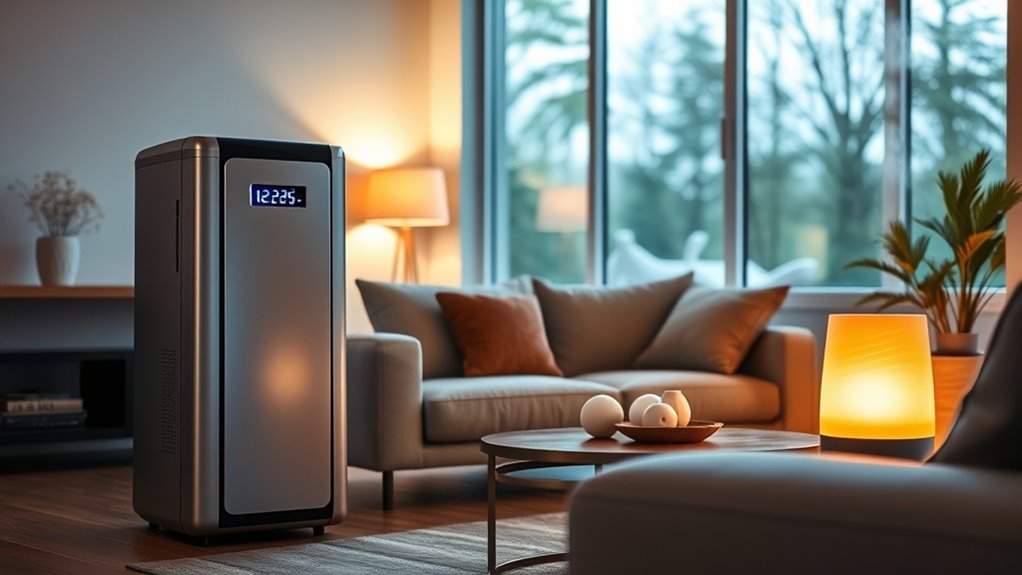
Maintaining proper humidity levels is vital for creating a comfortable and healthy indoor environment. When your home’s humidity is too high or too low, it can negatively impact indoor air quality, leading to discomfort, health issues, and even property damage. As seasons change, so do the challenges in managing humidity, requiring you to make seasonal adjustments to keep your indoor air quality ideal. During winter, for example, dry air often becomes a problem, while summer humidity can soar, making the air feel heavy and sticky. Understanding how to use dehumidifiers and humidifiers effectively helps you maintain the right balance throughout the year.
Balanced humidity is essential for comfort and health year-round.
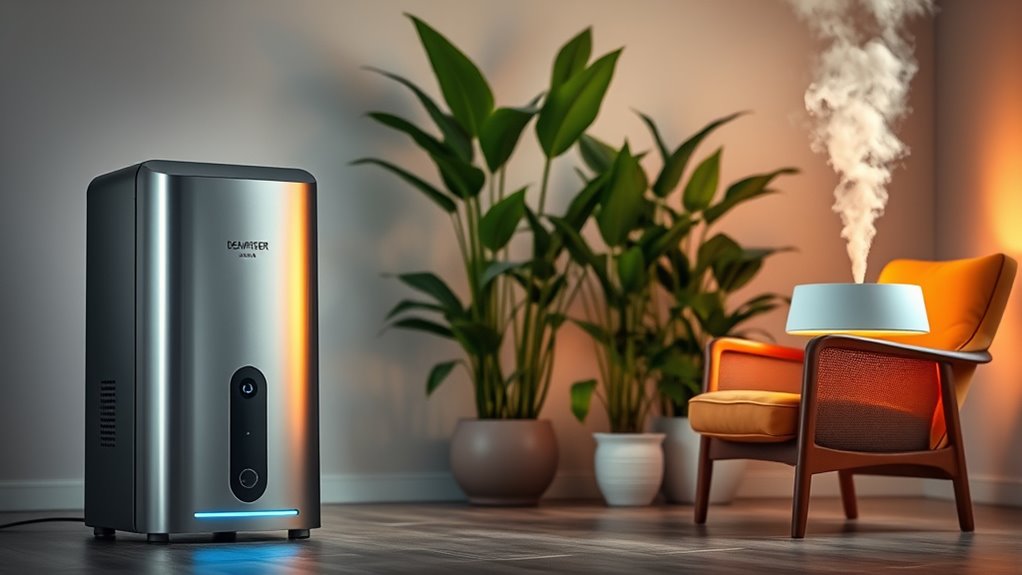
In colder months, indoor air tends to become dry because heating systems pull moisture out of the air, leading to low humidity. This dryness can cause skin irritation, respiratory discomfort, and increased susceptibility to colds and flu. To counteract this, a humidifier can be your best friend. By adding moisture to the air, it helps restore the balance, improving indoor air quality and making your environment more comfortable. When selecting a humidifier, consider the size of your space and the level of humidity you need. You want to keep humidity levels around 30-50%, which is generally comfortable and healthy. During seasonal adjustments, you might need to increase humidity in winter but reduce it during the humid summer months to prevent mold growth and dust mite proliferation.
On the flip side, high humidity levels, common in summer, can lead to mold, mildew, and dust mites, all of which compromise indoor air quality. In these cases, a dehumidifier is your go-to device. It pulls excess moisture out of the air, helping you maintain a dry environment that discourages mold growth and reduces allergens. Regularly monitoring your indoor humidity levels helps you decide when to run your dehumidifier, especially during peak summer months or in areas prone to dampness. Proper seasonal adjustments are key; running a dehumidifier during humid seasons prevents the indoor air from becoming stale and unhealthy.
Both dehumidifiers and humidifiers are vital tools in managing indoor air quality, but they serve opposite functions. By paying attention to seasonal shifts and adjusting device use accordingly, you guarantee a balanced, comfortable indoor environment year-round. Doing so not only enhances your comfort but also promotes better health and safeguards your home from moisture-related issues. Proper humidity control is about more than comfort—it’s about creating a space where you can breathe easy regardless of the season. Additionally, understanding the benefits of certification can help you select the most effective devices for your needs.
Frequently Asked Questions
How Do I Choose the Right Dehumidifier for My Room Size?
To choose the right dehumidifier for your room size, start by measuring the space accurately. Then, look for a model with a capacity suited to that room size, typically expressed in pints of moisture removed per day. Smaller rooms need lower capacity units, while larger spaces require higher capacity dehumidifiers. This guarantees efficient moisture control, keeping your environment comfortable without overworking the device.
Can Humidifiers Help With Allergy Symptoms Effectively?
Like a guardian shielding you from unseen enemies, humidifiers can help with allergy symptoms by adding moisture to dry air. While they aren’t a substitute for air purifiers, they do offer allergy symptom relief by soothing irritated nasal passages and skin. Proper humidity levels can reduce dust mites and mold growth, making breathing easier. Use a humidifier alongside air purifiers for the best allergy relief and overall comfort.
Are There Health Risks Associated With Overusing Dehumidifiers?
Overusing dehumidifiers can pose health concerns, especially if you don’t monitor humidity levels closely. Excessively low humidity can cause dry skin, throat irritation, and respiratory issues. Additionally, if you don’t clean the dehumidifier regularly, mold growth can develop, which worsens allergies and respiratory problems. To stay safe, keep humidity between 30-50%, clean your unit often, and avoid over-dehumidifying your space.
What Maintenance Is Required for Optimal Humidifier Performance?
Did you know that regular maintenance can extend your humidifier’s lifespan by up to 30%? To keep it running smoothly, you should follow a consistent cleaning schedule, including daily rinsing and weekly deep cleaning. Don’t forget to replace filters as recommended by the manufacturer. This routine prevents mold buildup and guarantees ideal humidifier performance, providing clean, healthy moisture for your home.
How Do Climate Differences Affect Humidity Control Needs?
Climate differences markedly impact your humidity control needs. In regions with high regional humidity, you’ll likely require a dehumidifier to prevent mold and discomfort. Conversely, in dry climates, a humidifier helps add moisture and improve air quality. Adapt your humidity control device to your specific climate to maintain ideal comfort and health. Understanding regional humidity patterns enables you to choose the right equipment for effective climate adaptation.
Conclusion
So, next time you’re torn between a dehumidifier and a humidifier, remember—it’s like choosing between a desert and a swamp. Want your living room to feel like a Sahara or a rainforest? Either way, you’re in control of your climate chaos. Just don’t be surprised if your home turns into a weather forecast you never signed up for. Ultimately, mastering humidity means becoming the benevolent ruler of your own indoor weather kingdom.