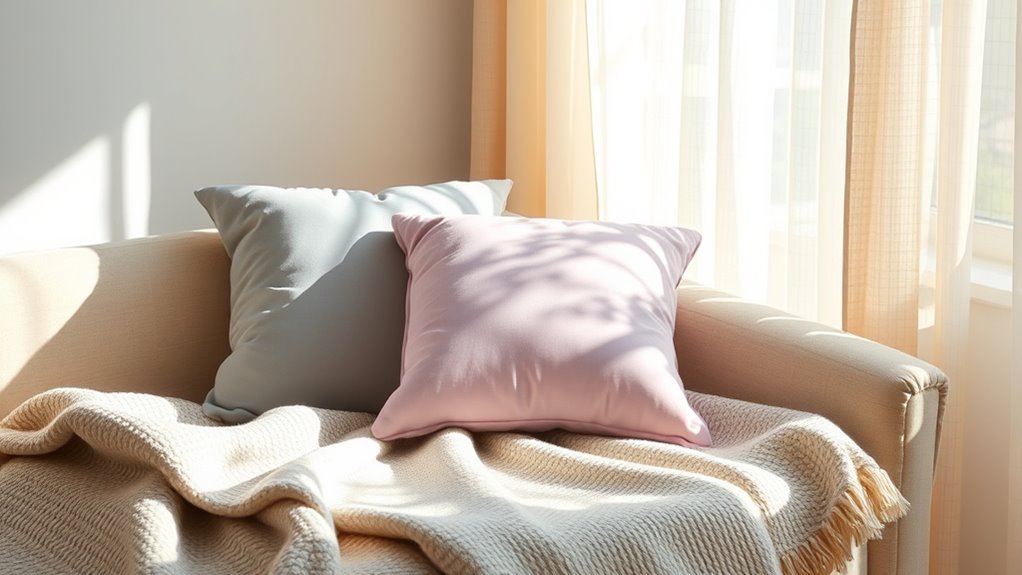

Colors and textures play a essential role in shaping your psychological comfort by directly affecting your mood and sense of safety. Soft, muted hues like pastels promote tranquility, while smooth textures like plush fabrics foster warmth and relaxation. Proper lighting also enhances these calming effects. When you thoughtfully combine soothing colors with comforting textures, you create an environment that reduces stress and boosts emotional stability. Keep exploring to discover how small changes can transform your daily well-being.
Key Takeaways
- Colors like pastels and muted tones promote calmness and reduce stress, enhancing psychological comfort.
- Soft textures such as plush fabrics and smooth surfaces evoke warmth and safety, supporting relaxation.
- Proper lighting complements color and texture choices, reinforcing a soothing environment.
- Combining calming colors with gentle textures creates spaces that foster emotional stability.
- Thoughtful use of color and texture influences mood positively, promoting mental well-being and resilience.
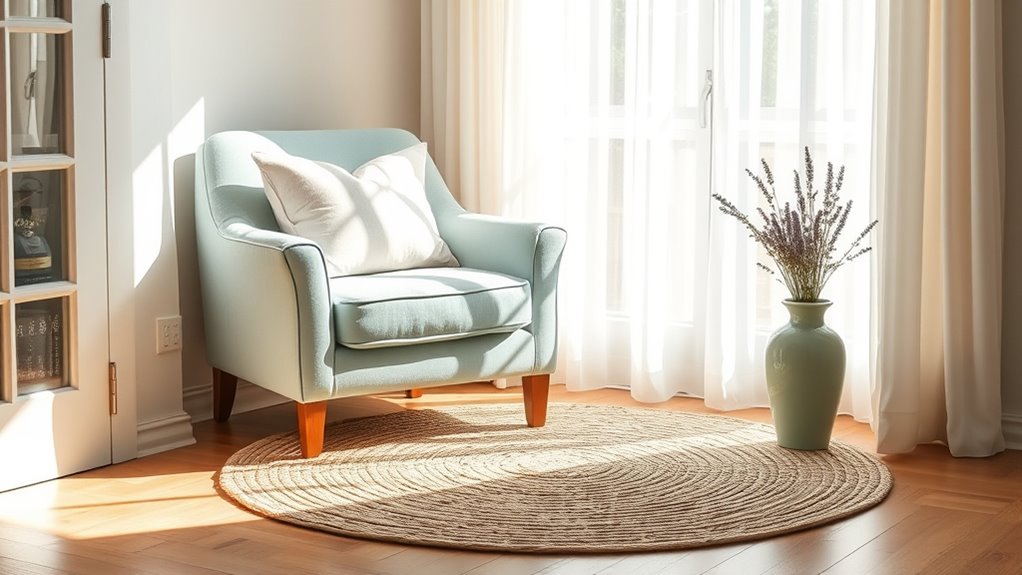
Psychological comfort plays a crucial role in maintaining your overall well-being, especially during stressful or uncertain times. When your environment feels safe and soothing, it can significantly reduce anxiety and promote a sense of stability. One powerful way to create this calming atmosphere is through an understanding of color psychology. Colors have the ability to influence your mood and emotions almost instantly. For instance, soft, muted hues like pastel blues and greens tend to evoke feelings of tranquility and relaxation. These shades can help lower your heart rate and ease tension, making your space feel more peaceful. Conversely, bright reds and yellows are energetic but can sometimes increase feelings of agitation if overused. By choosing colors thoughtfully, you can strategically foster a comforting environment that supports your mental health. Additionally, the lighting conditions in your environment can further enhance or undermine these calming effects. Texture effects also play a vital role in psychological comfort. The tactile quality of your surroundings influences how safe and relaxed you feel. Smooth, soft textures such as plush fabrics or polished surfaces can evoke feelings of warmth and security. These textures invite touch and create a cozy, inviting atmosphere. On the other hand, rough or harsh textures might trigger feelings of discomfort or restlessness. Incorporating textures that are pleasing to the touch helps you physically and emotionally settle into your space. For example, adding a soft throw blanket or a cushioned armchair can provide sensory relief, reducing stress levels. Texture effects aren’t just about aesthetics—they serve as subconscious cues that can either soothe or stimulate your senses, so choosing the right textures is essential for crafting a psychologically comfortable environment.
Creating a calming space with soft colors like pastels can reduce anxiety and promote stability.
Combining color psychology with thoughtful texture choices amplifies their impact. When colors and textures align harmoniously, they reinforce a sense of calm and stability. Imagine a room painted in gentle pastel shades with soft, velvety cushions and smooth linens—such a setting feels inherently relaxing. This synergy creates an environment that not only looks appealing but also actively supports your mental state. You might find yourself more inclined to unwind, focus, or simply feel more at ease when your surroundings are designed with these principles in mind. By paying attention to how colors and textures interact, you can transform any space into your personal sanctuary, making it easier to navigate life’s stresses and maintain your psychological comfort over time.
Ultimately, understanding and applying the concepts of color psychology and texture effects empowers you to craft environments that nurture your well-being. Small adjustments—like switching to calming hues or adding soft textiles—can make a noticeable difference in how you feel daily. Your environment becomes a reflection of your need for peace and stability, serving as a supportive backdrop that helps you face challenges with resilience. When you prioritize these elements, you’re actively investing in your mental health, creating spaces that foster comfort, reduce stress, and promote overall psychological well-being.
Frequently Asked Questions
How Do Cultural Differences Affect Color Perception?
You should know that cultural differences profoundly shape how you perceive colors. Cultural symbolism and color associations influence your reactions; for example, white might symbolize purity in some cultures but mourning in others. These cultural nuances affect your emotional responses and preferences. Being aware of these differences helps you understand that your perception of colors isn’t universal, and respecting diverse symbolism enhances your interactions and environments across cultures.
Can Textures Influence Emotional Responses Differently Across Individuals?
Textures can truly tickle your tactile emotional responses, but texture perception variability means they influence you differently. You might find rough surfaces invigorating, while others feel irritated or indifferent. This diversity demonstrates that textures influence emotional responses uniquely across individuals, shaping comfort, agitation, or relaxation. So, your personal texture preferences, shaped by experience and sensitivity, directly impact how textures evoke emotional reactions, making tactile experiences deeply personal and profoundly powerful.
Are There Specific Colors Linked to Stress Reduction?
Certain colors, like blue and green, are linked to stress reduction through color psychology, promoting calmness and relaxation. Incorporate these hues into your space for a soothing effect. Texture therapy also plays a role—soft, smooth textures can enhance feelings of comfort. Combining calming colors with gentle textures creates a harmonious environment that helps lower stress levels and boosts emotional well-being, making your space more inviting and peaceful.
How Long Does It Take to Feel Psychologically Comforted by a Space?
Ever wonder how quickly you settle into a space? Usually, it takes just a few minutes for you to feel psychologically comforted, especially when color therapy and texture psychology come into play. Your brain responds to soothing colors and soft textures almost immediately, creating a sense of calm. To truly feel at ease, it might take longer, but the initial comfort often starts within moments, thanks to these sensory cues.
Do Personal Experiences Alter Color and Texture Preferences?
Yes, your personal memory and aesthetic bias definitely influence your color and texture preferences. When you associate certain colors or textures with positive experiences, you’re more likely to find them comforting. Conversely, negative memories can make you dislike specific hues or surfaces. Over time, these personal experiences shape what feels psychologically comforting, making your preferences unique and constantly evolving based on your life’s memories and emotional connections.
Conclusion
Ultimately, the colors and textures you choose shape your emotional landscape. Bright hues energize, while soothing tones relax; smooth surfaces comfort, yet textured ones invigorate. By balancing these elements, you create harmony amid contrast. Your space becomes a refuge where vibrant excitement and calming serenity coexist. In this dance of shades and surfaces, you find psychological comfort—not just in what surrounds you, but in how it makes you feel. It’s your environment, your peace, your unique sanctuary.