A smart home hub can simplify your life if you manage multiple devices across different brands and protocols, offering centralized control and automation. If you already have devices that work well with a single app or ecosystem, a hub might be unnecessary. Consider using one if you want voice control or broader compatibility. To figure out whether a hub suits your setup and how it can enhance your smart home experience, keep exploring the details below.
Key Takeaways
- Use a hub when managing multiple brands and protocols for seamless device integration.
- Choose a hub to enable complex automation routines and centralized control.
- A hub is unnecessary if devices are compatible within the same ecosystem and simple to manage via apps.
- Consider a hub if you want broad device support, voice control, and easier troubleshooting.
- For small, straightforward setups, managing devices individually without a hub can save cost and complexity.

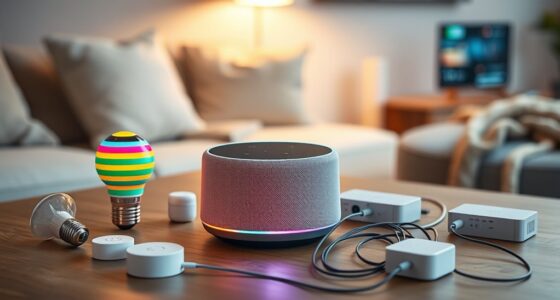
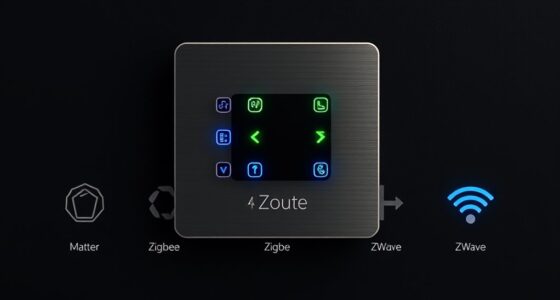
Have you ever wondered how to seamlessly connect all your smart devices into one easy-to-control system? If so, a smart home hub might be just what you need. These devices act as a central bridge, allowing you to manage everything from lights to thermostats through a single interface. The key to a smooth experience lies in choosing a hub that offers excellent voice control and broad device compatibility. Voice commands let you control your devices hands-free, making daily routines more convenient. When your hub supports popular voice assistants like Alexa, Google Assistant, or Siri, you gain the flexibility to operate your smart home effortlessly, without needing to open separate apps for each device. Compatibility is equally important; a hub that works with a wide range of brands and protocols ensures you’re not limited to just one ecosystem. Whether your smart bulbs are from Philips Hue, your security cameras are from Arlo, or your smart locks are from August, a compatible hub simplifies integration. It prevents the frustration of juggling multiple apps and disconnects, creating a unified, intuitive experience. Additionally, a central control system can help you monitor and troubleshoot your devices more efficiently, saving you time and effort in maintaining your smart home setup.
However, not everyone needs a smart home hub. If your devices are already compatible with the same platform and you prefer simple setups, managing each device individually through its app might suffice. For example, if you only have a few smart devices from the same brand with robust app support, a hub could be unnecessary. Additionally, some hubs come with advanced features like automation routines, multi-device control, and voice customization. If you enjoy creating complex routines or want to streamline your entire smart home experience, investing in a hub makes sense. On the other hand, if your smart devices are limited and your setup is straightforward, you might find that a hub adds unnecessary complexity and cost.
Ultimately, whether you need a smart home hub depends on your device ecosystem and your desire for convenience. If you value voice control and broad device compatibility, a quality hub can dramatically enhance your smart home experience. It consolidates control, simplifies management, and elevates your automation capabilities. But if your setup is simple and your current devices work well together without a hub, you might prefer to keep things straightforward. Assess your needs carefully—sometimes, a smart home hub is the perfect solution, and other times, managing devices individually is more practical.
Frequently Asked Questions
Can a Smart Home Hub Control All Smart Devices?
A smart home hub can control many smart devices, but not all. Your device compatibility depends on the hub setup and whether it supports the brands and protocols you use. Some hubs work with popular devices, while others have limited compatibility. To guarantee smooth control, check the hub’s device compatibility list before setting it up. This way, you’ll know if your devices will work seamlessly with the hub.
Do Smart Home Hubs Work With Voice Assistants?
Think of your smart home hub as a conductor guiding an orchestra—voice assistant integration makes it seamless. Yes, they work together, allowing you to control devices with just your voice. Your hub’s device compatibility guarantees it communicates smoothly with various smart gadgets. When you speak, it’s like a ripple through the system, syncing everything effortlessly. So, your smart hub and voice assistant team up to make your home smarter and more responsive.
Are Smart Home Hubs Compatible With Existing Devices?
Yes, smart home hubs are compatible with existing devices, including legacy ones, by acting as a central control point. They enable multi-platform integration, allowing you to manage different brands and protocols seamlessly. This means you can connect older gadgets without replacing them, simplifying your setup and enhancing automation. Just confirm your hub supports your specific devices and protocols to maximize compatibility and functionality.
How Secure Are Smart Home Hubs From Hacking?
Smart home hubs can be vulnerable to hacking risks due to security vulnerabilities in their software or weak passwords. You should guarantee your hub has strong encryption, regular updates, and unique login credentials to protect your devices. While no system is completely hack-proof, taking these precautions markedly reduces your chances of falling victim to hacking risks and helps keep your smart home secure.
What Is the Average Cost of a Smart Home Hub?
The average cost of a smart home hub ranges from $50 to $250. If you’re doing a pricing comparison, you’ll find budget options around $50 to $100, offering basic features. Mid-range models cost between $100 and $200, providing more compatibility and automation. Premium hubs may go over $250, but they often include advanced integrations. Consider your needs and budget to choose the right hub that fits your smart home setup.
Conclusion
Ultimately, choosing a smart home hub depends on your needs—it’s your gateway to seamless connectivity or an unnecessary middleman. Like a well-worn compass, it can guide you through the maze of devices or become a redundant extra. If you crave simplicity and unified control, a hub might be your best bet. But if you value flexibility and minimalism, you might prefer managing devices individually. Remember, the right choice aligns with your lifestyle, not just the hype.