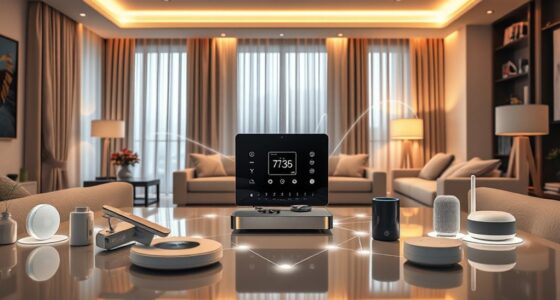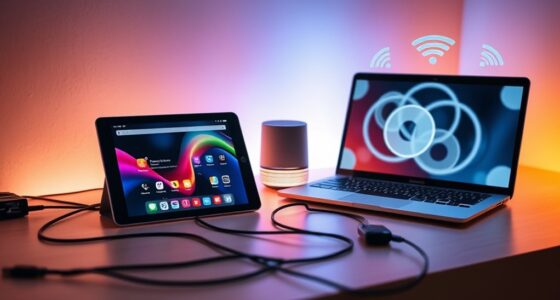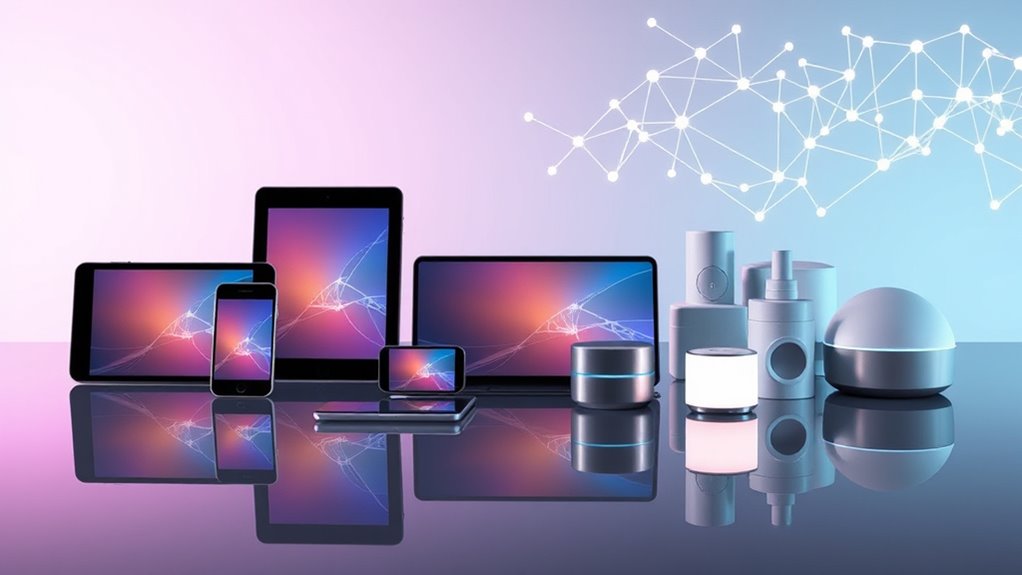

The Matter protocol is a universal standard that guarantees smart home devices from different brands work together seamlessly. It simplifies setup, enabling you to control everything through a single app or voice assistant. Built with strong security features like end-to-end encryption, it also faces some compatibility challenges initially. As more manufacturers adopt Matter, your smart home will become more reliable and easier to use. Exploring further reveals how this protocol is shaping a smarter, interconnected future.
Key Takeaways
- Matter creates a universal standard for smart home device communication across brands and ecosystems.
- It enhances compatibility, allowing devices to work seamlessly together with minimal setup.
- Built-in security features ensure safe device onboarding and protect user data.
- Adoption by manufacturers is increasing, improving device interoperability over time.
- Despite ongoing improvements, some compatibility issues may still occur due to varying implementations.
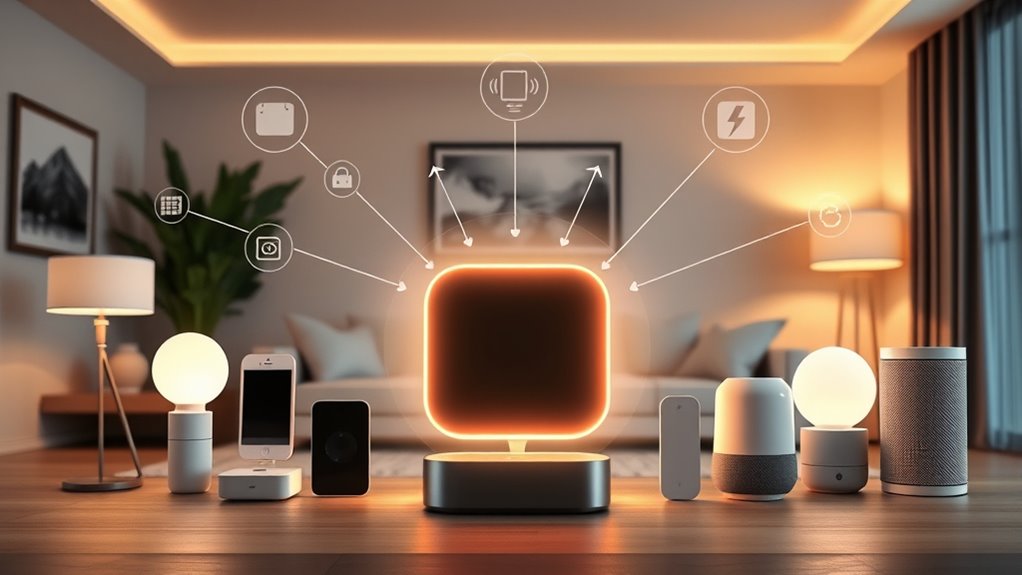
Have you ever wondered how your smart home devices work seamlessly together? It might seem like magic, but behind the scenes, protocols like Matter are making interoperability a reality. Matter is designed to create a universal standard that allows devices from different brands and ecosystems to communicate effortlessly. This means you no longer have to worry about whether your smart lights, thermostats, or security cameras will work together, regardless of their manufacturer. Instead, you benefit from a unified experience where devices can be controlled through a single app or voice assistant. The core goal of Matter is to simplify your smart home setup, but achieving this involves overcoming significant hurdles, especially related to security features and integration challenges.
Protocols like Matter enable seamless smart home device interoperability across brands and ecosystems.
Security features are a fundamental aspect of any smart home protocol, and Matter is no exception. Because your devices are constantly connected and exchanging sensitive data, guaranteeing their security is critical. Matter incorporates robust security measures, including end-to-end encryption and secure device onboarding, to protect your data from hacking or unauthorized access. These security features are built into the protocol itself, making it easier for manufacturers to deliver safe and trustworthy devices that can be integrated without compromising your privacy. This focus on security reassures you that your smart home remains a secure environment, even as devices from different brands communicate seamlessly. Additionally, ongoing security updates and compliance standards help maintain this protection over time.
However, integration challenges still exist. Despite the promise of a universal standard, getting devices from various ecosystems to work flawlessly together isn’t always straightforward. Different manufacturers may implement the protocol slightly differently or have varying levels of support for specific features, which can lead to compatibility issues. For example, some devices might support basic functions but struggle with more complex interactions, causing frustration or the need for workarounds. Additionally, existing devices may require firmware updates or resets to fully embrace Matter, which can complicate the transition. These challenges mean that, even with a protocol like Matter in place, your smart home setup might still require some troubleshooting and patience to achieve smooth integration.
Nevertheless, the promise of Matter is compelling—it aims to reduce these hurdles over time and foster a more open, interoperable ecosystem. As more manufacturers adopt the standard, you’ll likely see fewer compatibility issues and a more consistent user experience. The ongoing development of security features guarantees that this seamless integration doesn’t come at the expense of safety. So, while there are still hurdles to overcome, Matter is paving the way for a smarter, more connected home where devices work together effortlessly, giving you peace of mind and convenience. By emphasizing device interoperability, the protocol is working toward a future where your smart devices operate in harmony without requiring extensive setup or troubleshooting.

Linkind Matter Smart Plug, Work with Apple Home, Siri, Alexa, Google, SmartThings, Smart Home Smart Outlet Timer 15A/1800W, APP Remote Control & Schedule, 2.4G Wi-Fi Only, 4 Pack
【Easy Setup, One Control】With Matter, Skip the step of downloading and registering multiple manufacturers' apps every time you…
As an affiliate, we earn on qualifying purchases.
As an affiliate, we earn on qualifying purchases.
Frequently Asked Questions
How Does Matter Ensure Device Security?
Matter guarantees your device security through robust device authentication, confirming only trusted devices connect. It also uses advanced encryption standards to protect your data during transmission, preventing unauthorized access. By implementing secure onboarding processes and regular updates, Matter keeps your devices safe from vulnerabilities. You can trust that your smart home ecosystem remains private and secure, as the protocol prioritizes strong security measures at every step.
Can Existing Smart Devices Be Upgraded to Support Matter?
You can often upgrade existing smart devices to support Matter through firmware updates, but hardware compatibility is key. Manufacturers need to release updates that enable Matter support, so check if your device’s firmware can be updated. Sometimes, it’s a case of “barking up the right tree,” but if the hardware isn’t compatible, an upgrade might not be possible. Keep an eye on official updates to stay compatible.
What Is the Future Roadmap for Matter Development?
You can expect the future roadmap for Matter development to focus on establishing future standards that guarantee even broader device compatibility. Development milestones will likely include expanding support for new device categories, enhancing security features, and improving interoperability across brands. As a user, you’ll see consistent updates and new features that make your smart home experience more seamless and reliable, aligning with industry growth and innovation goals.
How Does Matter Handle Data Privacy Concerns?
Think of Matter as a trusted vault safeguarding your smart home. It handles data privacy by using strong data encryption to keep your information secure. Plus, it prioritizes user consent, ensuring you’re in control of what data gets shared. By combining these protections, Matter creates a safe environment where your privacy stays intact, giving you peace of mind while enjoying seamless device compatibility.
Are There Limitations to Device Compatibility Across Brands?
Yes, there are some limitations to device compatibility across brands due to compatibility challenges. While Matter notably improves cross-brand interoperability, not all devices support every feature or update immediately, which can cause issues. You might experience delays or limited functionality when integrating certain brands. However, these challenges are gradually decreasing as more manufacturers adopt the protocol, making your smart home setup more seamless over time.
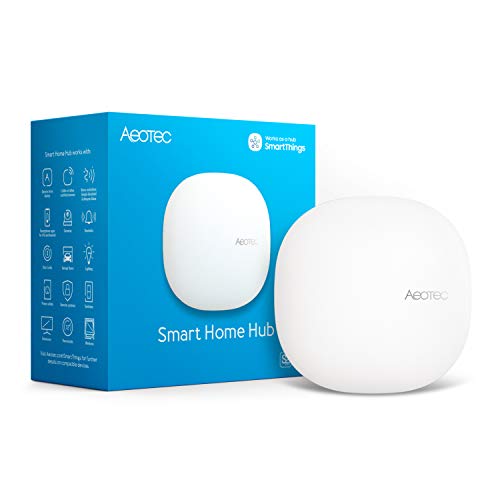
Aeotec Smart Home Hub, Works as a SmartThings Hub, Z-Wave, Zigbee, Matter Gateway, Compatible with Alexa, Google Assistant, WiFi
Connect & control your smart home — Easily link thousands of compatible devices from leading brands to create…
As an affiliate, we earn on qualifying purchases.
As an affiliate, we earn on qualifying purchases.
Conclusion
With Matter, you can confidently connect all your smart devices without worrying about compatibility issues. Imagine setting up a new smart bulb and instantly controlling it alongside your existing smart home system—no fuss, no extra apps. This seamless experience means you save time and frustration. As more manufacturers adopt Matter, your smart home becomes more reliable and future-proof, making everyday life simpler and more connected. That’s the true power of a universal protocol.

WiFi and 3/4G GSM Home Burglar Security Alarm System Auto Dial with Smart Life and Tuya App Alert, Works with Google Assistant and Alexa
No hidden costs and subscription fee: No contract with security company with Free app, your alarm kit includes…
As an affiliate, we earn on qualifying purchases.
As an affiliate, we earn on qualifying purchases.
smart home device firmware updater
As an affiliate, we earn on qualifying purchases.
As an affiliate, we earn on qualifying purchases.