Smart refrigerators keep your food fresh by automatically adjusting temperature and humidity based on real-time sensor data. They monitor conditions inside constantly, sending alerts if something’s off, like door left open or temperature fluctuations. Advanced air purifiers and zone controls help prevent odors and spoilage. Plus, with smartphone connectivity, you can manage and get updates from anywhere. Want to discover exactly how these features work together? Keep exploring to see how your fridge stays smarter than ever.

Get decor and gifts delivered free — and shop member deals
- Fast, free delivery on millions of items
- Access to Prime Big Deal Days deals on October 6–7
- Prime Video, Amazon Music and more included
Key Takeaways
- Smart sensors monitor and automatically adjust temperature and humidity levels for optimal food preservation.
- Continuous real-time monitoring alerts users to temperature fluctuations, door openings, and spoilage risks.
- Advanced air filtration and odor elimination technologies maintain a fresh environment inside the fridge.
- Connectivity features enable remote control, alerts, and smart home integration for proactive food management.
- Automated freshness notifications help prevent spoilage by advising on optimal storage conditions and usage.
Advanced Temperature Regulation Systems
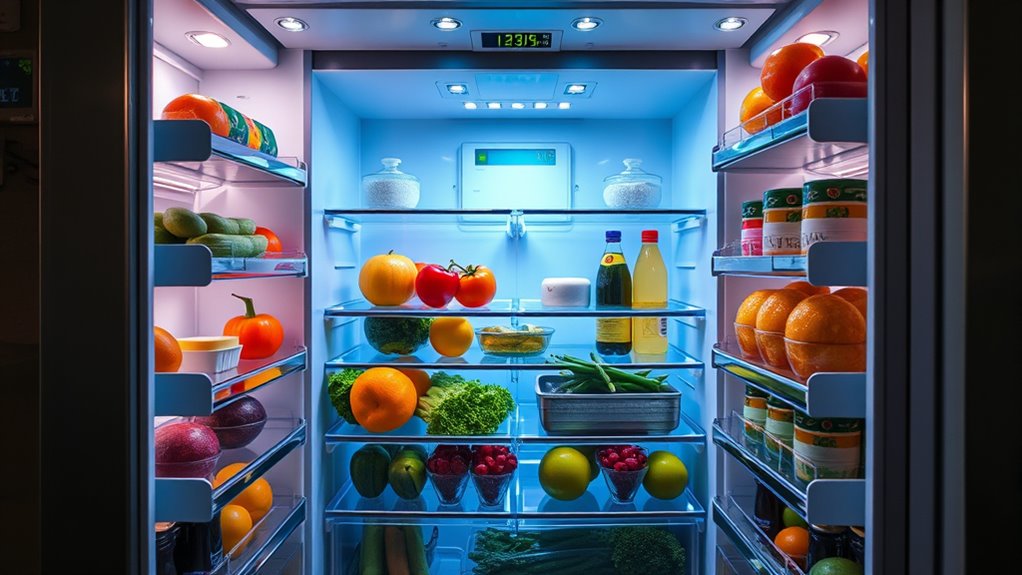
Modern refrigerators increasingly rely on advanced temperature regulation systems to keep your food fresh and safe. These systems monitor and adjust temperatures automatically, ensuring consistent cooling. Proper shelf organization helps optimize airflow, preventing hot spots that could spoil food. Door compartments are designed to hold frequently used items at slightly warmer temperatures, reducing temperature fluctuations inside the fridge. By managing temperature precisely, your refrigerator maintains the ideal environment for different foods, from dairy to vegetables. Smart sensors detect changes in temperature and activate cooling mechanisms instantly. This technology not only preserves freshness but also saves energy. Optimized airflow enhances the efficiency of cooling systems, ensuring even temperature distribution throughout the refrigerator. Keeping your shelves organized and utilizing door compartments efficiently allows these systems to work at their best, ensuring your food stays fresh longer.
Humidity Control for Optimal Food Preservation
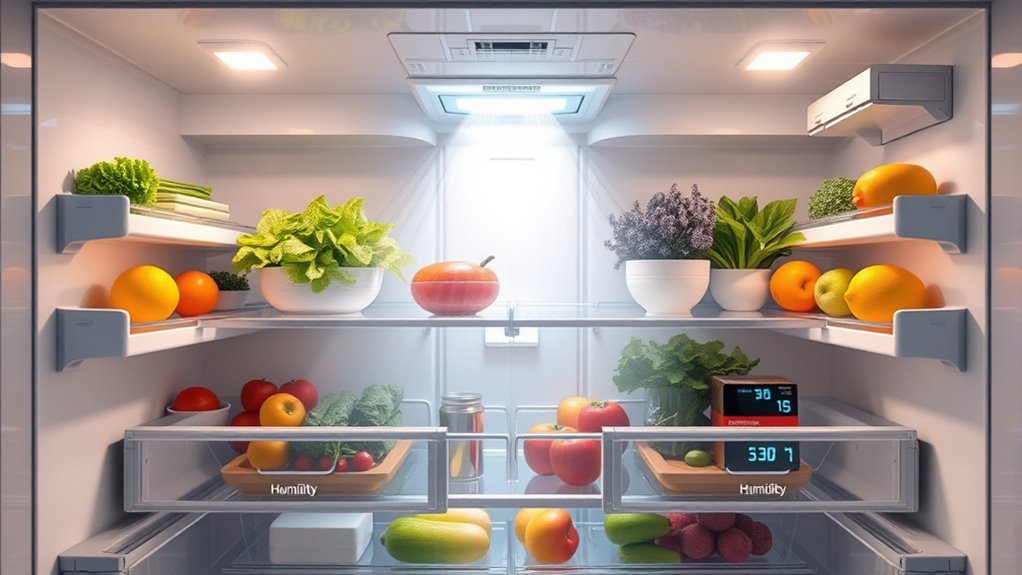
Adjusting humidity levels helps keep your food fresh longer and prevents spoilage. Proper humidity offers benefits like reducing moisture loss for produce and preventing excess moisture that causes mold. Keep an eye on your humidity settings to make sure your fridge maintains the ideal environment for different foods. Additionally, some smart refrigerators incorporate AI-powered sensors that automatically adjust humidity levels based on the type of food stored.
Adjusting Humidity Levels
Controlling humidity levels in your fridge is essential for keeping produce fresh and preventing spoilage. When humidity is too high, fruits and vegetables ripen faster and become prone to mold, which shortens their shelf life. Conversely, low humidity can cause produce to dry out and lose flavor. To optimize freshness, adjust humidity settings based on the type of food. For leafy greens and herbs, higher humidity helps maintain crispness, while fruits like berries prefer lower humidity to slow ripening and mold growth. Many smart fridges have humidity control compartments, allowing you to customize conditions for each group of produce. By fine-tuning these settings, you ensure your food stays fresh longer, reducing waste and keeping your fridge organized.
Benefits of Proper Humidity
Have you ever wondered how proper humidity levels can extend the freshness of your food? Maintaining the right moisture balance in your fridge is essential for preserving different types of produce. When humidity levels are just right, fruits and vegetables stay crisp, preventing dehydration and spoilage. If the air is too dry, produce wilts faster; if it’s too humid, mold and rot can develop. Proper humidity creates an environment that slows down bacterial growth and enzymatic activity, keeping food fresh longer. Efficient general ledger coding By controlling moisture, you reduce waste and save money. Your smart refrigerator’s humidity settings help you achieve this ideal moisture balance automatically, ensuring your food stays delicious and nutritious for as long as possible.
Monitoring Humidity Settings
Monitoring your fridge’s humidity settings is essential to maintaining the ideal environment for your food. Modern refrigerators feature humidity sensors that help you track moisture levels in different compartments. By adjusting these settings, you ensure produce stays fresh longer and prevents spoilage caused by excess moisture or dryness. Moisture control is especially important for delicate items like leafy greens and berries, which thrive in a balanced humidity environment. Many smart fridges automatically regulate humidity based on sensor data, simplifying the process. Regularly check and fine-tune your humidity controls to optimize freshness and reduce waste. Staying attentive to these settings empowers you to create a controlled environment that preserves your food’s quality and extends its shelf life effortlessly. Recognizing angel numbers related to love and transformation can also inspire a positive mindset while managing your food storage habits.
Smart Sensors and Real-Time Monitoring
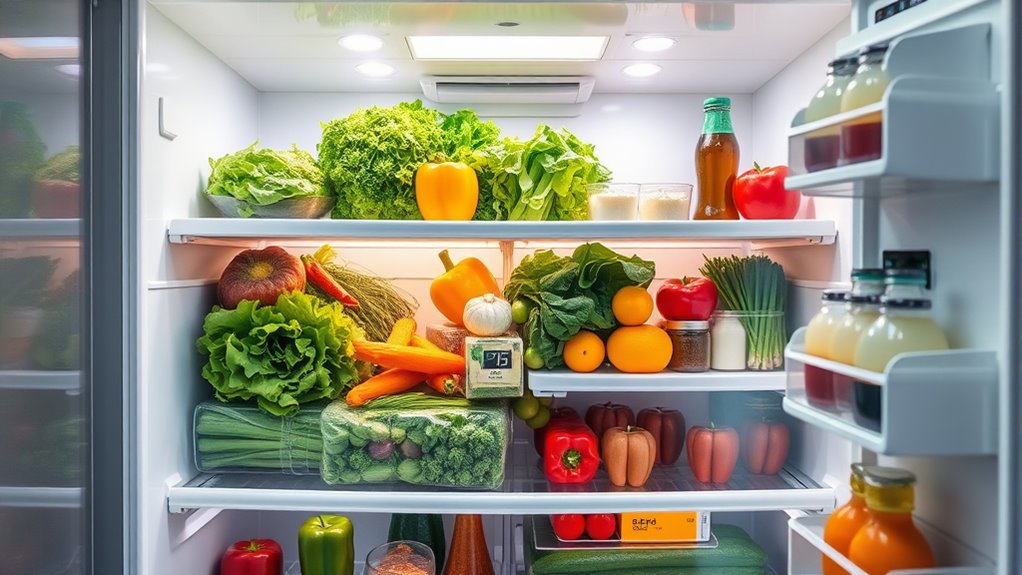
Smart sensors in your fridge continuously track temperature and humidity levels, helping you keep food fresh longer. These devices use different types of sensors to monitor conditions and send real-time data to you via alerts. With notifications, you’ll be instantly informed of any issues, so you can act quickly to prevent spoilage. Understanding chemical reactions that cause food to spoil can further improve your fridge’s effectiveness.
Sensor Types and Functions
Smart sensors in modern refrigerators play a crucial role by continuously gathering data, allowing you to keep track of temperature, humidity, and even door status in real time. These sensors help enhance storage conditions, prevent spoilage, and improve energy efficiency. For example, fruit ripening sensors detect ethylene levels to slow or speed ripening, helping preserve freshness. Ice maker sensors monitor water levels and ice quality, ensuring you always have ice when needed. Types of sensors include temperature sensors, humidity sensors, and door sensors, each with specific functions. Here’s a quick overview:
| Sensor Type | Function | Example Use |
|---|---|---|
| Fruit Ripening | Detects ethylene to control ripening | Extends freshness of produce |
| Ice Maker Sensors | Monitor water and ice quality | Prevents ice blockages |
| Temperature | Maintain ideal fridge temp | Keeps food fresh |
| Humidity | Regulate moisture levels | Prevents mold and spoilage |
Additionally, advancements in automation technology are enabling smarter management of these sensors, further enhancing food preservation and energy efficiency.
Continuous Temperature Tracking
Since temperature fluctuations can quickly compromise food safety, modern refrigerators use sensors that continuously track internal temperatures in real time. These smart sensors monitor key areas, including near the ice maker and fresh food compartments, ensuring consistent cooling. If temperatures drift outside safe ranges, the system can adjust cooling settings instantly. Additionally, door alarms alert you if the door is left open, preventing warm air from entering and causing temperature swings. This constant monitoring helps maintain ideal conditions, preserving freshness and preventing spoilage. By providing real-time data, these sensors allow your fridge to respond proactively, keeping your food safe without manual adjustments. Overall, continuous temperature tracking is essential for reliable food preservation and peace of mind.
Alerts and Notifications
How do you know if your fridge is working properly without opening the door? Smart refrigerators use alerts and notifications to keep you informed in real time. These sensors detect issues like temperature fluctuations or door ajar alerts, so you’re immediately notified on your phone. This prevents spoilage and ensures your food stays fresh longer. Plus, these alerts can suggest recipe ideas based on what’s inside, helping you plan meals efficiently. They also contribute to your interior design by reducing clutter and providing a sleek, modern look with integrated screens. With real-time monitoring, you don’t have to worry about food safety or appliance performance. Instead, you get peace of mind, knowing your fridge actively safeguards your groceries and simplifies your kitchen management. Additionally, many smart refrigerators support Bluetooth connectivity, allowing seamless pairing with your devices for enhanced control and updates.
Automated Freshness Alerts and Notifications
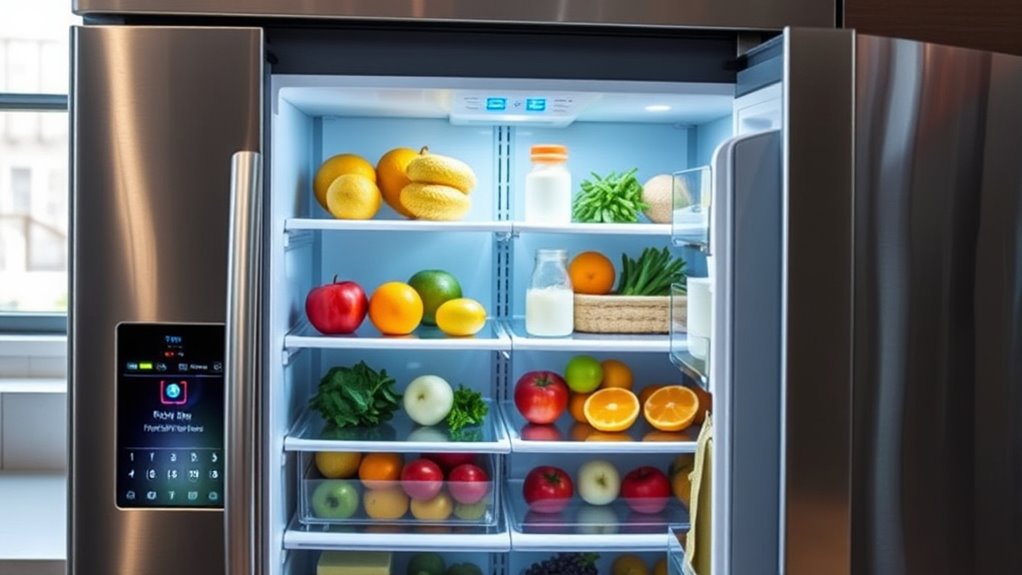
Ever wondered if your fridge could keep track of food freshness automatically? With smart refrigerators, it can. They send automated alerts and notifications when your food nears spoilage, helping you optimize fruit preservation and beverage cooling. For example, you’ll get a reminder before fruits go bad or drinks warm up. This ensures you consume items at their freshest, reducing waste. Here’s a quick overview:
| Food Type | Alert Trigger | Action Recommended |
|---|---|---|
| Fresh Fruits | 2-3 days before spoiling | Use quickly or consume |
| Beverages | Temperature fluctuations | Adjust cooling settings |
| Leftovers | Approaching expiry date | Consume or discard |
These alerts keep your food fresh and your kitchen smarter. Additionally, some models are compatible with solar panels, allowing for sustainable energy use and further reducing waste.
Innovative Air Purification Technologies

Modern fridges now feature advanced filtration systems that trap bacteria and particles, keeping your food fresher longer. Odor elimination methods, like activated carbon filters, prevent unwanted smells from lingering. With air quality monitors built in, you can easily track and maintain ideal freshness levels inside your fridge. Incorporating data-driven strategies ensures optimal performance and longevity of these advanced features.
Advanced Filtration Systems
Advanced filtration systems are transforming the way your fridge maintains freshness by using innovative air purification technologies. Many smart refrigerators now feature water filtration systems that remove impurities, ensuring clean, fresh-tasting water directly from the dispenser. UV sterilization adds another layer of protection by eliminating bacteria and viruses on surfaces and in the air, reducing spoilage and cross-contamination. These advanced filters not only improve the quality of the air inside your fridge but also extend the shelf life of your food. By continuously purifying the environment, they help prevent odors and keep produce fresher longer. Incorporating HEPA filters into your fridge’s air system can effectively capture common airborne allergens and particles, further enhancing food preservation. With these cutting-edge technologies, your fridge actively works to create a healthier, more efficient storage space, giving you peace of mind about the freshness of your groceries.
Odor Elimination Methods
Innovative air purification technologies are revolutionizing how your fridge handles odors, ensuring your stored food stays fresh and uncontaminated. Modern fridge design now integrates advanced air filters and ionization systems that actively neutralize unwanted smells. These systems work silently, maintaining a neutral environment without disrupting your fridge’s aesthetic or functionality. The user interface of smart refrigerators makes it easy to control and monitor odor elimination features, allowing you to activate or customize settings effortlessly. By combining sleek design with powerful purification methods, these technologies prevent odors from lingering and spreading. As a result, your fridge stays smelling clean, and your food remains fresh longer. This seamless integration of odor-eliminating tech and user-friendly controls keeps your refrigerator both effective and easy to operate.
Air Quality Monitoring
Have you ever wondered how your fridge keeps the air inside fresh and safe? Air quality monitoring plays a key role in this process. Smart refrigerators use sensors to detect levels of humidity, odors, and airborne bacteria, guaranteeing ideal conditions. When air quality drops, the system activates air purifiers with built-in filters to remove contaminants. Regular filter replacement is essential to maintain effective air purification and prevent buildup of odors or bacteria. Some models even alert you when it’s time to change the filter, making maintenance easier. By continuously monitoring and adjusting air quality, your fridge helps extend the freshness of your food and keeps unpleasant smells at bay. This innovative technology ensures a healthier environment inside your appliance, giving you peace of mind with every open door.
Energy Efficiency and Eco-Friendly Features

Many modern refrigerators are designed with energy efficiency and eco-friendly features in mind, helping you reduce electricity bills and minimize environmental impact. The refrigerator design now emphasizes better insulation, LED lighting, and compressor technology that lowers energy consumption without sacrificing performance. These innovations ensure your fridge uses less power while maintaining ideal cooling. Some models include adjustable temperature controls and smart sensors that optimize energy use based on how often you open the door or the amount of food stored. Eco-friendly features like recyclable materials and environmentally safe refrigerants further reduce your carbon footprint. By choosing a refrigerator with these energy-efficient designs, you not only save money but also contribute to a healthier planet.
Connectivity With Mobile Devices and Apps
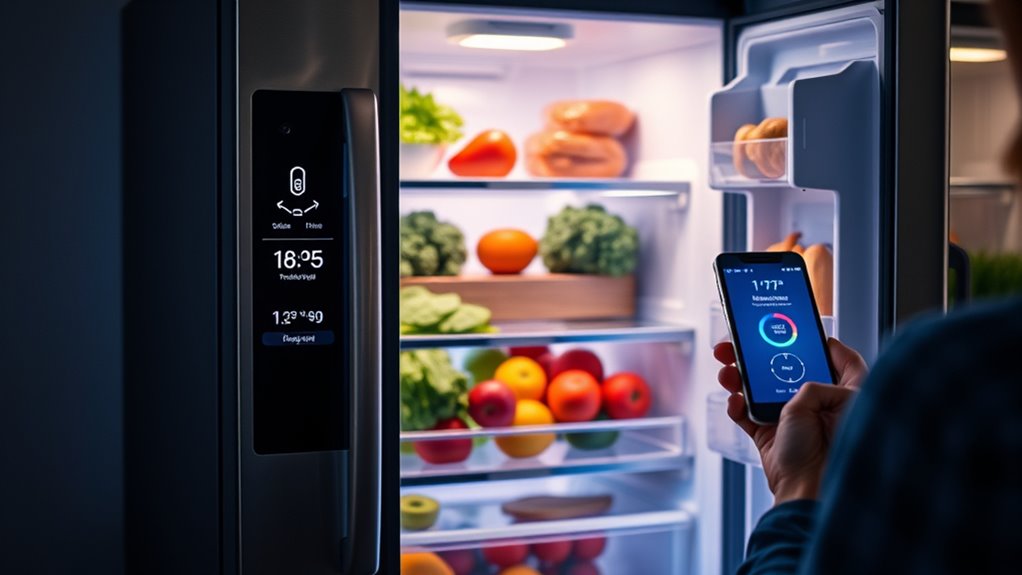
Connecting your refrigerator to mobile devices and apps allows you to monitor and control your appliance remotely, making daily management more convenient. With remote access, you can check the contents, adjust temperature settings, or receive alerts about open doors or low supplies from anywhere. Device pairing is simple—just link your fridge to your smartphone or tablet through the app, ensuring seamless communication. This connectivity means you don’t have to be physically in the kitchen to make quick adjustments or get updates, saving you time and effort. Whether you’re at work or on the go, managing your fridge becomes effortless with the right app and a stable internet connection. This smart feature keeps your food fresh and your life more streamlined.
Customizable Storage Options and Zones
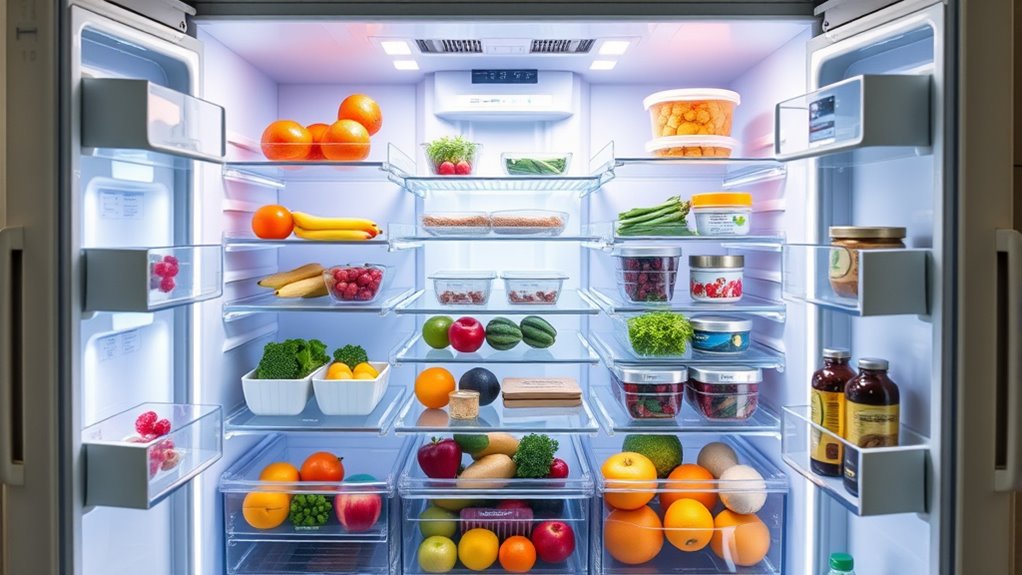
Customizable storage options and zones give you the flexibility to organize your fridge exactly how you want. With customizable compartments, you can allocate space for different types of food, making it easier to find what you need quickly. Adjustable shelves let you modify the height and layout to fit taller bottles, large containers, or bulky produce. Many smart refrigerators let you set specific zones for items like dairy, fruits, or leftovers, helping you maintain ideal freshness. This personalization reduces clutter and prevents cross-contamination. By customizing your storage, you maximize space efficiency and keep everything easily accessible. Whether you prefer a particular arrangement or need to adapt for special items, these features help you keep your fridge tidy, organized, and primed to preserve your food longer.
Integration With Other Smart Home Devices
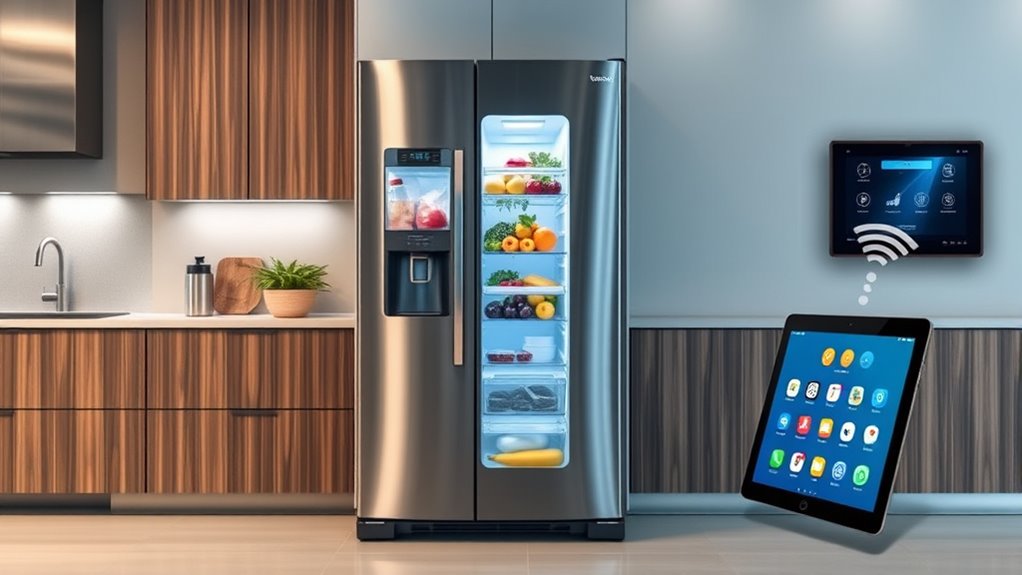
Integrating your fridge with other smart home devices enhances convenience and streamlines your daily routines. With smart home integration, you can control your refrigerator using voice control or through your central hub. Here are some ways it benefits you:
Smart fridge integration simplifies your kitchen with voice control and automation.
- Sync your fridge with smart lighting to adjust interior brightness based on your preferences.
- Use voice commands to check the fridge’s temperature or inventory without opening the door.
- Connect your fridge to your grocery list app, automatically updating when supplies run low.
- Integrate with smart assistants to receive alerts about door left open or filter changes.
This seamless integration makes managing your kitchen effortless, saving you time and energy while keeping everything running smoothly.
Maintenance and Troubleshooting Tips
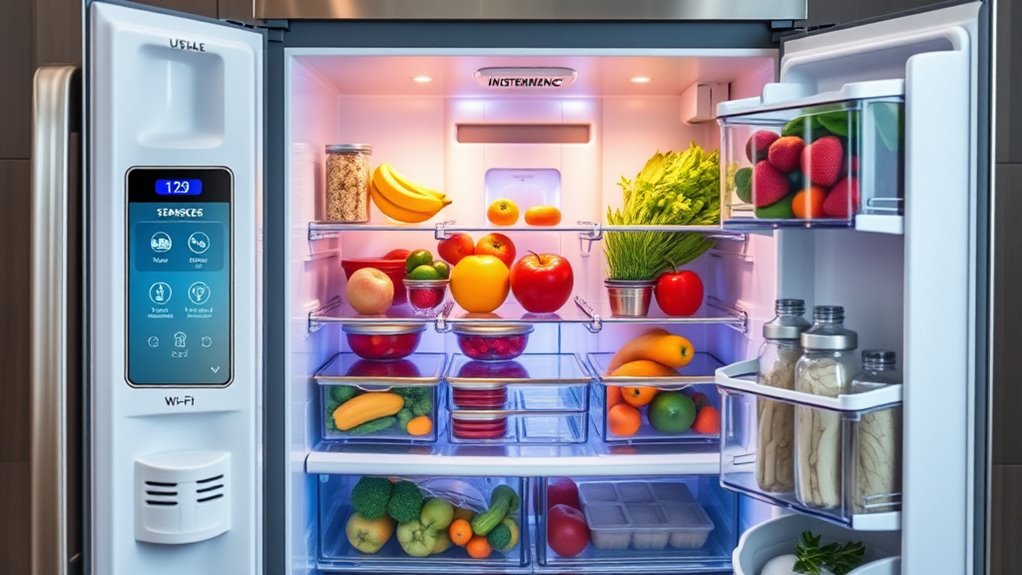
While smart integrations improve your fridge’s functionality, regular maintenance is key to keeping it operating smoothly. To prevent issues like excessive refrigerator noise, check and tighten door seals regularly. Proper door seal maintenance ensures your fridge stays energy-efficient and prevents warm air from entering. If noise persists, inspect the compressor or fan for debris or wear. Keep vents clean to promote airflow. When troubleshooting, listen for unusual sounds or temperature inconsistencies. Here’s a quick guide:
| Issue | Solution | Prevention |
|---|---|---|
| Refrigerator noise | Clean fans, tighten loose parts | Regularly inspect for debris |
| Door not sealing | Replace worn door seals | Routine door seal checks |
| Temperature issues | Adjust thermostat settings | Keep vents clear |
| Excessive frost | Defrost or check drain tubes | Maintain proper door closure |
Frequently Asked Questions
How Do Smart Refrigerators Learn My Food Storage Preferences?
Smart refrigerators learn your food storage preferences by tracking your food inventory and usage patterns. They monitor what you store and how often you access certain items, allowing the fridge to adapt to your habits. Over time, this data helps it suggest ideal storage solutions, alert you when supplies run low, and even automate reordering. You benefit from a personalized system that keeps your food fresh and minimizes waste.
Can I Access My Fridge’s Features Offline?
Ever wonder if you can control your smart fridge offline? The answer is yes, but it depends on your model. Some smart refrigerators offer offline access, allowing you to use local control features without internet. However, full functionality may require an active connection. Check your fridge’s manual or app settings to see what offline options are available. Stay prepared—knowing your offline access keeps your food management seamless, even when Wi-Fi drops.
What Security Measures Protect My Data and Privacy?
You might wonder about your smart fridge’s security measures. Rest assured, manufacturers use data encryption to protect your information and implement strict privacy policies. These safeguards ensure your data stays confidential and secure from unauthorized access. To maintain privacy, always review the privacy policies and keep your device’s software updated. This way, you stay in control of your data, and your food stays fresh and safe.
How Long Do the Sensors and Tech Components Last?
You wonder how long the sensors and tech components last in your smart fridge. Typically, these parts are durable, with energy efficiency and regular maintenance schedules extending their lifespan. Most sensors last 5-10 years, but check your manufacturer’s guidelines for specific details. Keep up with routine maintenance, like cleaning and software updates, to guarantee peak performance and prolong the life of your smart refrigerator’s tech components.
Are Smart Refrigerators Compatible With All Home Automation Systems?
They say variety is the spice of life, and smart fridges are no exception. Many models are compatible with popular home automation systems, enhancing your kitchen aesthetics and boosting energy efficiency. However, compatibility varies, so you should check if your smart fridge works with your existing devices. When integrated, it simplifies your routines and keeps everything running smoothly—making your kitchen smarter and more efficient.
Conclusion
With these smart features, your fridge becomes a guardian of freshness, turning everyday storage into a high-tech dance. By embracing advanced temperature controls, humidity management, and seamless connectivity, you’re not just keeping food; you’re extending its life and saving money. Think of your fridge as a vigilant partner, always watching over your groceries. With a little maintenance and smart use, it’ll serve you fresh and worry-free, making your kitchen smarter and your life easier.
Fall Picks
fall essentials
As an affiliate, we earn on qualifying purchases.