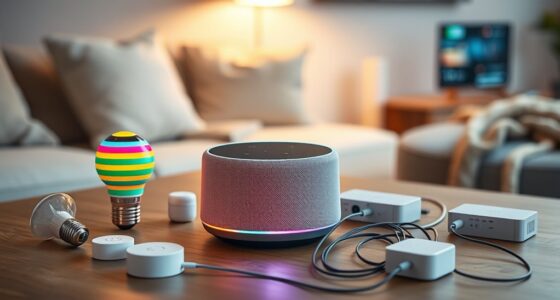
Thread is a smart home networking tech that creates a reliable, secure, and low-power mesh network, allowing your devices from different brands to communicate instantly and seamlessly. It improves on Wi-Fi and Bluetooth by offering faster, more dependable connections while using less energy. Devices act as relay points, keeping the network stable even if some drop out. If you want to understand how this technology makes your smart home more responsive and effortless, you’re in the right place.
Key Takeaways
- Thread is a low-power, secure wireless protocol that creates a reliable mesh network for smart home devices.
- It enables instant, seamless device communication without delays or compatibility issues.
- By relaying information through multiple nodes, Thread maintains stable connectivity even if some devices drop out.
- Its robust security features protect data and ensure only trusted devices join the network.
- Thread acts as the essential backbone for responsive, integrated, and truly “instant” smart home experiences.
Have you ever wondered what a thread really is and how it functions in the digital world? If you’re exploring smart homes or connected devices, understanding Thread can transform how you see the technology behind your daily routines. At its core, Thread is a wireless connectivity protocol designed specifically for smart home devices. Unlike traditional Wi-Fi or Bluetooth, which often struggle with reliability, power consumption, and device interoperability, Thread offers a seamless, low-power, and secure way for your devices to communicate. It creates a mesh network, meaning each device acts as a node that relays information to others, ensuring connectivity remains stable even if one device drops out. This mesh approach is vital because it guarantees your smart home stays responsive and dependable at all times.
Thread is a low-power, secure mesh network protocol that ensures reliable smart home device communication.
The key strength of Thread lies in its ability to enable device interoperability. Imagine having a smart thermostat, lights, locks, and sensors all working together effortlessly. With traditional protocols, these devices often come from different brands and require separate apps or bridging hubs, which complicates setup and limits their ability to communicate directly. Thread sidesteps these issues by providing a common language for devices to understand one another. This interoperability means you don’t need to worry about compatibility or complex configurations—your devices can work harmoniously out of the box. As a result, your smart home becomes more intuitive, with devices sharing information and coordinating actions smoothly, like your lights dimming automatically when you set the alarm or your door lock communicating with the security system.
Another advantage of Thread is its emphasis on security. In a world where connected devices can be vulnerable to hacking, Thread employs robust encryption and secure device onboarding processes. This security layer guarantees that only trusted devices join the network and that data remains private. Plus, because Thread is designed to be energy-efficient, your battery-operated devices last longer without needing frequent recharging or battery replacements, making it ideal for sensors and other low-power devices. This efficiency is partly achieved through its low-power design, which extends device lifespan and reduces energy costs.
In essence, Thread acts as the missing link that makes your smart home smarter and more dependable. It’s not just about faster wireless connectivity but about creating a cohesive ecosystem where devices can communicate effortlessly and securely. This technology helps eliminate the frustrations of disconnected devices, slow responses, or compatibility issues, bringing you closer to the instant, integrated experience you’ve always envisioned. When you understand how Thread works, it becomes clear why it’s considered the backbone of the next-generation smart home—one that’s more responsive, secure, and easy to manage.
Frequently Asked Questions
How Does Thread Compare to Other Mesh Networking Protocols?
You’ll find that Thread compares favorably to other mesh networking protocols because of its low power consumption, reliability, and security features. Unlike Wi-Fi or Zigbee, Thread offers a more seamless mesh comparison, with better device-to-device communication and scalability. Its protocol differences make it ideal for smart homes, ensuring quick, secure connections without interference, giving you a more instant and reliable smart home experience.
Can Thread Be Integrated With Existing Smart Home Devices?
Yes, you can integrate Thread with existing smart home devices, but you might face compatibility issues depending on the device. Setup complexity varies; some devices require simple updates, while others need more advanced configurations. To guarantee smooth integration, check if your current devices support Thread or if they need a compatible hub or bridge. With the right setup, you can enjoy a more seamless, interconnected smart home experience.
What Is the Security Level of Thread-Enabled Devices?
You’re right to worry about security, but with Thread-enabled devices, you’re in good hands. They use robust device encryption, keeping your data safe from prying eyes. Plus, the network’s resilience ensures your smart home stays secure even if part of the system faces issues. It’s not foolproof, but it’s a solid step forward—think of it as locking the door before trusting someone with your keys.
How Energy-Efficient Is Thread for Battery-Powered Gadgets?
Thread is highly energy-efficient for battery-powered gadgets, helping you extend battery longevity through low power consumption. Its design guarantees devices use minimal energy during communication, preserving battery life over time. You’ll notice longer intervals between charges, making your smart home gadgets more reliable and convenient. This efficiency means your devices stay active longer without sacrificing performance, giving you peace of mind and saving you money on frequent replacements or recharging.
What Future Developments Are Planned for Thread Technology?
Are you curious about what’s next for Thread technology? Future developments aim to boost interoperability and ease industry adoption by creating more seamless device integration. Expect advancements in security protocols, broader compatibility with smart home standards, and smarter mesh networking capabilities. These improvements will help overcome current interoperability challenges, making your smart home devices more reliable and user-friendly, ultimately bringing you closer to a truly instant, effortless smart home experience.
Conclusion
So, now you see how Thread connects your smart home devices seamlessly. But there’s more beneath the surface—hidden challenges and untapped potential waiting to be revealed. As technology evolves, what’s next could change everything you thought you knew about smart living. Are you ready to discover the future that’s quietly shaping your connected world? The real story is just beginning—and it might be closer than you think. Stay tuned; the best is yet to come.