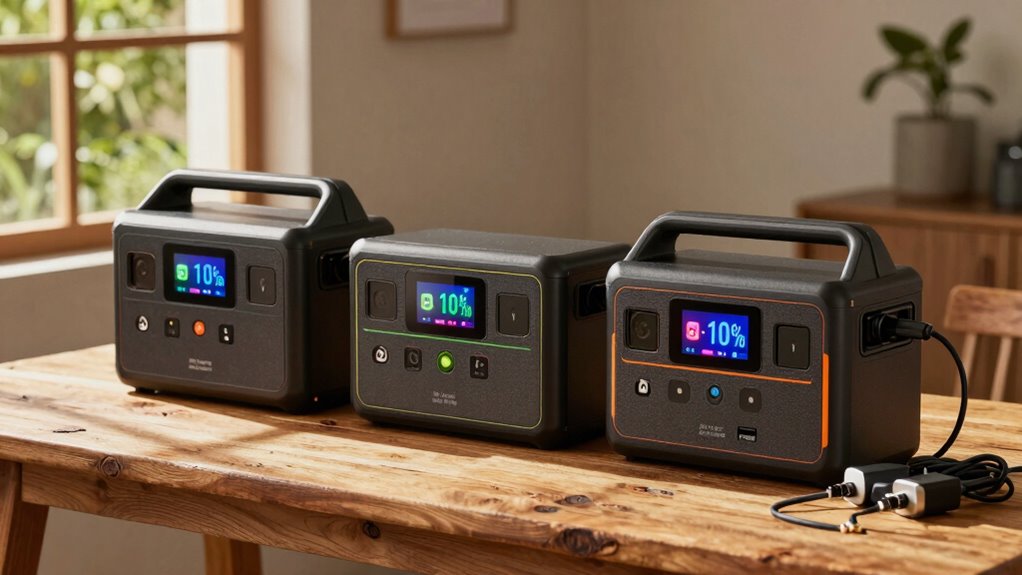

Understanding watts and watt-hours helps you choose the right portable power station. Watts show the maximum power output at any moment, indicating how quickly devices can run, while watt-hours measure total energy capacity, showing how long devices can operate. A larger watt-hour rating means longer runtime, even if the watt output is lower. To maximize your power station’s effectiveness, knowing both is key—continue exploring to get the full picture.
Key Takeaways
- Watts measure the instant power output or consumption rate, indicating how much power a device needs at any moment.
- Watt-hours represent the total energy capacity, showing how long a power station can run devices over time.
- High watt-hours mean longer usage durations, while high watts indicate the station’s ability to handle powerful devices immediately.
- Balancing watt-hours and watts ensures selecting a power station that provides both sufficient capacity and adequate power delivery.
- Understanding both metrics helps prevent under- or overestimating a power station’s performance for your specific needs.
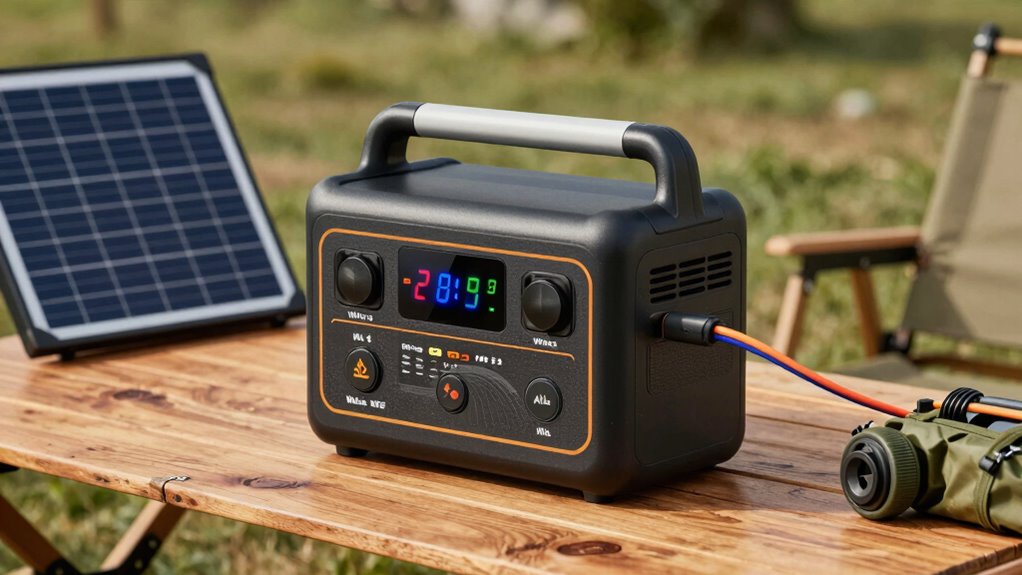
Have you ever been caught without power during an outdoor trip or a blackout? If so, you know how frustrating it can be to run out of juice just when you need it most. That’s where portable power stations come in, offering a reliable way to keep your devices charged. But understanding what makes one station better than another can be confusing. The key lies in grasping the difference between watts and watt-hours, and how they relate to your needs.
When evaluating a portable power station, you’ll want to pay close attention to its battery capacity, usually measured in watt-hours (Wh). This number tells you how much energy the station can store and provides an idea of how long it can power your devices. For example, a station with a higher watt-hour rating can run your smartphone longer or power larger devices for more extended periods. But watt-hours only tell part of the story. You also need to contemplate the charging speed, which determines how quickly the station can replenish its energy. A station with a fast charging capability will be ready to use again sooner, especially if you’re on a tight schedule or multiple trips.
Understanding the difference between watts and watt-hours helps you choose the right power station for your needs. Watts measure the rate of power flow — in other words, how much power your device consumes at any given moment. Watt-hours, on the other hand, measure the total amount of energy stored in the battery over time. Think of it like a fuel tank: watts are how fast you’re using the fuel, and watt-hours are how much fuel you have in the tank. If you only look at watts, you might think a station is powerful because it can deliver high output momentarily, but that doesn’t necessarily mean it’ll last long. Conversely, a station with a high watt-hour capacity can run devices for longer, even if its maximum output wattage is lower.
Watts measure instant power flow, watt-hours indicate total energy stored—balance both to find the right portable power station.
Another important aspect is the charging speed, which impacts how quickly the station can be refilled after use. If you’re often on the move, a station with faster charging capabilities lets you get back to full power quicker. This is especially useful during outdoor adventures or emergency situations, where time may be limited. Combining a high battery capacity in watt-hours with a rapid charging speed ensures you stay powered up with minimal downtime.
Furthermore, understanding the power output capabilities in relation to your specific devices ensures you select a station that can handle your power needs safely and efficiently. In essence, understanding watts versus watt-hours, along with battery capacity and charging speed, empowers you to pick a portable power station that truly fits your lifestyle. It’s about balancing how much energy you need with how fast you can get it, so you’re never left powerless when it matters most.

EBL Portable Power Station 1000W Solar Generator 999Wh for Home Backup
- Powerful 1000W Output: Supports small appliances and electronics
- Large 999Wh Capacity: Provides extended power for home or camping
- Supports Solar Charging: Eco-friendly, 12-26V, 8A max
As an affiliate, we earn on qualifying purchases.
As an affiliate, we earn on qualifying purchases.
Frequently Asked Questions
How Do I Choose the Right Portable Power Station for My Needs?
To choose the right portable power station, consider your battery capacity needs based on what devices you’ll power and for how long. Think about charging options like solar, wall outlets, or car adapters to keep it ready. Match the station’s watt-hour or watt rating to your devices’ power requirements, ensuring it can handle peak loads. This way, you pick a station that’s reliable and fits your specific portable power needs.
Are Portable Power Stations Safe to Use Indoors?
You can breathe easy knowing portable power stations are generally safe for indoor use when handled correctly. Think of them as reliable guardians that provide power without igniting fire hazards. Just guarantee proper ventilation and avoid overloading outlets. With indoor safety in mind, these stations become your silent allies during outages, lighting up your home safely and confidently, while keeping risks at bay.
Can a Portable Power Station Charge My Household Appliances?
Yes, your portable power station can charge household appliances, especially if it’s solar compatible, allowing you to recharge using sunlight. Just make certain the station’s wattage matches your appliances’ power needs. Keep in mind, frequent use and high loads can affect battery lifespan, so monitor usage carefully. A solar-compatible station with a good battery lifespan offers sustainable, reliable power for your appliances during outages or outdoor activities.
How Long Does a Portable Power Station Typically Last on a Full Charge?
On average, a portable power station lasts about 2 to 3 years, depending on usage and battery lifespan. You’ll typically get 300 to 500 charge cycles before performance drops markedly. If you use it daily for essential devices, expect about 8 to 12 hours of power per full charge. Proper care and avoiding deep discharges can extend its life, ensuring reliable backup whenever you need it most.
What Maintenance Is Required for Portable Power Stations?
You should regularly maintain your portable power station to extend its battery lifespan. Keep it clean by wiping down vents and connections with a dry cloth, and avoid dust buildup. Store it in a cool, dry place when not in use, and periodically charge it even if unused. These simple cleaning procedures and proper storage help guarantee your power station remains reliable and lasts longer.
Conclusion
Think of a portable power station as a trusty backpack on your adventure. Watts are the speed at which you can run, giving you quick bursts of energy, while watt-hours are the miles you can travel before needing a rest. Knowing the difference helps you choose the right pack for your journey. With this understanding, you’re now ready to navigate the wilderness of power options confidently, ensuring your devices stay charged wherever your adventures take you.