Munich’s 2005 smart home showcases how early automation transforms daily living by boosting energy efficiency, security, and convenience. You can control lighting, heating, and appliances automatically, adapting to your routines. Remote management via your phone offers added flexibility, while integrated security features keep you safe. This pioneering example highlights how technology can simplify your life and promote sustainability. Keep exploring to discover how these innovations continue to shape modern homes today.
Key Takeaways
- Munich’s 2005 smart home showcased early integration of automation for enhanced convenience.
- It prioritized energy efficiency through automated controls for heating and electricity use.
- The home enabled remote management via smartphones, allowing real-time adjustments.
- Security features included automated locks, surveillance, and alarm systems for safety.
- It demonstrated sustainable living by reducing waste and promoting environmental conservation.
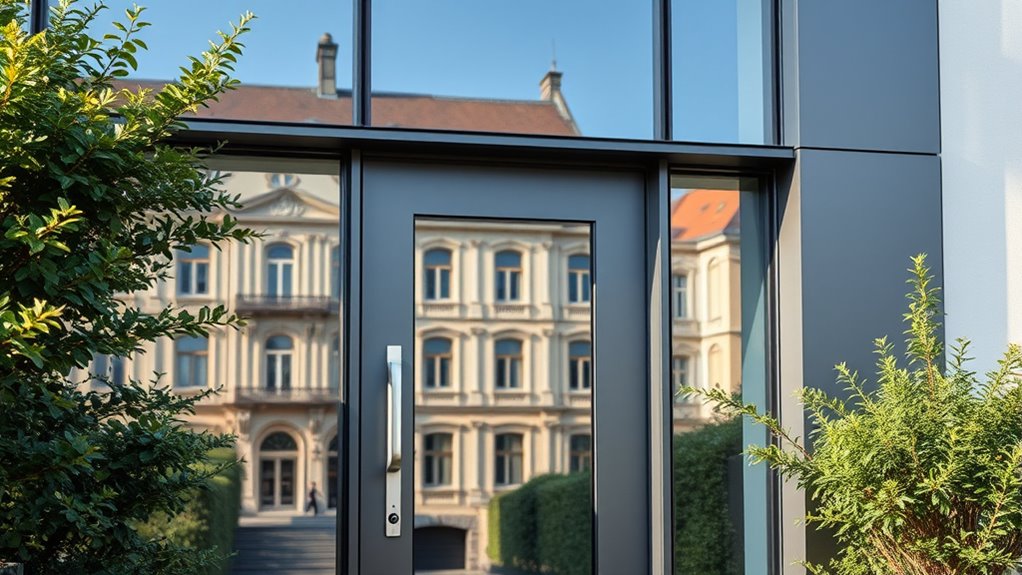
Munich residents are increasingly embracing smart home technology to enhance comfort, security, and energy efficiency. Back in 2005, the city showcased an innovative example of this shift with one of the earliest smart homes, illustrating how technology can transform everyday living. When you step into such a home, you’re met with a seamless integration of devices that work together to make your environment smarter and more responsive. This home was designed to prioritize energy efficiency, ensuring that electricity and heating were used most effectively, reducing waste and lowering utility bills. You could control lighting, heating, and appliances from a central system, adjusting them automatically based on your routines or preferences.
Munich’s 2005 smart home set the stage for energy-efficient, automated living, blending comfort, security, and sustainability seamlessly.
User automation played a key role in this smart home concept. Instead of manually turning lights on or off, the system learned your habits and adapted accordingly, turning lights off when you left a room or lowering the thermostat when you were away. This automation not only saved energy but also made daily routines more convenient. You didn’t need to think about whether you had switched off appliances or adjusted the temperature; the system took care of it, giving you more time to focus on what mattered. Such automation was groundbreaking at the time, laying the foundation for future developments in home technology.
The smart home of 2005 also featured early sensors and timers that enhanced its energy-saving capabilities. Motion detectors would turn off lights when rooms were unoccupied, and smart thermostats adjusted heating based on occupancy patterns. These features helped the home operate efficiently without sacrificing comfort. As a resident, you’d appreciate how these innovations reduced your carbon footprint while cutting costs. The home’s automated systems could be monitored and managed remotely, giving you control even when you weren’t physically present. This level of connectivity was revolutionary, allowing homeowners to optimize their energy use with minimal effort.
Furthermore, the home’s security systems were integrated with automation, providing safety and peace of mind. Automated door locks, surveillance cameras, and alarm systems worked together to protect the property while being easily manageable via a smartphone or computer. This extensive approach made residents feel safer and more in control of their environment. Overall, the 2005 Munich smart home exemplifies how early adoption of user automation and energy-efficient technologies can transform a residence into a more sustainable and user-friendly space. It showed that smart homes aren’t just about luxury—they’re about making daily life easier, safer, and more environmentally conscious. Today, these principles continue to evolve, but that pioneering house remains a demonstration of Munich’s forward-thinking approach to living in the digital age. Recognizing the importance of energy management in such homes highlights how integrating reliable power solutions can further enhance their efficiency and safety.
Frequently Asked Questions
How Energy-Efficient Is Munich’s Smart Home Compared to Traditional Homes?
Munich’s smart home is more energy-efficient than traditional homes because it actively uses renewable energy sources and smart appliances. You’ll notice lower energy consumption since smart devices optimize heating, cooling, and lighting. The integration of renewable energy reduces reliance on fossil fuels, making your home eco-friendly. Overall, this smart home helps you save money and reduce your carbon footprint, demonstrating a significant improvement in energy efficiency.
What Security Measures Are Integrated Into the Munich Smart Home?
You’ll find that Munich’s smart home integrates advanced security protocols, such as encrypted data transmission and multi-factor authentication, to protect your information. Privacy safeguards are also in place, including anonymized data collection and strict access controls, ensuring your personal data remains secure. These measures work together to prevent unauthorized access and enhance your peace of mind, making your home both smarter and safer.
Can the Smart Home System Be Expanded or Upgraded Over Time?
You’ll be pleased to know that the Munich smart home has impressive scalability potential, allowing you to expand or upgrade your system easily over time. With a modular design, upgrade feasibility is high, meaning you can add new devices or features as technology advances. This flexibility guarantees your smart home remains current, adapting seamlessly to your evolving needs without requiring a complete overhaul.
How User-Friendly Is the Technology for Non-Technical Residents?
You’ll find the smart home technology quite user-friendly, even if you’re not technically inclined. The intuitive user interface makes it easy to control and customize settings, while accessibility features guarantee everyone can use the system comfortably. You won’t need to be tech-savvy to navigate the controls or benefit from automation, allowing you to enjoy the convenience without frustration. The design prioritizes simplicity, so you can focus on comfort and ease.
What Are the Initial Costs Versus Long-Term Savings of the Smart Home?
Thinking about smart homes? Well, the initial cost comparison might make you think twice—it’s a hefty investment upfront. But, if you play your cards right, the long-term savings and investment return can turn that grin into a grin wider than a smart thermostat’s screen. Over time, energy efficiency and reduced bills make your smart home a savvy, money-saving move, proving that sometimes, you’ve got to spend a little to save a lot.
Conclusion
You step into Munich’s smart home, where cutting-edge technology seamlessly blends with everyday life. It’s a glimpse of the future, yet it’s rooted in the present. This house isn’t just a marvel of innovation; it’s a reflection of how modern comforts meet sustainability. As the lines between technology and home blur, remember: it’s not just about gadgets, but how they enhance your daily experience, turning ordinary spaces into extraordinary homes.