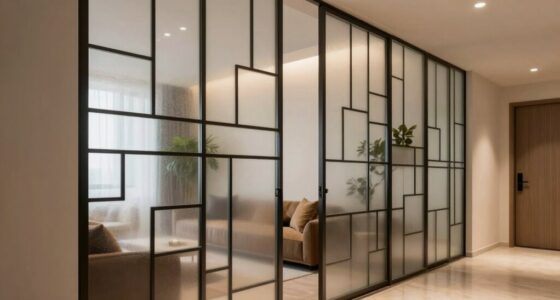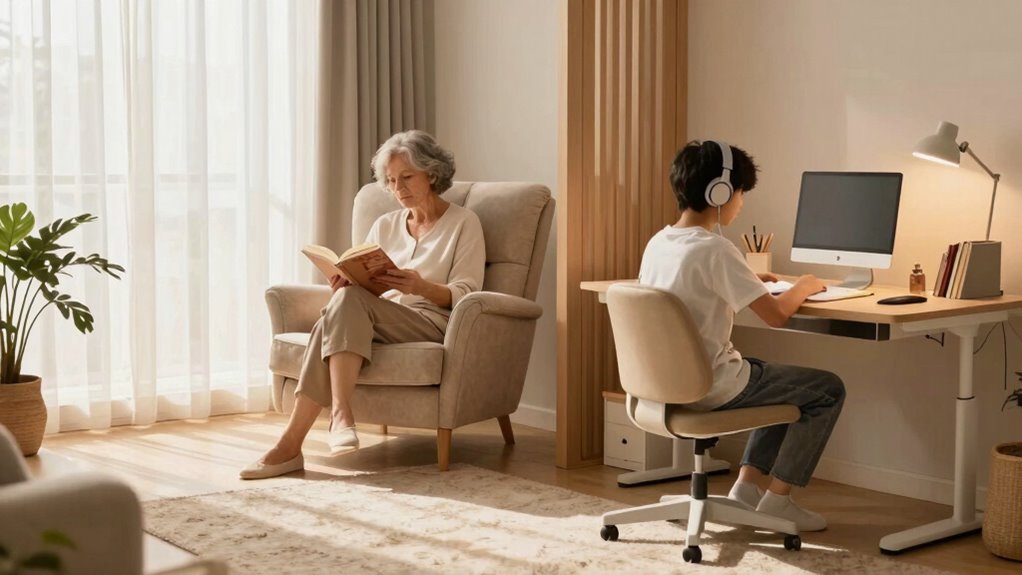

In a multigenerational home, quiet zones are key to keeping everyone’s needs balanced. They help prevent conflicts by providing spaces for relaxation, work, or study, away from household noise. These zones promote privacy and respect among family members, reducing misunderstandings and stress. By establishing designated quiet areas, you foster a peaceful environment that supports overall harmony and well-being. Want to discover how to set up these essential spaces effectively? Keep exploring to find out more.

Get decor and gifts delivered free with Prime
- Fast, free delivery on millions of items
- Prime Video, Amazon Music and more included
- Member-only deals all year
Key Takeaways
- Quiet zones prevent conflicts by reducing noise and promoting peaceful interactions among different generations.
- They provide essential spaces for relaxation, focus, and mental health within busy household environments.
- Establishing privacy areas helps respect personal boundaries and fosters mutual consideration.
- Proper planning and soundproofing enhance overall harmony and well-being for all household members.
- Quiet zones support a sustainable living environment by balancing individual needs and household dynamics.
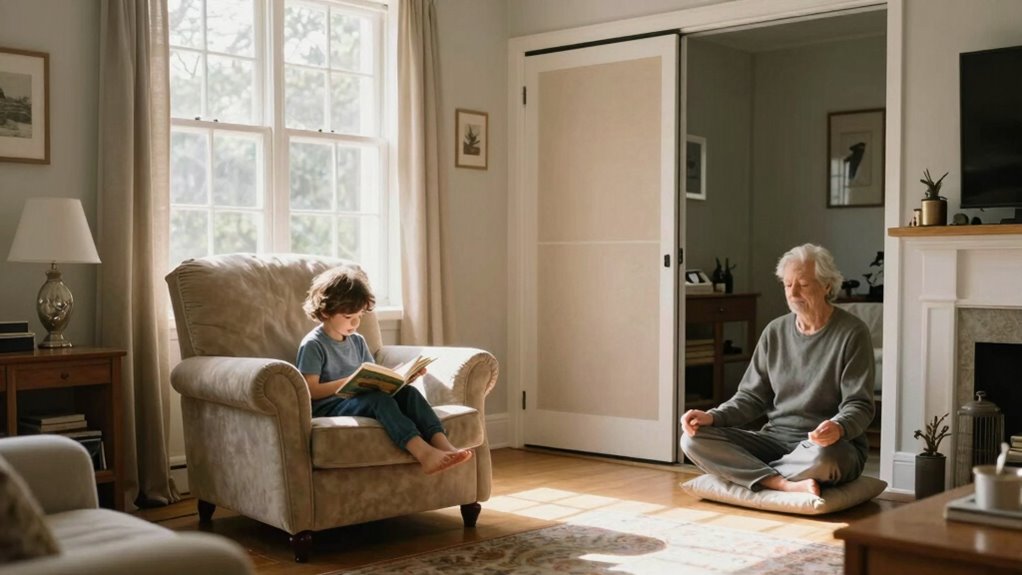
In multigenerational homes, creating quiet zones has become essential for maintaining harmony and allowing everyone to thrive. With different generations living under one roof, noise levels can quickly escalate, making it difficult for anyone to find a moment of calm. That’s why incorporating effective noise reduction and privacy solutions is crucial. When you set up designated quiet areas, you give each person a space to relax, focus, or simply escape the noise of daily life. Whether it’s a home office, a reading nook, or a bedroom retreat, these zones help prevent conflicts and promote a peaceful environment.
Noise reduction isn’t just about muffling sound; it’s about creating a barrier that allows individuals to concentrate or rest without interruption. You can achieve this through various methods—installing soundproof doors, adding rugs and curtains to absorb sound, or using acoustic panels on walls. These solutions minimize the spread of noise from busy communal areas, such as the kitchen or living room, into personal spaces. When you prioritize noise reduction, you’re actively reducing the stress that common household sounds can cause, especially when different schedules clash or when someone needs to work or study in peace. Incorporating soundproofing techniques can significantly improve the overall tranquility of your home. Additionally, modern smart appliances can contribute to creating quieter environments by reducing noise during operation. Recognizing the importance of sound absorption in interior design can help enhance the effectiveness of your quiet zones. Understanding how acoustic materials function is key to achieving optimal sound control. Incorporating soundproofing materials into your home’s design can further enhance these efforts.
Privacy solutions go hand-in-hand with noise reduction. In multigenerational homes, personal boundaries can be challenged, making it vital to establish physical or visual barriers. You might consider adding room dividers, installing pocket doors, or creating separate entrances to different sections of the house. Even simple solutions like soundproof curtains or strategically placed furniture can provide a sense of seclusion. These measures help everyone feel respected and secure in their personal space. When you respect privacy, you reduce the chances of misunderstandings and build a more cooperative living situation.
Creating quiet zones also involves mindful planning. You should consider the layout of your home, aiming to position bedrooms and study areas away from high-traffic zones. Using furniture and decor to absorb sound and block sightlines adds to the sense of privacy. Regularly communicating with household members about the importance of respecting each other’s quiet zones fosters a culture of mutual consideration. When everyone understands the purpose behind these spaces, they’re more likely to use them thoughtfully, making the entire household more harmonious.
Ultimately, integrating noise reduction and privacy solutions isn’t just about comfort; it’s about creating a sustainable, respectful living environment. Quiet zones serve as sanctuaries amid the busy energy of multigenerational living, ensuring that each person can rest, work, or focus without undue disturbance. When you prioritize these spaces, you’re investing in the well-being of everyone under your roof.
As an affiliate, we earn on qualifying purchases.
Frequently Asked Questions
How Can I Financially Justify Creating Quiet Zones?
You can justify creating quiet zones financially by highlighting privacy enhancement and noise reduction strategies that boost overall home value. Quiet spaces can attract potential buyers or renters seeking tranquility, increasing demand. Additionally, they improve daily living comfort, reducing conflicts and stress. Investing in soundproofing may seem costly initially, but it offers long-term benefits like enhanced privacy, better productivity, and a more harmonious household, making it a wise financial decision.
What Are the Best Locations for Quiet Zones in a Home?
You should place quiet zones in areas like bedrooms, home offices, or reading nooks to maximize privacy and minimize noise distractions. Use soundproofing techniques like acoustic panels, weatherstripping, or thick curtains to enhance privacy solutions. These locations offer the best balance of tranquility and accessibility, ensuring everyone in the multigenerational home can enjoy peaceful moments without disturbing others. Prioritize spaces where calm is essential for work, rest, or personal reflection.
How Do Quiet Zones Impact Household Dynamics?
Like a lighthouse guiding ships through stormy seas, quiet zones steer your household toward calmer waters. They foster better family communication by providing a peaceful space for conversations and reflection. When conflicts arise, these zones offer a refuge for thoughtful conflict resolution, reducing tension. As a result, household dynamics improve, strengthening bonds and creating a harmonious environment where everyone feels heard and respected, even amid busy multigenerational living.
Are There Legal Regulations for Designated Quiet Areas?
Yes, there are legal regulations for designated quiet areas. Noise ordinances and zoning restrictions often set limits on noise levels and specify quiet zones, especially in residential neighborhoods. You should check local laws to guarantee your quiet zone complies with these rules. When creating a quiet space in your multigenerational home, following these regulations helps avoid disputes and maintains harmony within the household.
What Materials Best Soundproof a Personal Space?
You should use soundproofing materials like mass-loaded vinyl, acoustic panels, and dense foam to effectively block noise. Adding these materials to your walls, ceiling, and door can considerably reduce sound transmission. Consider installing acoustic treatments such as bass traps and diffusers to improve sound quality and absorption. These options create a quiet, personal space within your home, making it easier to focus or relax without disturbances from other household members.
Conclusion
Creating quiet zones in multigenerational homes isn’t just about peace—it’s about weaving a sanctuary where each voice can sing without drowning out another. Think of these zones as the calm lakes in a bustling forest, offering reflection amid the chaos. When you carve out these peaceful pockets, you’re nurturing harmony that echoes through every room, allowing your home to bloom with understanding and serenity. Because in a shared space, silence often speaks the loudest.
Halloween Picks
halloween
As an affiliate, we earn on qualifying purchases.