
TL;DR
Emerging research indicates that modern interior decor could be causing increased mental strain. Experts warn this trend may impact people’s cognitive health, though more studies are needed to confirm causation.
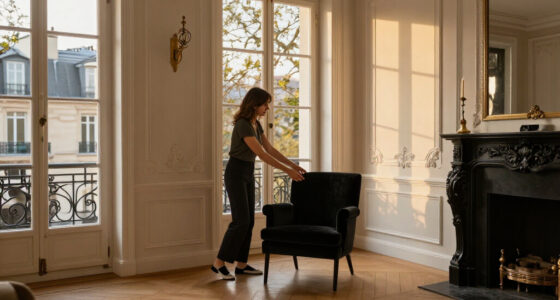
Recent research suggests that modern interior decor styles, characterized by minimalism, stark color schemes, and clutter-free spaces, may be contributing to increased brain strain and mental fatigue. While these design trends are popular for their aesthetic appeal, experts warn they could be impacting cognitive health, making this a noteworthy development for interior designers and the general public alike.
The study, conducted by neuroscientists at the University of California, analyzed brain activity of participants exposed to various interior environments. Results indicated that spaces with high-contrast color schemes, sparse furniture, and minimal visual cues—hallmarks of modern decor—corresponded with increased activity in brain regions associated with stress and cognitive load. Researchers emphasized that while aesthetic preferences vary, the potential mental health implications of these design choices warrant further investigation.
According to Dr. Laura Chen, lead researcher, ‘Our findings suggest that certain modern design elements may inadvertently increase mental effort, especially in individuals with existing cognitive vulnerabilities. However, causation has not yet been definitively established, and further studies are required to understand long-term effects.’
Implications of Modern Decor on Cognitive Well-Being
This development matters because it highlights a possible unintended consequence of popular interior design trends. If modern decor contributes to mental fatigue, it could affect productivity, mental health, and overall well-being, particularly in work or home environments where individuals spend significant time. Awareness of these potential impacts may influence future design choices and encourage more psychologically considerate approaches.
ergonomic desk chair for mental health
As an affiliate, we earn on qualifying purchases.
As an affiliate, we earn on qualifying purchases.
Recent Trends in Interior Design and Cognitive Research
Over the past decade, minimalism and modern decor have gained popularity for their clean aesthetics and perceived ability to reduce clutter. However, limited research has explored how these environments affect mental health. The current study builds on prior work linking visual environment complexity to cognitive load, offering new insights into how design influences brain function. The findings come amid increasing awareness of mental health issues related to environmental factors.
“Our findings suggest that certain modern design elements may inadvertently increase mental effort, especially in individuals with existing cognitive vulnerabilities.”
— Dr. Laura Chen
Unconfirmed Causation and Long-Term Effects
It is not yet clear whether modern decor directly causes increased brain strain, or if other factors such as individual differences or environmental context play a role. The long-term consequences of exposure to these environments are still unknown, and further longitudinal studies are necessary to establish causality and assess sustained impact.
Future Research and Design Recommendations
Researchers plan to conduct larger-scale, longitudinal studies to better understand the relationship between interior design and cognitive health. Meanwhile, interior designers and homeowners are encouraged to consider psychological comfort alongside aesthetics, possibly integrating more visual cues and varied textures to mitigate potential mental fatigue. Public awareness campaigns may also emerge to inform about mental health considerations in interior spaces.
Key Questions
Can modern decor really cause mental fatigue?
Current research indicates a possible link between modern decor styles and increased cognitive load, but causation has not been definitively proven. More studies are needed to confirm this relationship and understand its implications.
What specific design elements might contribute to brain strain?
High-contrast color schemes, minimal visual cues, sparse furniture, and clutter-free environments are characteristic of modern decor that may be associated with increased mental effort according to recent studies.
Should I avoid modern decor to protect my mental health?
Not necessarily. While some aspects of modern design might contribute to cognitive load, personal comfort and individual preferences vary. It is advisable to balance aesthetics with psychological comfort and consult design professionals if concerned.
Are there ways to make modern spaces more mentally comfortable?
Yes. Incorporating varied textures, softer color palettes, and visual cues can help reduce cognitive strain. Future design guidelines may focus on creating environments that are both stylish and psychologically supportive.
Source: hn