
Induction cooking uses magnetic fields to heat your cookware directly, making it faster, more efficient, and safer for your kitchen. Since heat is generated within the cookware itself, the cooktop stays cooler and reduces burn risks. It also ensures precise temperature control, saving energy and preventing overcooking. To get the most out of this technology, using compatible magnetic cookware is essential. If you want to explore how this system maximizes safety and efficiency, keep going.
Key Takeaways
- Induction cooking heats cookware directly via magnetic fields, enabling rapid temperature changes and precise control.
- Compatibility requires cookware with magnetic properties; non-magnetic cookware won’t heat on induction stoves.
- Safety is enhanced as heat is generated in the cookware, keeping the cooktop surface cooler and reducing burn risks.
- Energy efficiency is maximized through direct heat transfer, reducing waste and lowering environmental impact.
- Proper cookware selection ensures optimal performance, safety, and full utilization of induction cooking technology.

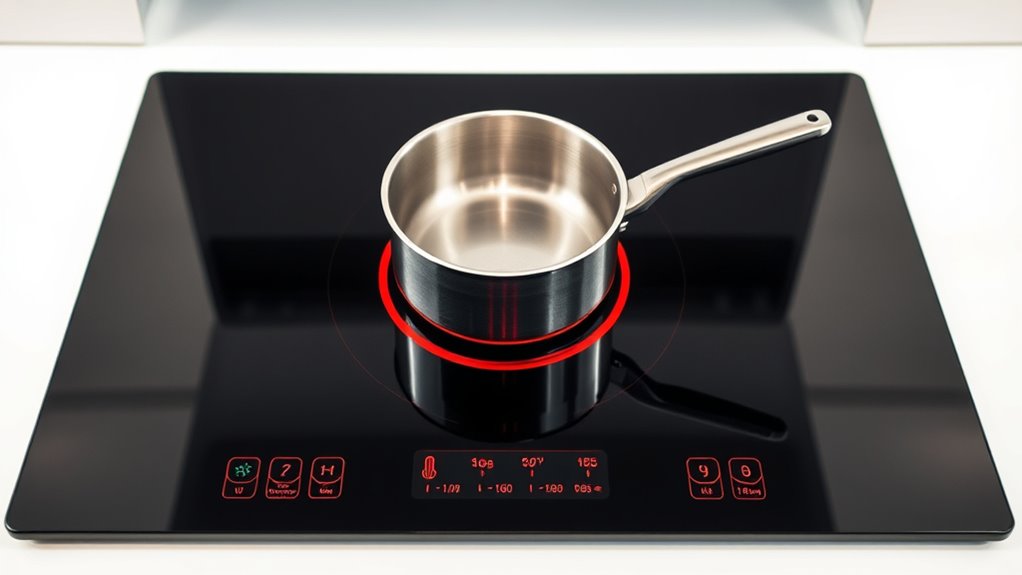
Have you ever wondered how induction cooking heats your cookware so quickly and efficiently? The secret lies in its use of a magnetic field. Unlike traditional stoves that rely on flame or electric heating elements, induction cooktops generate a powerful magnetic field beneath their smooth glass surface. When you place compatible cookware—typically made of ferrous metals like cast iron or certain stainless steels—on the cooktop, this magnetic field induces an electrical current within the metal. That current produces instant heat directly in the cookware, allowing for rapid temperature changes and precise control. This process is highly efficient because almost all the energy goes directly into the cookware, minimizing heat loss.
Induction heats cookware instantly via a magnetic field, offering rapid, precise, and energy-efficient cooking.
However, to make the most of induction technology, you need to guarantee cookware compatibility. Not all pots and pans work with induction cooktops. Cookware must contain magnetic properties to respond to the magnetic field. You can test whether your existing cookware is compatible by checking if a magnet sticks firmly to the bottom. If it does, you’re in good shape; if it doesn’t, you’ll need to invest in cookware designed for induction. This compatibility is essential because without it, the magnetic field won’t generate the necessary electrical currents, and your cookware won’t heat up.
Using induction cooktops also offers safety advantages. Since heat is generated directly in the cookware, the cooktop itself remains relatively cool to the touch, reducing the risk of burns. The magnetic field only activates when compatible cookware is in place, so accidental activation is less likely, especially if you have children around. Additionally, because induction cooktops heat so quickly, you can start cooking almost immediately, which saves energy and time. The precise control of heat also means you can simmer or boil with accuracy, preventing food from burning or overcooking.
The efficiency of induction cooking isn’t just about speed; it’s also about energy conservation. Because the heat is generated directly in the cookware, less energy is wasted in heating the surrounding air or the cooktop surface itself. This makes induction a more environmentally friendly choice compared to traditional electric or gas stoves. When you understand how the magnetic field interacts with compatible cookware, you can access the full potential of induction technology, enjoying safer, faster, and more efficient cooking experiences.
Frequently Asked Questions
Can Induction Cooktops Damage Non-Metal Cookware?
No, induction cooktops won’t damage non-metal cookware because they only work with induction-compatible, ferromagnetic materials. If your non-metal cookware isn’t induction-compatible, it simply won’t heat up on the stove, so there’s no risk of damage. You should always check if your cookware is induction-compatible before using it on an induction cooktop. Using incompatible non-metal cookware won’t harm the cooktop but just won’t produce heat.
Are Induction Cooktops Suitable for Outdoor Use?
Yes, induction cooktops can be suitable for outdoor cooking if they’re weather-resistant and designed for outdoor use. You should look for models with weatherproof features that resist moisture, dust, and temperature changes. Keep in mind, outdoor conditions can be unpredictable, so make certain your cooktop is protected from rain or extreme weather. Properly chosen, induction cooktops offer safe, efficient, and convenient outdoor cooking experiences.
How Do Induction Cooktops Affect Energy Bills Long-Term?
Induction cooktops can reduce your energy bills by up to 50% over traditional stoves, thanks to their energy savings and precise heating. You’ll notice improved cost efficiency because they heat faster and waste less energy. Over time, this means lower utility costs and a more eco-friendly kitchen. By investing in induction technology, you’re making a smart choice for both your wallet and the environment.
What Maintenance Is Required for Induction Cooking Surfaces?
You should regularly clean your induction cooking surface with a soft cloth and mild cleaner to prevent buildup, which guarantees peak performance. Avoid abrasive materials that can scratch the surface, and wipe spills promptly to protect the surface. Use gentle surface protection like trivets or mats for hot pots, and keep the area free of debris. Consistent cleaning routines and surface protection help maintain your cooktop’s appearance and efficiency over time.
Are There Health Risks Associated With Electromagnetic Fields?
An ounce of prevention is worth a pound of cure. When it comes to electromagnetic safety, current research shows that health concerns from induction cooktops are minimal if you follow manufacturer guidelines. The electromagnetic fields generated are typically low and localized, posing little risk to most users. However, if you have implants or medical devices, you should consult your doctor. Overall, proper use guarantees your health remains safe.
Conclusion
Now that you understand how induction cooking works, you can see it’s like having a lightning bolt in your kitchen—fast, efficient, and safe. With its energy-saving powers and precise control, induction cooking transforms your culinary experience into a smooth sailing adventure. So, go ahead and embrace this modern marvel, making your kitchen not just smarter but also a safer, more enjoyable space. Your cooking game is about to get a serious upgrade!