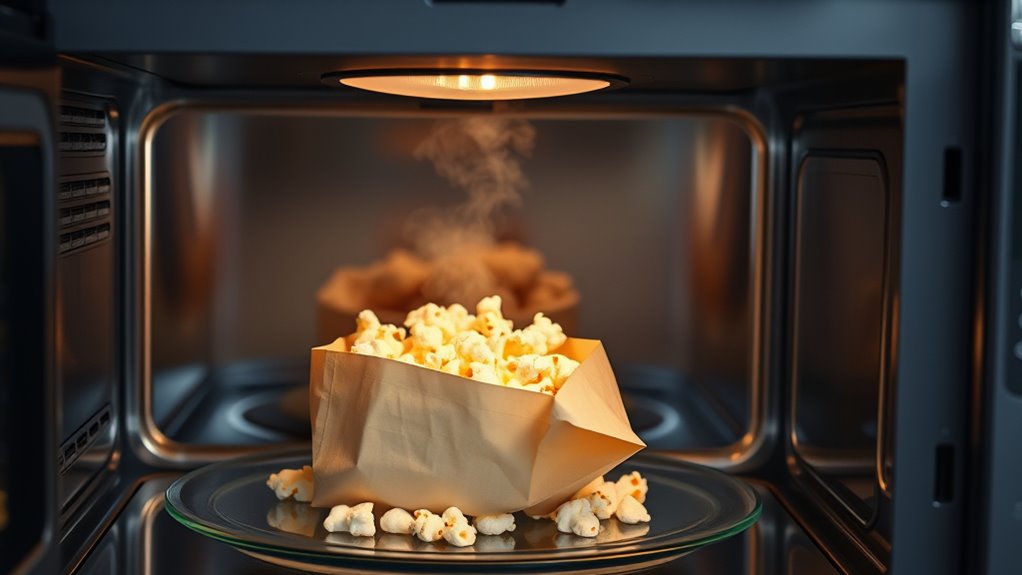
Sensor cooking in microwaves uses built-in moisture and temperature sensors to monitor your food as it cooks. When you microwave popcorn, these sensors detect moisture released by the popping kernels and track temperature changes inside the bag. As popping slows, the microwave senses the reduced moisture and temperature shift, automatically shutting off or adjusting power to prevent burning. Want to discover how you can benefit even more from these smart features? Keep exploring!
Key Takeaways
- Sensor microwaves detect moisture released by popcorn kernels as they pop, helping determine when popping slows down.
- They measure internal temperature changes to assess the popcorn’s doneness during cooking.
- The sensors monitor moisture levels, recognizing when moisture drops, indicating that popping is nearly finished.
- When popping slows or stops, the microwave automatically reduces power or stops to prevent overcooking.
- Proper calibration ensures sensors accurately interpret moisture and temperature signals for perfect popcorn results.
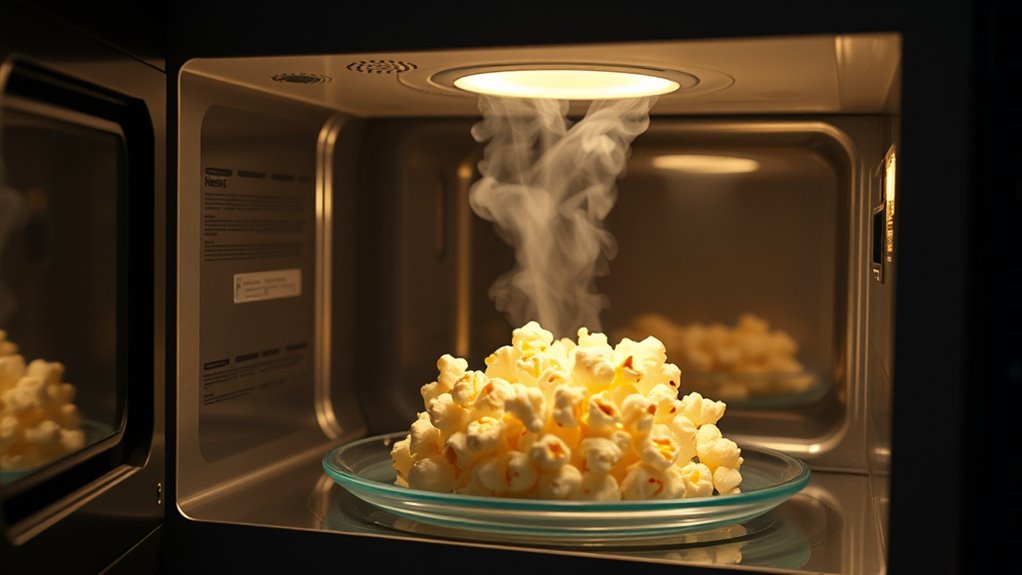
Sensor cooking in microwaves has revolutionized how you prepare meals by automatically adjusting cooking times and power levels based on moisture and temperature sensors. This innovation relies on intelligent sensor technology that continually monitors the food’s internal moisture levels and temperature, allowing the microwave to determine the ideal cooking process. Instead of guessing or manually setting timers, you simply select the sensor cooking option, and the microwave takes over, guaranteeing your food is cooked perfectly every time. When it comes to popcorn, this feature becomes especially handy because it eliminates the guesswork and reduces the risk of burnt or undercooked kernels.
The way sensor cooking works is quite sophisticated. As your microwave begins to heat popcorn, the smart sensor technology detects the moisture released as the kernels pop and measures the changes in temperature inside the bag. When the moisture levels decrease markedly—indicating that popping has slowed—the microwave recognizes that the process is nearing completion. It then automatically reduces power or stops cooking altogether, preventing overcooking or burning. This precise detection is what makes sensor cooking so effective; it adapts in real-time, responding to the food’s internal signals rather than relying solely on preset timers.
However, to guarantee sensor cooking functions correctly, proper microwave calibration is essential. Microwave calibration involves checking that your appliance’s sensors and controls are accurately aligned with the actual power output and sensor responses. Over time, factors like dust, dirt, or minor mechanical issues can affect calibration, leading to less accurate readings. Regular calibration helps maintain the microwave’s ability to correctly interpret moisture and temperature signals, ensuring sensor cooking works dependably. Many microwaves come with built-in calibration tests, or you can follow specific procedures outlined in your user manual to verify that the sensor technology is operating as intended.
With well-maintained calibration, your microwave’s smart sensor technology becomes a powerful tool. It can detect exactly when your popcorn is done, saving you from the common dilemma of overcooked or unpopped kernels. Plus, because it adjusts based on real-time data, it can handle different popcorn brands and quantities, providing consistent results without manual intervention. This makes your microwave not just a cooking device but a clever kitchen assistant that understands the nuances of food preparation. By leveraging sensor cooking and maintaining proper calibration, you get perfectly popped popcorn with less fuss, guaranteeing your snack is just the way you like it—crispy, fluffy, and ready to enjoy.
GoveeLife Upgraded Smart Water Leak Detector 1s with 1804 ft Ultra-Long Range, WiFi Water Sensor with SMS/Email/APP Push and Sound Alarm, 5-Year Battery Life, Suit for Home, Basement, Kitchen, 3 Pack
Breakthrough 1804 ft Connectivity: Engineered with advanced Sub-1G long-range wireless tech, our leak detector maintains robust signals over...
As an affiliate, we earn on qualifying purchases.
Frequently Asked Questions
How Does the Microwave Detect When Popcorn Is Finished?
When you microwave popcorn, it detects when it’s done through sensor calibration. The microwave’s sensor monitors the steam and moisture levels from the popcorn as it pops. As the popping slows down, the sensor recognizes this change, indicating most kernels are popped and the moisture has decreased. This technology helps prevent overcooking or burning, making sure your popcorn is perfectly popped without you needing to guess.
Can Sensor Cooking Be Used for All Types of Microwave Foods?
Did you know that over 60% of microwave users find sensor cooking helpful? You might wonder if it works for all foods. Sensor cooking adjusts based on food texture and moisture levels, so it’s great for many dishes. However, it may not be perfect for everything, especially foods with inconsistent moisture or texture. For best results, check your specific microwave’s recommendations for different food types.
What Technology Powers the Sensor in Microwave Ovens?
You might wonder what powers the sensors in microwave ovens. They use infrared sensors combined with moisture detection technology to monitor your food. Infrared sensors detect temperature changes, while moisture detection measures steam and humidity levels. This combination helps the microwave automatically adjust cooking times, ensuring your food is perfectly cooked without overdoing it. So, it’s a smart system that makes cooking more convenient and precise.
How Accurate Is Sensor Cooking Compared to Manual Timing?
Think of popcorn sensors as your microwave’s sixth sense, finely tuned to detect when your snack is perfectly popped. Compared to manual timing, these sensors boost cooking accuracy by adjusting power and time dynamically, reducing the risk of burnt or undercooked popcorn. While not flawless, they offer a smarter, more reliable way to achieve consistent results, making your popcorn experience closer to perfection with less guesswork.
Are There Any Limitations to Sensor Cooking in Microwaves?
Sensor cooking has limitations, especially with moisture variability. You might notice it struggles with foods that have inconsistent moisture levels, like frozen or processed items, leading to uneven results. Sensor limitations mean it can misjudge doneness if moisture isn’t typical, so you still need to check occasionally. Relying solely on the sensor isn’t foolproof, but it’s a helpful tool when used alongside your judgment.

Moen Flo 1-inch Smart Water Shut Off Valve, Smart Home Water Monitor Leak Detector, Wifi Connected, App Enabled Flow Meter and Shutoff, 900-006
AUTOMATIC SHUTOFF: Learns your home’s water usage patterns to identify abnormalities like running water or small leaks and...
As an affiliate, we earn on qualifying purchases.
Conclusion
Now that you understand how sensor cooking detects when your popcorn is just right, imagine what other surprises your microwave might hold. With this technology, you’re closer than ever to perfect results every time—no guesswork needed. But what if the sensors are subtly evolving, becoming even smarter? The future of microwave cooking might hold secrets yet to be uncovered. Are you ready to see just how smart your microwave can really get?

GoveeLife Premium Smart Water Leak Detector 2 with 1968ft Ultra-Long Range, WiFi Water Sensor with SMS/Email/APP Push and Sound Alarm, 5-Year Battery Life, Suitable for Home, Basement, Kitchen, 6 Pack
SMS, APP & Email Real-time Alerts: Connect the gateway to Wi-Fi, and it will instantly send SMS, APP,...
As an affiliate, we earn on qualifying purchases.

YoLink DIY Automatic Water Leak Detection & Shut-Off Starter Kit, EVO Valve Operator, Wireless Valve Controller, (3) Leak Sensors, Hub
Comprehensive Kit for Complete Leak Protection: This bundle includes 3 YoLink Water Leak Sensors, 1 Smart Valve Controller,...
As an affiliate, we earn on qualifying purchases.