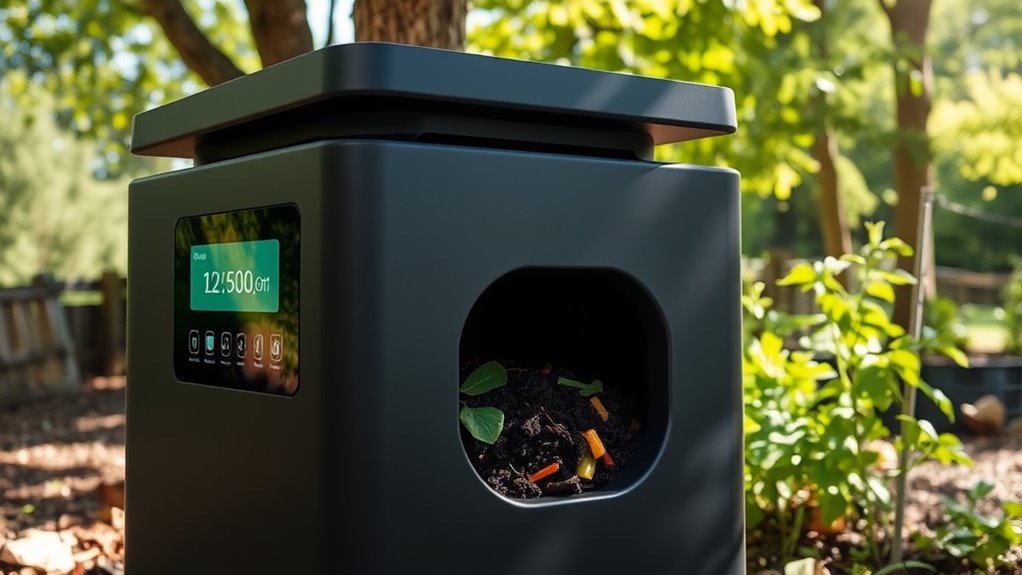

Smart composters speed up food waste breakdown by using sensors and automation to maintain ensure temperature, moisture, and airflow. They regulate conditions for faster, odor-free composting, making indoor use easy and clean. Features like odor filters and self-cleaning systems reduce manual effort and keep your space fresh. Advanced designs ensure eco-friendly materials and energy efficiency. Want to discover how these innovations can transform your waste management? Keep exploring to learn more.
Key Takeaways
- Advanced sensors monitor internal conditions to optimize temperature, moisture, and airflow for faster composting.
- Automated adjustments maintain ideal environments for efficient food waste breakdown.
- Remote app controls enable users to track progress and receive maintenance alerts in real-time.
- Odor control features like activated carbon filters prevent smells during indoor composting.
- Eco-friendly designs and self-cleaning mechanisms reduce maintenance and environmental impact.
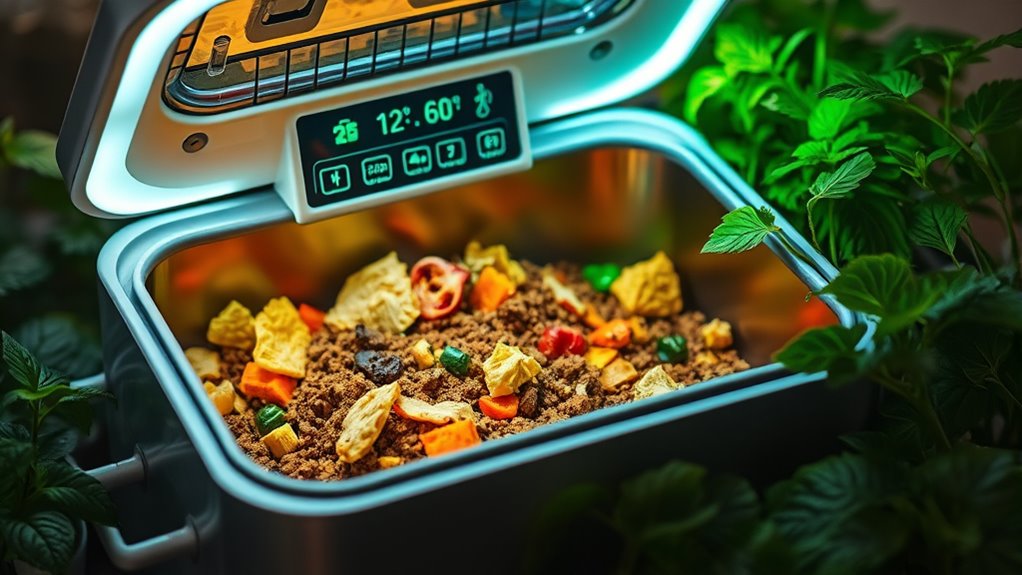
Have you ever wondered how technology can make composting easier and more efficient? Smart composters are transforming the way you turn food waste into nutrient-rich compost, making the process faster and cleaner. These devices leverage advanced sensors and automation to optimize conditions inside the unit, so you don’t have to constantly monitor temperature, moisture, or airflow. Instead, the composter does the work for you, guaranteeing your waste decomposes quickly and safely. If you’re interested in worm composting, some smart models incorporate features that support the needs of worms, such as maintaining ideal temperature and moisture levels. This creates an environment where worms thrive, accelerating composting naturally while reducing the effort on your part. Smart composters also prioritize odor control, which is essential if you’re placing your unit in a kitchen, balcony, or shared space. Many models use activated carbon filters or airtight sealing to trap and neutralize smells before they escape, so your home stays fresh. This technology minimizes the common issue of unpleasant odors, allowing you to compost indoors without worry.
With the integration of sensors and automation, smart composters adjust their internal environment in real-time. For example, if moisture levels get too high or too low, the unit can automatically add water or increase airflow to balance conditions. Temperature sensors ensure the compost heats up enough to break down organic matter efficiently, but not so much that it becomes unpleasant or unsafe. This precise control means quicker decomposition without the need for manual intervention. Plus, many smart models come with user-friendly apps that let you track the composting process, receive maintenance alerts, and even get tips on optimizing your compost. You don’t have to be a gardening expert to use these devices effectively; they simplify the entire process and make sustainable waste management accessible for everyone. Additionally, app integration allows users to monitor and control their composters remotely, making the process even more convenient.
Furthermore, some smart composters are designed with eco-friendly materials and energy-efficient features, reducing their environmental footprint. They often include features like self-cleaning mechanisms or easy-to-empty collection chambers, so cleanup is minimal. The combination of technology and thoughtful design means you spend less time fussing with your compost and more time enjoying the benefits of reduced waste and healthy soil. Overall, smart composters empower you to compost indoors with confidence, knowing that odor control is managed and the decomposition process is optimized. Whether you’re new to composting or a seasoned enthusiast, these devices make sustainable waste management simple, clean, and effective—bringing the benefits of composting right into your home with the help of cutting-edge technology.
Frequently Asked Questions
How Do Smart Composters Differ From Traditional Compost Bins?
Smart composters differ from traditional bins by enhancing composting efficiency through technology that monitors and controls temperature, moisture, and airflow. This encourages microbial activity, speeding up decomposition. Unlike traditional bins that rely on manual management, smart composters automate these processes, reducing odor and pests while producing compost faster. You’ll find they’re more user-friendly, making food waste recycling easier and more effective for your household or community.
What Maintenance Is Required for Smart Composters?
You’ll need to regularly check sensor calibration to guarantee your smart composter operates efficiently. Keep an eye on the software updates, as they improve system performance and add new features. Also, clean the sensors and interior components periodically to prevent buildup. This simple maintenance helps your smart composter run smoothly, accelerating decomposition and reducing odors, making it a hassle-free addition to your eco-friendly home.
Can Smart Composters Handle Large Amounts of Food Waste?
Yes, smart composters can handle large amounts of food waste, but their food waste capacity varies by model. If you generate a lot of waste regularly, scalability concerns may arise, so choose a composter designed for higher capacity. Be sure to check the specifications to verify it meets your needs, and consider models with adjustable settings to manage larger loads efficiently without overloading the system.
Are Smart Composters Suitable for Indoor Use?
Yes, smart composters are suitable for indoor use. They typically feature odor control systems that keep your indoor air quality fresh and free from unpleasant smells. Their compact design fits well in kitchens or utility spaces, allowing you to compost food waste conveniently indoors. You’ll appreciate how these smart devices help manage waste efficiently while maintaining a clean, odor-free environment in your home.
What Is the Typical Lifespan of a Smart Composter Device?
The typical lifespan of a smart composter device is around 3 to 5 years. You’ll find that device durability varies depending on usage, maintenance, and build quality. Regular software updates can extend its lifespan by improving functionality and fixing bugs. To get the most out of your device, follow manufacturer recommendations and keep up with updates, ensuring your smart composter stays efficient and reliable for years to come.
Conclusion
With a smart composter, you become the conductor of a vibrant, eco-friendly symphony. Picture your kitchen transformed into a lush garden bed, rich with nourishing compost, as food scraps whisper their transformation. The gentle hum of technology guides each step, turning waste into life. Embrace this seamless blend of innovation and nature, and watch your surroundings flourish. You’re not just composting—you’re nurturing a sustainable future, one mindful act at a time.