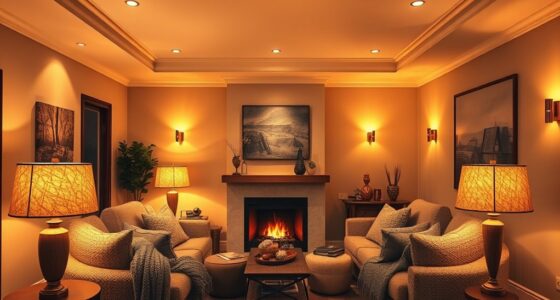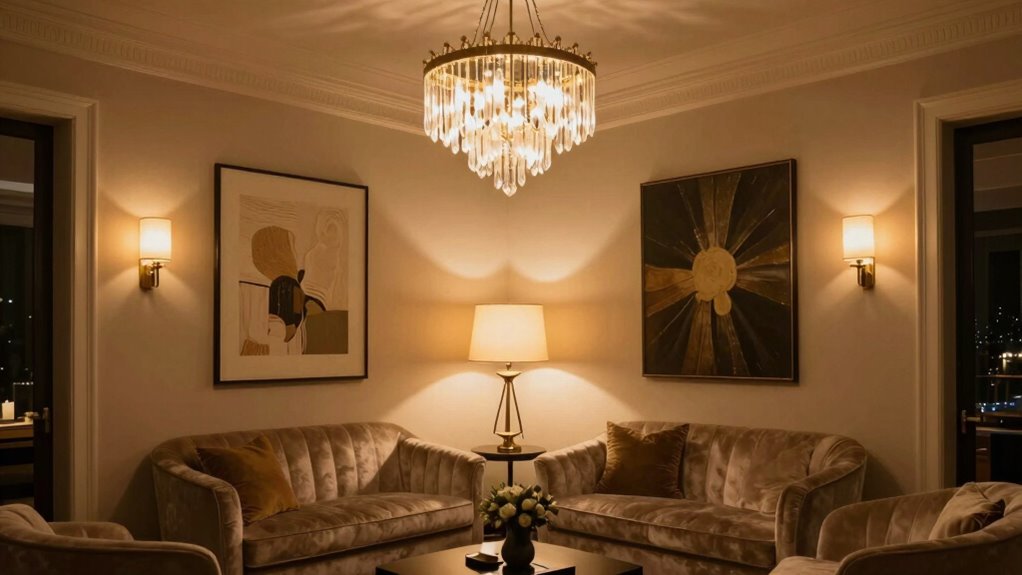

To make any room look expensive, you should master the 3-light rule by combining ambient, task, and accent lighting. Ambient lighting creates a warm, even glow that sets the mood; task lighting focuses on specific activities like reading or cooking; and accent lighting highlights architectural details or decor. When these layers work together, your space feels balanced, polished, and inviting. Keep exploring to discover how to perfect each layer for stunning results.
Key Takeaways
- Incorporating ambient, task, and accent lighting creates a balanced, sophisticated ambiance that enhances room appearance.
- Layered lighting highlights architectural features and decor, adding depth and a curated, luxurious feel.
- Using the 3-light rule ensures even illumination, reducing shadows and making spaces look more polished and expensive.
- Combining different light types allows for customizable environments, elevating the room’s style and functionality.
- Thoughtful layering of lighting transforms ordinary spaces into inviting, high-end interiors with minimal investment.

Have you ever wondered how to create a space that’s both functional and inviting? The secret lies in layered lighting, a design technique that combines different types of light to enhance your room’s ambiance and usability. When you master the 3-light rule, you can transform any space into a sophisticated, cozy environment that feels expensive without breaking the bank. The first layer, ambient glow, sets the tone. It’s the soft, overall illumination that fills the room, making it welcoming and comfortable. Think of it as the backdrop that guarantees your space isn’t dim or harsh. You might use ceiling-mounted fixtures, recessed lights, or wall sconces to achieve this effect. The goal is to create a gentle, even light that eliminates shadows and establishes a mood. Ambient lighting should be evenly distributed and warm enough to make the room feel cozy but bright enough to see comfortably.
Next, task illumination plays an essential role in functionality. This layer is all about providing focused light where you need it most—whether you’re reading, cooking, or working. Proper task lighting helps prevent eye strain and guarantees that activities are performed efficiently. For instance, a dedicated desk lamp or under-cabinet lighting in the kitchen offers precise, bright light directly on your work surface. When you incorporate task illumination, you enhance the room’s practicality and make daily activities more enjoyable. It’s vital to choose fixtures that direct light exactly where you need it, avoiding glare and shadows that can hinder your tasks. Combining ambient glow with task illumination not only boosts your room’s usefulness but also adds visual interest through contrast. Incorporating layered lighting techniques can elevate your space from ordinary to extraordinary by emphasizing different areas and features.
The third layer involves accent lighting, which highlights specific features or decor. This type of lighting draws attention to artwork, architectural details, or decorative objects, creating focal points that add depth and sophistication. Think of picture lights above artwork, or LED strips under shelves that cast a gentle glow on your displays. Accent lighting enriches the room’s layered effect, making it look curated and expensive. When you effectively combine ambient glow, task illumination, and accent lighting, you craft a balanced, inviting space that feels both practical and luxurious. It’s this thoughtful layering that elevates your room’s design, making it look polished and well-designed. By mastering the 3-light rule, you gain control over your environment, creating a space that’s not only stunning but also perfectly suited to your needs.
Frequently Asked Questions
How Do I Choose the Right Light Bulbs for Layered Lighting?
You choose the right light bulbs by considering bulb color and wattage selection. Opt for warm white bulbs to create a cozy atmosphere, or cooler tones for a modern look. Match wattage to your fixture’s recommended levels, ensuring enough brightness without overloading. Layer your lighting with different wattages and colors for a balanced, inviting space. Always check your fixture’s guidelines to avoid safety issues and achieve the perfect layered lighting effect.
Can Layered Lighting Work in Small or Irregularly Shaped Rooms?
Ever wonder how layered lighting fits into small or irregularly shaped rooms? It definitely can, with smart space optimization and strategic lighting placement. You just need to focus on highlighting key areas and using adjustable fixtures to adapt to unique contours. By layering ambient, task, and accent lighting, you create depth and dimension, making even compact or oddly shaped spaces look stylish and inviting.
What Are Common Mistakes to Avoid With Layered Lighting?
You should avoid common mistakes like neglecting dimming controls, which limit your lighting options, and mismatched fixture coordination that disrupts the room’s aesthetic. Make certain your lighting layers work harmoniously by choosing fixtures that complement each other. Also, don’t forget to install dimmers, so you can adjust brightness for different moods. This way, your layered lighting creates a sophisticated, inviting atmosphere without overpowering the space.
How Do I Balance Natural and Artificial Lighting Effectively?
You balance natural and artificial lighting by adjusting dimming controls to match daylight levels and using light color to complement sunlight. During the day, maximize natural light, then add layered artificial lights with dimming controls to soften or brighten the room as needed. Keep light color consistent to avoid harsh contrasts, creating a seamless shift between natural and artificial sources that enhances your space’s overall ambiance.
Is Layered Lighting Suitable for Energy-Efficient Homes?
Layered lighting is suitable for energy-efficient homes because it helps you control energy savings effectively. By combining task, ambient, and accent lighting, you can turn off unnecessary lights and use smart technology to automate lighting schedules. This setup reduces energy waste, enhances comfort, and maintains a stylish look. Smart dimmers and motion sensors make it easy to optimize lighting, ensuring your home stays energy-efficient without sacrificing elegance.
Conclusion
By mastering the 3-light rule, you channel the timeless elegance of a well-lit masterpiece, much like a painter’s careful strokes bring a canvas to life. Layer your lighting thoughtfully, and you’ll transform any room into a curated gallery that whispers luxury. Remember, just as a symphony relies on harmony, your space depends on layered light to create a warm, inviting ambiance—making your home feel truly priceless.