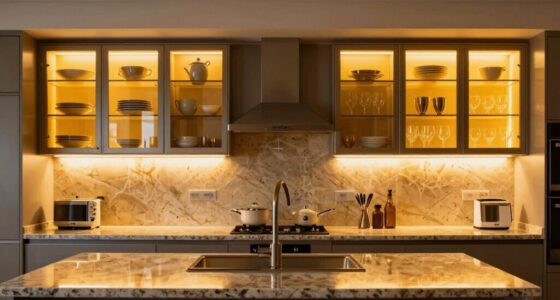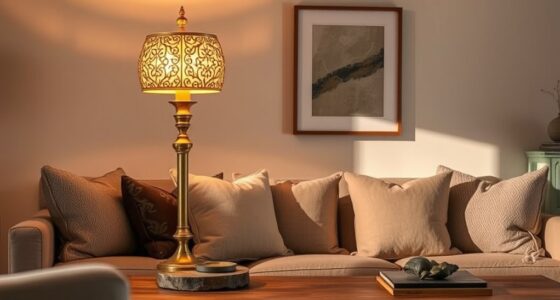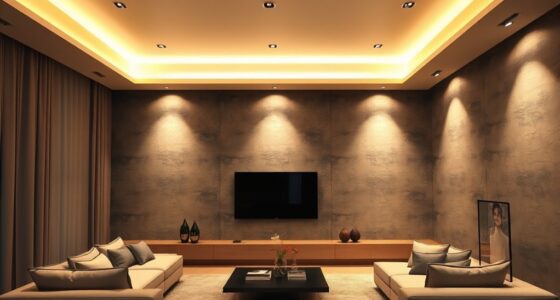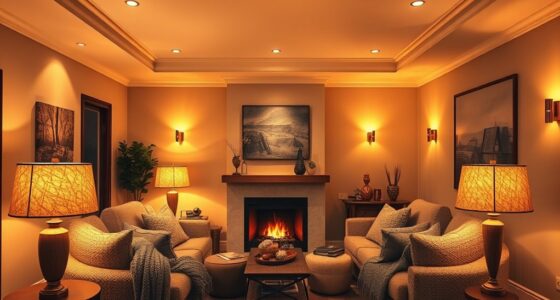
To plan lighting for real mornings and evenings, start by maximizing natural light in the morning areas, positioning workspaces near windows and using sheer curtains to adjust sunlight. As the day progresses, incorporate layered lighting with adjustable fixtures like dimmers, task lights, and cozy lamps for evenings. Use smart controls to automatically adapt lighting levels throughout the day. By thoughtfully combining natural and artificial light, you’ll create a comfortable, functional space that shifts seamlessly from morning to night.

Get decor and gifts delivered free — and shop member deals
- Fast, free delivery on millions of items
- Access to Prime Big Deal Days deals on October 6–7
- Prime Video, Amazon Music and more included
Key Takeaways
- Maximize natural light in mornings by placing work areas near windows and using adjustable curtains or blinds.
- Use cooler, brighter lighting in morning zones to energize spaces and support daytime activities.
- Incorporate warmer, softer lighting in evening zones to promote relaxation and comfort.
- Utilize layered and dimmable fixtures to seamlessly transition lighting levels from morning to evening.
- Implement smart lighting controls that adjust automatically based on time, natural light, or occupancy.
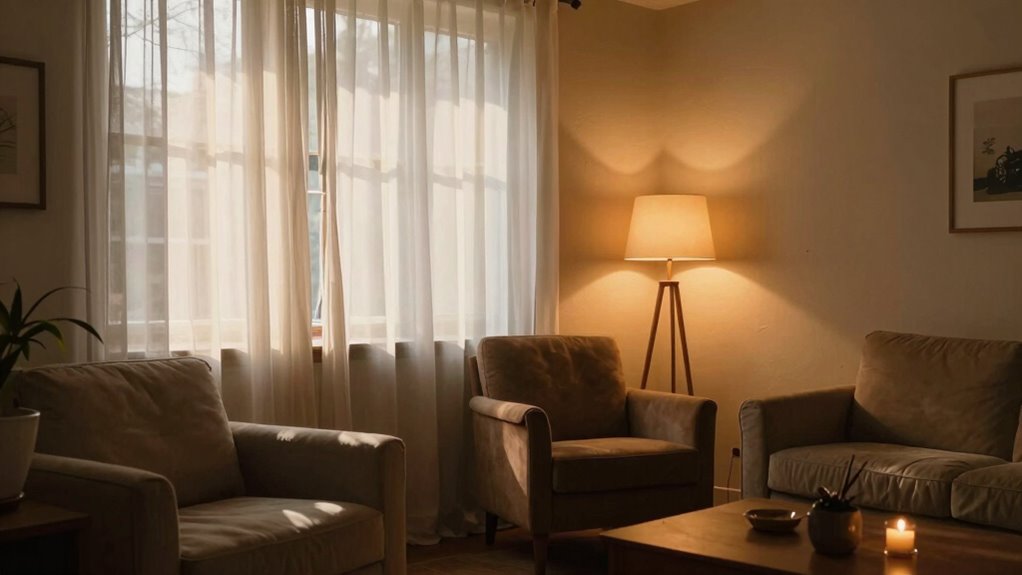
Planning your lighting carefully can transform a space, making it both functional and inviting. When designing your lighting, you want to think about how natural light flows through your room during the day, as it plays a crucial role in setting the mood and reducing energy costs. Positioning your lighting zones thoughtfully ensures that your space adapts seamlessly from bright mornings to cozy evenings. During the day, maximize natural light by placing work areas near windows and using sheer curtains or blinds that can be easily adjusted. This allows sunlight to illuminate your space naturally, creating a vibrant atmosphere that reduces the need for artificial lighting. Keep in mind that natural light shifts throughout the day, so plan your lighting zones to complement these changes. For example, in the mornings, you might want brighter, cooler lighting in areas where you start your day, like the kitchen or home office, to mimic the invigorating quality of morning sun. As the day progresses and evening approaches, you’ll want to gradually shift to warmer, softer lighting that promotes relaxation and comfort. Incorporating natural light patterns into your design helps ensure your lighting remains effective and comfortable throughout the day. Understanding how natural light interacts with your space can also support biodiversity by maintaining healthier indoor environments and reducing reliance on artificial sources.
To achieve this, divide your space into distinct lighting zones based on function and time of day. A dedicated task zone with adjustable, focused lighting works well for reading, cooking, or working. Overhead fixtures, such as pendant lights or recessed lights, can provide overall illumination, but they should be complemented with task lights that you can dim or turn on as needed. For relaxation zones like the living room or bedroom, incorporate layered lighting—use table lamps, floor lamps, or wall sconces—to create a warm, inviting glow in the evening. Dimmers are essential here, allowing you to adapt lighting levels to suit your mood or activity, whether you’re winding down or entertaining guests. Additionally, understanding natural light interactions can help you optimize the placement of fixtures and curtains for the best effect, as well as lighting control systems that can automatically adjust based on the time of day or occupancy. Exploring the use of smart lighting technology can further enhance your ability to customize lighting conditions effortlessly.
As an affiliate, we earn on qualifying purchases.
Frequently Asked Questions
How Does Natural Light Influence Artificial Lighting Choices?
Natural light greatly influences your artificial lighting choices by guiding daylight integration and light layering. During the day, you’ll want to minimize artificial lighting, using it to complement natural light. In the evening, you layer artificial light to mimic natural shifts, creating a cozy, natural ambiance. Understanding how daylight varies helps you select fixtures and adjust brightness, ensuring your space feels balanced, comfortable, and responsive to the natural light cycle.
What Are the Best Lighting Options for Small Spaces?
In small spaces, lighting fixtures become your guiding stars, illuminating without overwhelming. Opt for wall-mounted sconces or sleek pendant lights to save precious surface area, creating a sense of openness. Use layered lighting—ambient, task, and accent—to add depth and warmth. Prioritize space optimization by choosing fixtures that blend seamlessly into your decor, turning tight quarters into a cozy, well-lit haven where every glow feels intentional and inviting.
How Can Lighting Be Adjusted for Different Seasons?
You can adjust lighting for different seasons by aligning it with seasonal daylight changes. In winter, increase warm, cozy lighting to compensate for shorter days, ensuring consistent lighting throughout your space. During summer, maximize natural light and use cooler tones to match extended daylight hours. This approach maintains lighting consistency, helping your home feel comfortable year-round regardless of seasonal daylight variations.
What Role Does Color Temperature Play in Mood Setting?
Color temperature creates calming or energizing cues, playing a pivotal role in mood setting. You’ll find that warm tones foster feelings of comfort and coziness, while cool tones boost alertness and focus. By understanding color psychology, you can enhance moods intentionally. Adjusting color temperature becomes a simple yet powerful way to influence emotional responses—whether you want to energize mornings or relax during evenings.
How to Balance Lighting for Both Functionality and Aesthetics?
You balance lighting by layering different fixtures and styles to suit both functionality and aesthetics. Use task lighting for activities, ambient lighting for mood, and accent lighting to highlight features. Mix fixture styles—like sleek sconces with modern pendants—to create visual interest. Adjust brightness and color temperature as needed, ensuring each layer complements the others, resulting in a harmonious space that’s practical and beautiful for both mornings and evenings.
Conclusion
Now that you know how to plan lighting for real mornings and evenings, you’re ready to create a space that feels alive and inviting like a well-tuned symphony. When you layer your lighting thoughtfully, you’re not just illuminating a room—you’re crafting a mood that shifts seamlessly from dawn’s gentle glow to twilight’s warm embrace. With these tips, your lighting will be the brushstroke that paints the perfect atmosphere, turning everyday moments into something truly special.
Fall Picks
fall essentials
As an affiliate, we earn on qualifying purchases.