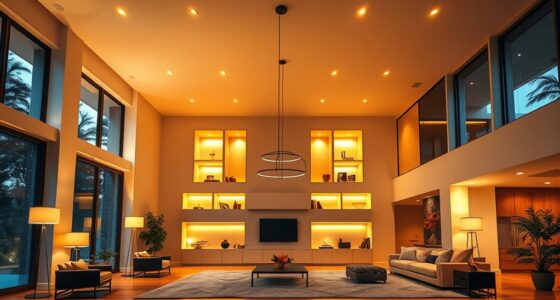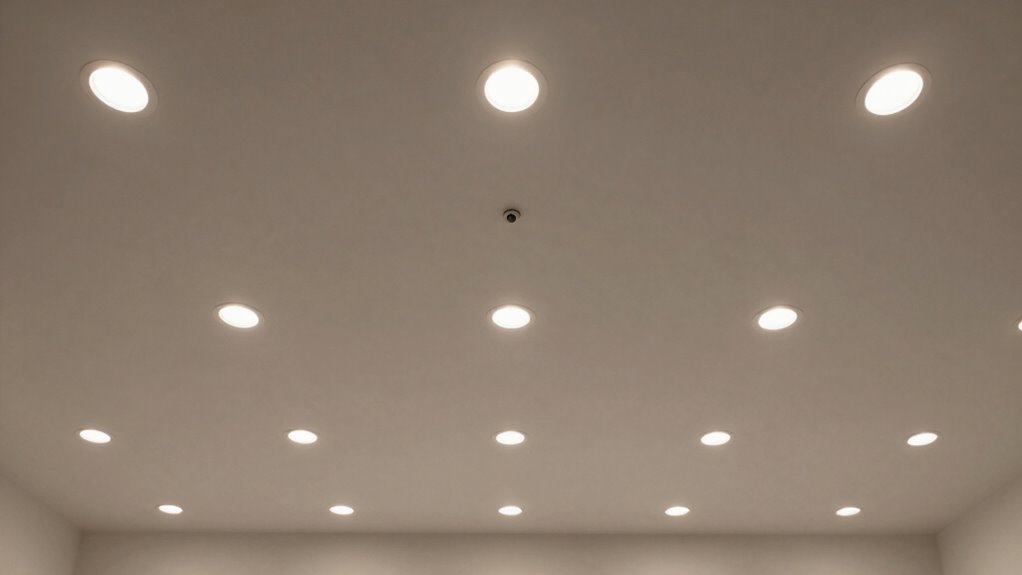

To prevent spotty lighting, space your recessed fixtures about 1.5 to 2 times the ceiling height apart; for example, an 8-foot ceiling works well with fixtures 12 to 16 inches apart. Proper spacing evenly distributes light, minimizes shadows, and creates a balanced, inviting atmosphere. Remember, the key is to measure your room carefully and consider fixture styles. If you want to master ceiling math for perfect lighting, keep going for more tips.
Key Takeaways
- Space recessed lights 1.5 to 2 times the ceiling height for even coverage.
- Measure room dimensions to determine optimal fixture spacing based on ceiling height.
- Use wider fixtures or adjust spacing to prevent dark spots and uneven illumination.
- Consider fixture beam angles and styles to enhance light dispersion and reduce spotty areas.
- Plan lighting layout carefully to achieve a balanced, uniform glow across the entire ceiling.

Are you unsure how to space your recessed lighting for the best illumination and aesthetic appeal? Proper spacing isn’t just about filling the ceiling; it’s about creating a balanced, inviting space that highlights your room’s features without causing glare or dark spots. To achieve this, you need to contemplate how the lighting color and fixture styles work together to produce a cohesive look. Light color impacts the mood and perceived size of a room, so choosing the right lighting temperature—warm, neutral, or cool—sets the tone. Fixture styles also influence the overall aesthetic, whether you prefer sleek, modern designs or more traditional options. But beyond selecting the right fixtures, understanding the ceiling math behind spacing is essential.
Start by measuring your room’s dimensions. For most standard ceilings, spacing recessed lights about 1.5 to 2 times the ceiling height works well. For example, if your ceiling is 8 feet high, plan for fixtures approximately 12 to 16 inches apart. This distance prevents uneven lighting and minimizes shadows, especially when you’re aiming for a uniform glow. Keep in mind that the lighting color can alter how evenly the room appears. Cooler hues can create a crisp, energetic space, while warmer tones evoke coziness. Select fixtures that complement your desired lighting color and style to maintain harmony in your design. Additionally, understanding the lighting layout principles helps optimize coverage and avoid dark spots.
When choosing fixture styles, think about how they will disperse light. Some fixtures have narrow beam angles, ideal for accent lighting, while others spread light more broadly, perfect for general illumination. Mixing these styles strategically can help you avoid “spotty” light and achieve a layered lighting scheme. For example, use wider fixtures in living areas for overall brightness and narrower ones over artwork or task zones. Also, consider the size and trim of each fixture. Smaller, more discreet fixtures tend to blend seamlessly, while larger, statement pieces draw attention and add character.
Spacing isn’t only about distance; it’s about how the light interacts with your space. Properly spaced recessed lights create an even, inviting environment, reducing harsh shadows and dark corners. Remember to account for the lighting color and fixture styles as these choices influence the room’s ambiance and visual flow. When you plan your spacing carefully, you’ll prevent the common mistake of “spotty” light, ensuring your ceilings look uniformly illuminated and your room feels balanced and welcoming. With the right ceiling math and thoughtful selection of fixtures, your recessed lighting can truly elevate your space.
Frequently Asked Questions
How Do I Calculate the Optimal Spacing for Different Ceiling Heights?
You determine ideal spacing by considering your ceiling height and the lighting ratio. For higher ceilings, increase spacing between fixtures to guarantee even light distribution, generally around 1.5 to 2 times the ceiling height. Use the lighting ratio to balance brightness, ensuring the light overlaps without creating dark spots. Measure carefully, and remember that adjusting spacing based on these factors helps achieve a well-lit, uniform space.
What Are the Best Tools for Measuring Recessed Lighting Placement?
Using a laser distance meter is the best tool for measuring recessed lighting placement, as it offers precision and ease. A tape measure also works well for quick, manual measurements, especially for marking distances on ceilings. You should verify your measurements to prevent uneven lighting, and investing in a laser distance tool can save time and improve accuracy, ensuring your lights are evenly spaced and eliminate ‘spotty’ light effects.
How Can I Achieve Even Light Distribution in Irregular Room Shapes?
To achieve even light distribution in irregular room shapes, focus on strategic placement for corner illumination and wall washing. Position your recessed lights in a way that covers corners and walls evenly, avoiding dark spots. Use adjustable fixtures to fine-tune the angle and spread of light. Incorporate multiple light sources to balance brightness, creating a cohesive, well-lit space that highlights architectural features and maintains visual comfort.
What Spacing Guidelines Exist for Energy-Efficient Lighting Setups?
Did you know that energy-efficient lighting can reduce electricity use by up to 80%? For best results, space your lighting fixture about 3 to 4 feet apart, depending on ceiling height and fixture type. Consider your ceiling design—higher ceilings may need wider spacing to prevent dark spots. Proper spacing ensures consistent light distribution, saving energy and enhancing your space’s ambiance. Always tailor spacing to your room’s specific ceiling and fixture details.
How Does Room Color Affect the Perceived Brightness From Recessed Lights?
Your wall color and paint finish considerably impact how bright your recessed lights appear. Lighter wall colors reflect more light, making a room seem brighter, while darker shades absorb it, creating a cozy feel. A matte finish diffuses light, reducing glare, whereas a glossy or semi-gloss finish reflects more, enhancing brightness. So, choose wall colors and paint finishes carefully to achieve your desired lighting ambiance.
Conclusion
By understanding the ceiling’s silent symphony of spacing, you’ll orchestrate a balanced glow that banishes dark corners and prevents uneven shadows. Think of your lighting as a carefully choreographed dance—each fixture plays its part, creating a harmonious ambiance. When you master this math, your ceiling transforms into a canvas of light, leaving behind a space that feels both thoughtfully illuminated and effortlessly elegant. Let your spacing be the brushstroke that completes your perfect lighting masterpiece.