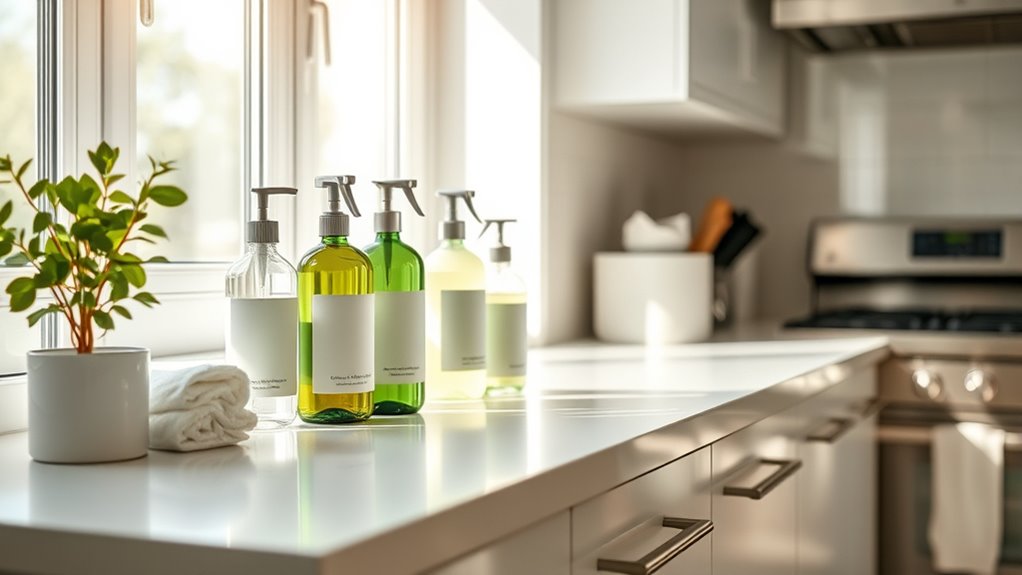

To choose low-toxicity cleaning agents, look for natural ingredients like vinegar, baking soda, lemon juice, and castile soap, which are gentle yet effective. These products reduce exposure to harsh chemicals, promote a healthier home, and are often more eco-friendly. Crafting your own cleaners allows control over ingredients and minimizes plastic waste. Keep exploring the options to discover simple, safe solutions that create a clean, toxin-free environment for everyone.
Key Takeaways
- Opt for natural ingredients like vinegar, baking soda, lemon juice, and castile soap to create effective, low-toxicity cleaning solutions.
- Avoid products with synthetic fragrances, dyes, phosphates, and phthalates to reduce health risks and sensitivities.
- Read labels carefully to select cleaners with minimal chemical additives and eco-friendly, biodegradable ingredients.
- DIY cleaning methods allow control over ingredients, ensuring safer, personalized, and less toxic household products.
- Prioritize sustainable packaging and waste reduction by making reusable, homemade cleaners to promote a healthier home environment.

Cleaning your home with low-toxicity agents is a smart choice for your health and the environment. When you opt for natural ingredients, you’re reducing exposure to harsh chemicals that can cause skin irritation, respiratory issues, or long-term health problems. Natural ingredients are gentle yet effective, making them perfect for everyday cleaning routines. You can easily incorporate these into your routine through DIY cleaning methods, giving you control over what goes into your products. Creating your own cleaners allows you to select safe, biodegradable ingredients that are often cheaper and more sustainable than store-bought options.
DIY cleaning with natural ingredients is straightforward and empowering. Vinegar, baking soda, lemon juice, and castile soap form the foundation of many effective homemade cleaners. For example, mixing vinegar and water creates a versatile all-purpose spray that works well on countertops, glass, and even stainless steel appliances. Baking soda acts as a gentle abrasive and deodorizer, perfect for scrubbing sinks, tubs, and even carpets. Lemon juice adds a fresh scent and has natural antibacterial properties, making it a great addition to homemade disinfectants. When you combine these ingredients, you produce cleaning solutions that are not only effective but also free from synthetic fragrances, dyes, and harmful chemicals. Additionally, understanding the benefits of natural cleaning ingredients aligns with the principles of mindful living, promoting healthier choices in your daily routine.
Choosing DIY cleaning with natural ingredients also means you avoid the environmental impact associated with many commercial cleaning products, which often contain phosphates, phthalates, and other pollutants. By making your own cleaners, you minimize plastic waste and reduce your carbon footprint. Plus, you can customize your recipes to suit specific cleaning needs, ensuring that you’re using only what’s necessary and avoiding unnecessary chemicals. This approach promotes a healthier home environment for you and your loved ones, especially those with allergies, asthma, or sensitivities.
In addition to being eco-friendly and safe, DIY cleaning allows you to be creative and resourceful. Many common household items can be repurposed into effective cleaning solutions, saving you money and reducing clutter. You might discover that a simple mixture of lemon and baking soda can brighten your grout or that a vinegar rinse can remove soap scum without harsh scrubbing. By choosing natural ingredients and DIY methods, you’re taking control of what goes into your home, making it safer and more sustainable. Ultimately, adopting low-toxicity cleaning practices is about making smarter choices that support your health and the planet, and starting with natural ingredients and DIY cleaning is an excellent way to do that.

MRS. MEYER'S CLEAN DAY Baking Soda Cream Cleaner, Lemon Verbena, 16 fl oz
- Effective Grease Removal: Removes soap scum and grease build-up
- Scratches-Free Polish: Gentle on surfaces, no scratches
- Powerful Cleaning Agent: Scrubs away cooked-on grease and grime
As an affiliate, we earn on qualifying purchases.
As an affiliate, we earn on qualifying purchases.
Frequently Asked Questions
Are Natural Cleaning Agents Always Non-Toxic?
Natural cleaning agents aren’t always non-toxic. You need to evaluate their ingredients, as some natural products might cause allergic reactions or irritate your skin. When choosing cleaning options, weigh the environmental impact and cost considerations, since some natural solutions may be more eco-friendly but also more expensive or less effective. Always read labels carefully to ensure safety and effectiveness, especially if you have sensitive skin or pets.
How Do Low-Toxicity Cleaners Compare in Effectiveness?
Low-toxicity cleaners often match traditional products in effectiveness because they use eco-friendly formulations designed for cleaning power. They meet customer safety standards by avoiding harsh chemicals, making them safer for your family and the environment. While some may require longer contact times or multiple applications, many low-toxicity options efficiently handle everyday messes. Ultimately, you can choose eco-friendly formulations that prioritize safety without sacrificing cleaning performance.
Can Children or Pets Be Exposed to Low-Toxicity Products Safely?
Yes, children and pets can be exposed safely to low-toxicity products when you use child-proof packaging and store them properly out of reach. Always read labels for specific safety instructions, keep products in their original containers, and avoid mixing cleaners. Regularly check product storage safety, and educate family members on safe handling. This way, you reduce the risk of accidental exposure and ensure a healthier, safer home environment.
Do Low-Toxicity Cleaners Have a Longer Shelf Life?
Think of low-toxicity cleaners as delicate flowers—they can last longer if you care for them properly. Generally, they do have a longer shelf life, especially when stored under ideal conditions like cool, dry, and dark places. Proper storage conditions help prevent degradation, ensuring your cleaning products remain effective and safe to use. Keep an eye on expiration dates, and you’ll enjoy their benefits longer.
Are There Certifications to Identify Truly Low-Toxicity Products?
Yes, there are certifications that help you identify truly low-toxicity products. Look for certification standards like EcoLogo, Green Seal, or USDA Organic, which verify products meet strict toxicity and environmental criteria. Toxicity markings on labels also indicate safety levels. By checking for these certifications and markings, you can confidently choose cleaning agents that are safer for your home and family, ensuring healthier living spaces.
Conclusion
So, next time you reach for that all-purpose cleaner, remember: your home’s health isn’t worth a quick fix. Why risk turning your sanctuary into a toxic wasteland when safer options exist? After all, who needs a spotless home if it costs you your lungs? Switch to low-toxicity cleaners, breathe easier, and keep the “clean” in cleaning without turning your space into a chemical lab. Your lungs will thank you—probably.