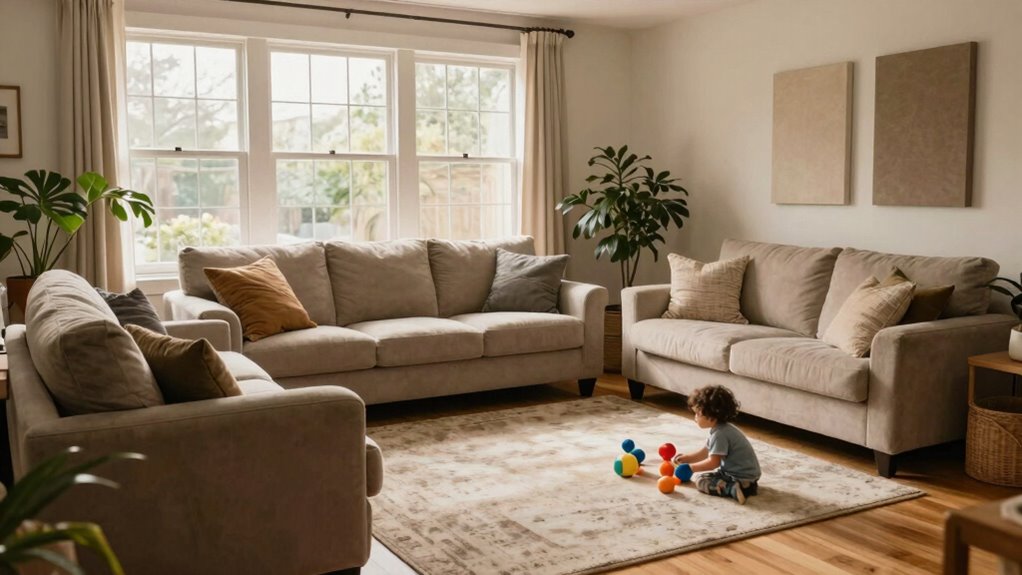

To reduce noise in a busy family home, seal gaps around doors and windows with weatherstripping or caulk, and add soft furnishings like rugs and curtains to absorb sound. Use acoustic panels and foam tiles on walls to dampen noise and consider soundproof window inserts. Using white noise machines or noise-canceling headphones helps mask disruptive sounds. Setting quiet hours and designing designated zones can also minimize disturbances. Continuing further will reveal even more effective strategies.

Get decor and gifts delivered free with Prime
- Fast, free delivery on millions of items
- Prime Video, Amazon Music and more included
- Member-only deals all year
Key Takeaways
- Seal gaps around doors and windows with weatherstripping or acoustic caulk to prevent sound leaks.
- Use soft furnishings like rugs, curtains, and upholstered furniture to absorb and dampen noise.
- Incorporate acoustic panels or foam tiles in shared areas to reduce sound reflection and transmission.
- Implement white noise machines or fans to mask disruptive sounds and create a calming background.
- Establish designated quiet zones and communicate noise boundaries to promote respectful noise levels.

In busy family homes, constant noise can quickly become overwhelming, making it hard to focus, relax, or get a good night’s sleep. To combat this, you need effective soundproofing techniques and noise canceling strategies that fit your space and lifestyle. Soundproofing isn’t just about adding thick walls; it’s about creating barriers that absorb or block sound. Start by sealing gaps around doors and windows with weatherstripping or acoustic caulk. This simple step prevents noise from sneaking in or escaping, making a noticeable difference. You can also install heavy curtains or soundproof window inserts, which absorb sound waves and reduce exterior noise.
Seal gaps around doors and windows with weatherstripping or acoustic caulk for immediate noise reduction.
Adding soft furnishings can markedly dampen sound within rooms. Think about plush rugs, thick drapes, or upholstered furniture—these absorb echoes and lower overall noise levels. For more substantial soundproofing, consider installing acoustic panels or foam tiles on walls. These materials are designed to absorb sound energy, especially in shared spaces like living rooms or play areas. Another effective technique involves creating decoupled walls or floating floors, although these are more involved and may require professional help. The goal is to minimize vibrations and prevent noise transfer between rooms.
Noise canceling strategies go beyond physical barriers. Using white noise machines or fans can mask disruptive sounds, creating a more peaceful environment. These devices generate consistent background noise that makes sudden or loud sounds less noticeable. Earplugs or noise-canceling headphones are excellent options when you need quiet for work, study, or rest. Additionally, establishing quiet hours or designated quiet zones in your home can help family members understand when to keep noise levels down. Communicating these boundaries ensures everyone respects each other’s need for peace.
Another tip involves scheduling noisy activities during times when they’re less disruptive. For instance, doing laundry or vacuuming during the day rather than late at night reduces the impact on sleep. If your children are noisy during playtime, setting boundaries or designated play areas can contain the chaos. Keeping clutter to a minimum also helps, as clutter can echo sounds and make the space feel noisier. Incorporating soundproofing techniques into your home design can significantly improve overall noise levels and create a calmer environment. Understanding soundproofing materials and their effectiveness can help you choose the right solutions for your home.
As an affiliate, we earn on qualifying purchases.
Frequently Asked Questions
Can Soundproofing Walls Eliminate All Noise in a Family Home?
Soundproofing walls can’t eliminate all noise in your family home, but they considerably reduce it. Acoustic panels absorb sound, making rooms quieter, while adding window seals prevents outdoor noise from entering. Combining these with other strategies, like sealing gaps and using rugs, creates a more peaceful environment. Remember, complete silence is hard to achieve, but these methods can make your home much calmer and more comfortable.
What Are the Most Cost-Effective Noise Reduction Solutions?
You can cut noise costs by installing acoustic panels in busy areas, which absorb sound and reduce echoes effectively. Additionally, sealing windows with quality window seals prevents outdoor noise from entering, making a big difference without a hefty price tag. Combining these solutions offers a budget-friendly way to minimize noise, creating a calmer environment for your family without needing extensive or expensive renovations.
How Does Furniture Placement Affect Noise Levels?
You might think furniture is just for style, but clever furniture arrangement actually plays a big role in controlling noise. Positioning acoustic furniture strategically can absorb sound and block noise transmission between rooms. For example, placing plush sofas or bookshelves near noisy areas creates a barrier, reducing overall noise levels. So, your furniture isn’t just aesthetic—it’s your secret weapon for a quieter, calmer home.
Are There Specific Materials Best for Absorbing Sound?
You should choose materials like acoustic panels and soundproof curtains to absorb sound effectively. Acoustic panels are designed to dampen noise and echo, making rooms quieter. Soundproof curtains add an extra layer of insulation, blocking out noise from outside or other rooms. Combining these materials creates a more peaceful environment, especially in busy family homes. Opt for soft, dense fabrics and strategically place acoustic panels on walls for the best results.
How Can I Reduce Noise From Outdoor Sources?
To reduce noise from outdoor sources, you can install outdoor barriers like fences or walls made from dense materials to block sound. Incorporate garden landscaping with thick shrubs, trees, and layered planting to absorb and deflect noise. Strategically placing these elements creates a natural sound barrier, helping to shield your home from outdoor noise. Combining outdoor barriers with thoughtful landscaping markedly minimizes external sounds and creates a quieter, more peaceful indoor environment.
Conclusion
By implementing these simple tips, you can create a calmer, more peaceful environment in your busy family home. Remember, noise levels can be as high as 85 decibels during lively family activities—equivalent to a motorcycle. Reducing noise isn’t just about comfort; it’s about fostering better concentration and sleep for everyone. With a few strategic adjustments, you’ll enjoy a quieter, more harmonious household where everyone can thrive.
Halloween Picks
halloween
As an affiliate, we earn on qualifying purchases.