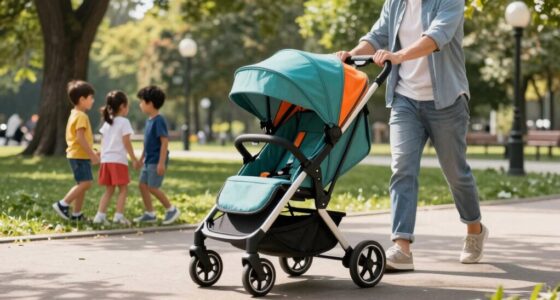
To guarantee your back stays comfortable, you need a baby carrier designed with ergonomic principles that evenly distribute weight across your hips and shoulders. Proper support reduces strain, prevents discomfort, and promotes healthy posture for long-term wear. Durable materials and easy maintenance also help keep the carrier supportive over time. Prioritizing these features makes carrying safer and more comfortable for you and your child. Keep exploring to find out how to choose a carrier that truly supports your back.

Get decor and gifts delivered free — and shop member deals
- Fast, free delivery on millions of items
- Access to Prime Big Deal Days deals on October 6–7
- Prime Video, Amazon Music and more included
Key Takeaways
- Ergonomic design distributes weight evenly, reducing strain and improving back comfort for caregivers during extended use.
- Properly supported carriers promote healthy posture, preventing long-term back pain and discomfort.
- Durable, well-constructed carriers maintain back support and safety over time with proper maintenance.
- Incorporating ergonomic principles enhances the overall carrying experience and long-term back comfort.
- Selecting carriers with ergonomic features ensures ongoing back support during prolonged carrying periods.

Carrying your baby comfortably on your back is crucial for both your ease and your little one’s safety, especially during longer outings. When you choose a baby carrier, understanding the importance of ergonomic design can make all the difference. An ergonomic carrier is crafted to distribute your baby’s weight evenly across your hips and shoulders, reducing strain and preventing discomfort. It guarantees that your child’s hips are supported in a natural, healthy position, which is essential for their development. A well-designed ergonomic carrier promotes better posture, allowing you to carry your baby for extended periods without feeling sore or fatigued. This thoughtful design not only benefits your back but also enhances your overall carrying experience. Additionally, selecting a carrier with material durability ensures that it remains reliable and comfortable over time, even with frequent use. Properly maintained carriers can help prevent wear and tear, ensuring safety and comfort for both you and your baby. Recognizing the role of ergonomic design in baby carriers can help caregivers make informed choices for long-term comfort. Incorporating ergonomic principles into design considerations can further improve your carrying experience and support your baby’s healthy development. Moreover, understanding long-term comfort can guide you in selecting the most suitable carrier for your needs.
ergonomic baby carrier with lumbar support
As an affiliate, we earn on qualifying purchases.
As an affiliate, we earn on qualifying purchases.
Frequently Asked Questions
How Do I Adjust My Carrier for Optimal Back Support?
To adjust your carrier for the best back support, start by ensuring it has an ergonomic design that fits your body. Tighten straps so weight is evenly distributed across your shoulders and hips, preventing strain. Adjust the carrier’s panel height to keep your baby close without causing you to lean forward. Regularly check the fit after adjustments, making sure your back feels supported and comfortable, reducing fatigue and improving overall comfort.
Are There Specific Carriers Designed for Better Back Comfort?
Imagine you’re choosing a carrier for daily walks; some are specifically designed for back comfort. Many carriers with ergonomic design and quality carrier materials prioritize back support, reducing strain. For example, structured frames with padded straps distribute weight evenly, easing your back. Look for carriers labeled “ergonomic,” featuring adjustable straps, lumbar support, and durable materials. These are tailored to keep your back comfortable, especially during extended wear.
How Long Can I Wear a Carrier Without Back Pain?
You can typically wear a carrier comfortably for about 1-2 hours if it has an ergonomic design that supports your back properly. To avoid back pain, choose a carrier made from durable materials that distribute weight evenly and provide good support. Take regular breaks, listen to your body, and adjust the carrier as needed. Proper fit and ergonomic features are key to preventing discomfort during extended wear.
Can Back Pain From Carriers Affect Postpartum Recovery?
Back pain from carriers can affect your postpartum healing by causing discomfort and delaying recovery. If your carrier lacks ergonomic design, it may strain your back, making healing more difficult. To support postpartum recovery, choose carriers with proper back support and adjust them correctly. Listening to your body and avoiding prolonged use can prevent setbacks. Prioritizing ergonomic design helps protect your back and promotes smoother postpartum healing.
What Signs Indicate My Carrier Isn’t Providing Proper Back Support?
Like a shaky bridge, your carrier’s back support should feel firm and stable. Signs it isn’t providing proper support include persistent back pain, uneven weight distribution, or discomfort during wear. Prioritize child safety and choose carriers made from durable, supportive materials. If you notice these issues, it’s time to reassess your carrier—your back and your child’s safety depend on proper support and reliable materials.
Conclusion
You deserve a carrier that supports your back, that relieves your strain, and that keeps you comfortable through every moment. You deserve a carrier that aligns with your needs, that adapts to your body, and that respects your well-being. When you choose wisely, you embrace better back comfort, better posture, and better moments with your baby. Because your comfort isn’t just a preference—it’s a priority, a necessity, and a foundation for happy, healthy parenting.
Fall Picks
fall essentials
As an affiliate, we earn on qualifying purchases.