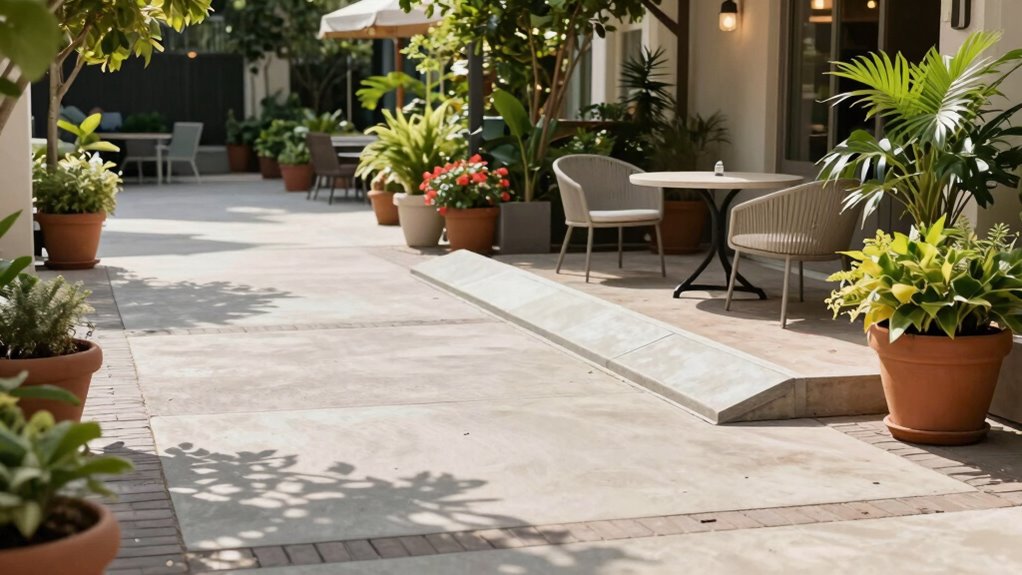
To make your patio more accessible, focus on creating wide, unobstructed pathways of at least 36 inches, with smooth, level surfaces like concrete or pavers. Incorporate proper lighting, such as solar-powered and motion-sensor lights, to boost safety and visibility. Arrange lightweight furniture for flexibility and guarantee seats are positioned near shaded or social areas. Add ramps with handrails instead of stairs and keep thresholds low for easy entry. Keep pathways clear and use contrasting colors to aid those with visual impairments—discover more tips ahead.

Get decor and gifts delivered free — and shop member deals
- Fast, free delivery on millions of items
- Access to Prime Big Deal Days deals on October 6–7
- Prime Video, Amazon Music and more included
Key Takeaways
- Incorporate gentle, compliant ramps with handrails at entry points for easy wheelchair access.
- Use smooth, level ground surfaces like concrete or pavers to prevent tripping hazards.
- Arrange furniture with wide, unobstructed pathways (at least 36 inches) for easy navigation.
- Install well-placed, glare-free outdoor lighting to enhance visibility and safety.
- Select lightweight or stackable furniture to allow flexible, inclusive seating arrangements.

Creating an accessible patio guarantees everyone can enjoy your outdoor space comfortably and safely. To start, focus on outdoor lighting, which plays a vital role in ensuring visibility and safety during evening hours. Bright, well-placed lights along pathways, steps, and seating areas help prevent accidents and make the space inviting after dark. Consider installing solar-powered lights along the perimeter to provide consistent illumination without adding complexity to your setup. Use motion-sensor lights near entry points to enhance security and convenience. Avoid overly harsh or dim lighting; instead, aim for a balanced glow that highlights key areas without creating glare or shadows that could be confusing or dangerous.
Proper outdoor lighting ensures safety, visibility, and a welcoming atmosphere for everyone at your patio.
Next, pay attention to furniture arrangement. You want your outdoor furniture to promote easy movement and accessibility. Opt for pieces with simple, clean lines and avoid heavy or bulky furniture that’s difficult to move if needed. Arrange seating in a way that leaves clear, wide pathways—at least 36 inches—so that anyone can navigate without obstruction. Position tables and chairs to accommodate wheelchair users or those with mobility aids, ensuring they can sit comfortably and get in and out easily. Consider using lightweight furniture or stacking pieces for flexible arrangements, allowing you to adapt the space for different needs or events. Additionally, incorporating ground surface considerations, such as smooth, level materials, is essential for safety and ease of access.
In addition, think about the ground surface, which complements your lighting and furniture choices. Smooth, level surfaces like concrete, pavers, or tightly fitted decking create a safer environment free of tripping hazards. Avoid loose gravel, uneven stones, or thick rugs that could cause someone to stumble. If you do include rugs, make sure they have non-slip backing to prevent slipping.
Accessibility also involves the design of entry points. Incorporate ramps with gentle slopes instead of steps, making sure they meet recommended standards for width and incline. Handrails on ramps and stairs provide additional support, especially for those who need extra stability. Keep door thresholds low, ideally under half an inch, to facilitate easy passage for wheelchairs and walkers.
Finally, include features that encourage social interaction and relaxation without compromising accessibility. Place seating in shaded areas or near features like a water fountain or garden to make the space welcoming. Keep pathways clear of clutter, and use contrasting colors for edges and features to help those with visual impairments distinguish boundaries easily. By thoughtfully integrating outdoor lighting, furniture arrangement, and thoughtful design, you create a patio that’s truly accessible, inviting everyone to enjoy your outdoor haven.
solar-powered outdoor pathway lights
As an affiliate, we earn on qualifying purchases.
As an affiliate, we earn on qualifying purchases.
Frequently Asked Questions
What Materials Are Best for Accessible Patio Surfaces?
You should choose smooth, non-slip materials like decorative pavers or concrete for accessible patio surfaces. These options provide stability and reduce tripping hazards. Eco-friendly choices, such as permeable pavers or recycled materials, help protect the environment while ensuring durability. Opt for materials with consistent texture and gentle slopes to make your patio more accessible, safe, and inviting for everyone.
How Can I Improve Lighting for Better Accessibility?
Think of your patio as a lighthouse guiding guests safely. You can improve lighting by installing solar illumination, which provides eco-friendly, steady brightness, and adds charm. Incorporate motion sensors to automatically light pathways when movement is detected, ensuring safety without fumbling for switches. This combination creates a welcoming, well-lit space that enhances accessibility, allowing everyone to enjoy your patio comfortably, even after sunset.
Are There Specific Design Tips for Wheelchair Users?
To make your patio more wheelchair-friendly, focus on universal design principles like wide, smooth pathways that accommodate mobility devices. Keep aesthetic considerations in mind by choosing cohesive materials and colors that blend seamlessly. Incorporate lower-height tables or accessible seating options to enhance comfort. Avoid steps or thresholds, and guarantee there’s ample turning space. These tips create a functional, inviting space that’s both accessible and visually appealing for everyone.
How Do I Prevent Slipping on Outdoor Surfaces?
To prevent slipping on outdoor surfaces, you should apply anti-slip coatings to your patio, which add grip and reduce accidents. Additionally, choose textured surfaces or add textured mats in high-traffic or wet areas to increase traction. Regularly clean your patio to remove debris and algae that can cause slips. These simple steps help guarantee your outdoor space remains safe, even when wet or slick.
What Maintenance Is Required for Accessible Patios?
You maintain your accessible patio by regularly inspecting and cleaning the surface, ensuring landscape integration remains seamless and safe, and checking outdoor furniture for stability and wear. You sweep or hose down the area to prevent debris buildup, trim nearby plants to keep pathways clear, and tighten or repair furniture as needed. You also reseal or reseal textured surfaces to prevent slipping, keeping your space safe, inviting, and accessible year-round.
Conclusion
By designing your patio with accessibility in mind, you’re opening the door to countless enjoyable moments, no matter your mobility. Imagine stepping onto a smooth, level surface where every step feels natural, like a gentle breeze guiding you forward. With thoughtful planning, your outdoor space becomes more than just a patio—it transforms into a welcoming haven for all. So, take these simple steps and turn your backyard into a garden of inclusivity, where everyone can truly feel at home.
Fall Picks
fall essentials
As an affiliate, we earn on qualifying purchases.