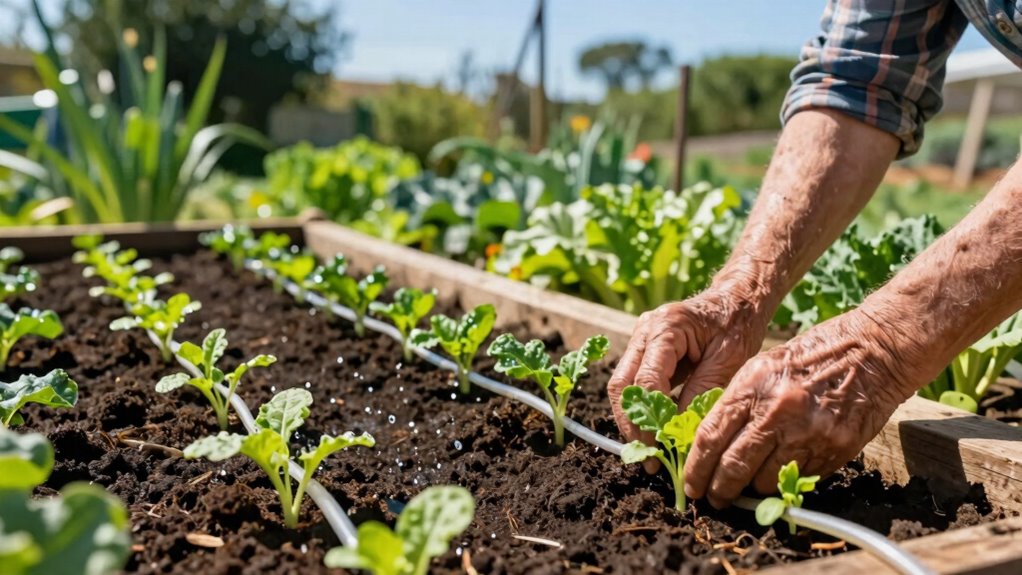

Drip irrigation makes raised beds more realistic for aging gardeners by delivering water directly to plant roots, reducing the need for manual watering. It simplifies garden maintenance, minimizes physical effort, and automates watering with timers. You’ll enjoy healthy plants and better yields without the strain of lifting heavy hoses or working in tough conditions. Keep exploring to discover how this system can transform your garden experience further.
Key Takeaways
- Drip irrigation reduces physical effort by automating watering, ideal for aging gardeners managing raised beds.
- It delivers water directly to plant roots, ensuring consistent moisture with minimal manual intervention.
- The system can be easily customized to suit different plant needs within raised beds.
- Automated timers allow for scheduled watering, freeing gardeners from daily manual tasks.
- Improved water efficiency supports sustainable gardening, making raised beds more practical and eco-friendly.

If you’re growing vegetables or flowers in raised beds, installing a drip irrigation system can make watering more efficient and effective. As you age, mobility issues or physical limitations might make traditional watering methods challenging. Drip irrigation offers a simple solution by delivering water directly to the roots, helping you maintain consistent soil moisture without the need for frequent manual watering. This system reduces the physical effort involved and minimizes water wastage, making gardening more manageable and enjoyable.
One of the key benefits of drip irrigation is its ability to maintain ideal soil moisture levels. When soil moisture is consistent, plants can absorb nutrients more effectively, leading to healthier growth and better yields. Unlike overhead watering, which can cause runoff or uneven distribution, drip systems provide a slow, steady supply of water directly where your plants need it most. This precise delivery supports the health of your plants, especially in raised beds where soil tends to warm up quickly and dry out unevenly. Additionally, efficient water use** is a fundamental aspect of sustainable gardening practices, which many older gardeners aim to incorporate. Proper watering techniques** can also prevent issues like fungal diseases caused by excess moisture on plant foliage. A well-designed drip system can also help prevent overwatering, which can lead to root rot and other issues.
Water conservation is another critical advantage. Many older gardeners are keen to reduce water use, both to save money and to promote eco-friendly practices. Drip irrigation considerably cuts down on unnecessary water loss caused by evaporation or runoff. Because the water is delivered directly to the roots, you use less overall water compared to traditional sprinklers or hoses. This targeted approach not only conserves water but also ensures your garden stays properly hydrated, even during dry spells. Incorporating sustainable practices like this not only benefits your garden but also promotes a healthier environment for future generations.
Using a drip system also simplifies the scheduling and monitoring of watering. You can set timers to automate the process, ensuring your plants receive consistent moisture without you having to remember or exert extra effort. This automation is especially helpful if you’re away or tend to forget to water regularly. Additionally, drip irrigation systems are adaptable; you can easily add or adjust emitters to cater to different plant needs or to accommodate expanded garden beds. This flexibility makes it easier to customize watering for various plants and garden layouts. Incorporating sustainable practices like this not only benefits your garden but also promotes a healthier environment for future generations.
Finally, the reduced physical effort, combined with the precision of watering and the benefits of water conservation, makes drip irrigation a practical choice for aging gardeners. It helps you keep your garden thriving without the strain of lifting heavy hoses or manually watering each plant. As a result, you can enjoy your garden longer, focusing on the pleasure of gardening rather than the labor involved. With drip irrigation, your raised beds become more accessible and sustainable, ensuring your garden remains a source of joy for years to come.
drip irrigation system for raised beds
As an affiliate, we earn on qualifying purchases.
As an affiliate, we earn on qualifying purchases.
Frequently Asked Questions
How Much Does a Drip Irrigation System Typically Cost?
A drip irrigation system usually costs between $100 and $300, depending on the size and complexity of your garden. You’ll find it offers better watering efficiency compared to traditional methods, saving water and time. When considering a cost comparison, keep in mind that investing in a drip system can be more economical over time due to reduced water bills and less waste, making it a smart choice for sustainable gardening.
Can Drip Irrigation Be Used for Container Gardening?
Did you know that over 80% of container gardeners find consistent watering challenging? Yes, drip irrigation works great for container gardening! You can use portable drip systems to deliver precise amounts of water directly to plant roots, reducing waste. These systems are adjustable and easy to move, making container watering more efficient and less time-consuming. So, whether you have a few pots or a large balcony garden, drip irrigation is a smart choice.
How Often Should I Check My Drip Irrigation System?
You should check your drip irrigation system at least once a week to guarantee proper water flow and prevent leaks. Regular inspections help conserve water and avoid over- or under-watering. When troubleshooting, look for clogged emitters or damaged hoses that could disrupt water delivery. By staying proactive, you maximize water conservation and keep your plants healthy, ensuring your system operates efficiently and effectively.
Is Professional Installation Necessary for Drip Irrigation?
You don’t necessarily need professional expertise for drip irrigation installation, but it’s highly recommended. Professional installers follow precise installation guidelines, ensuring your system works efficiently and lasts longer. They can identify potential issues early, saving you time and money. If you’re comfortable with DIY projects and follow detailed instructions, you might handle it yourself. However, for the best results and peace of mind, consulting a professional is often the smarter choice.
What Maintenance Is Required for Long-Term Use?
To guarantee long-term use, you need to regularly check soil moisture levels to prevent over or under-watering. Keep an eye on the system’s durability by inspecting for leaks, clogs, or damage, especially after harsh weather. Clean filters monthly and flush the lines periodically to maintain peak performance. Proper maintenance helps your drip irrigation system operate efficiently, saving water and ensuring healthy plants over time.
Conclusion
With drip irrigation, your raised beds become a garden oasis that’s easy to care for, even as you age. It’s like giving your plants a gentle, steady hand guiding their every sip of water. No more lugging hoses or bending over painfully—just sit back and watch your garden thrive. Embrace this simple upgrade, and your gardening days will bloom brighter and stress-free, turning your garden into a lush, effortless paradise.