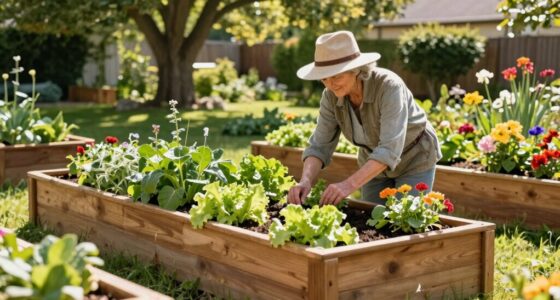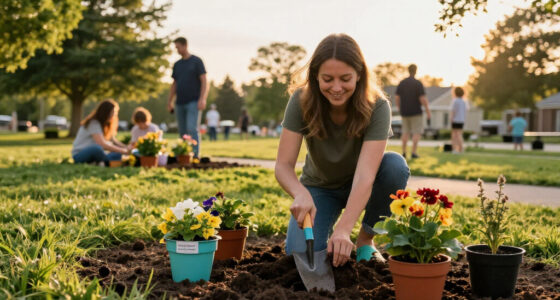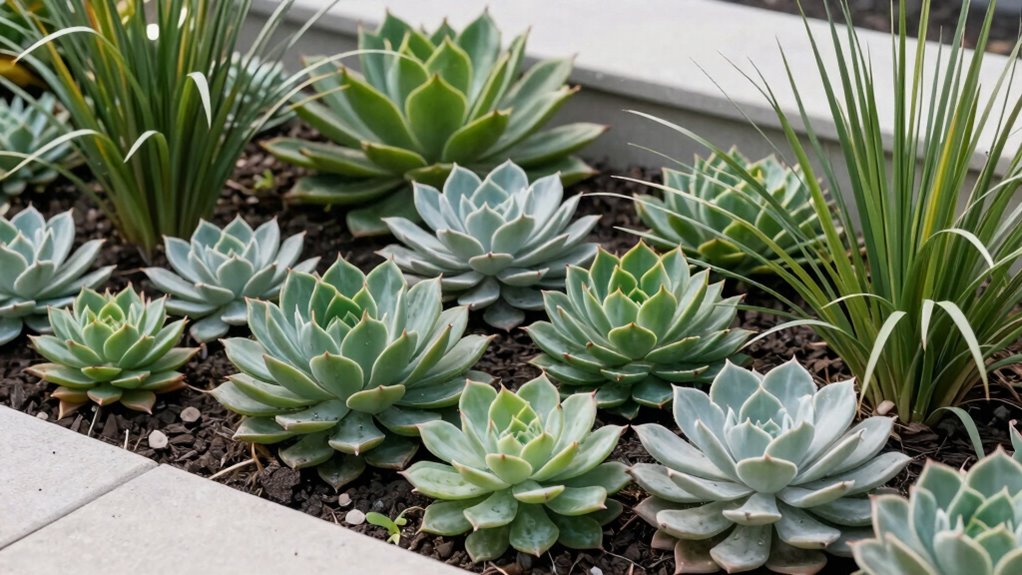

To make your garden easier to maintain, choose drought-tolerant plants like succulents, lavender, yarrow, and native grasses that thrive with less water and care. Combine them with companion plants such as marigolds near vegetables or basil with tomatoes to naturally support growth and repel pests. These choices create a resilient, low-input landscape that requires less watering, fertilizer, and chemical use. Keep going to discover how these strategies can transform your garden into a sustainable oasis.

Get decor and gifts delivered free — and shop member deals
- Fast, free delivery on millions of items
- Access to Prime Big Deal Days deals on October 6–7
- Prime Video, Amazon Music and more included
Key Takeaways
- Choose drought-tolerant plants to reduce watering and maintenance needs.
- Incorporate native and climate-adapted plants for greater resilience and less care.
- Use companion planting to naturally support plant health and minimize pest control.
- Select low-maintenance perennials that thrive with minimal intervention.
- Design with sustainable principles to create a low-input, eco-friendly garden.
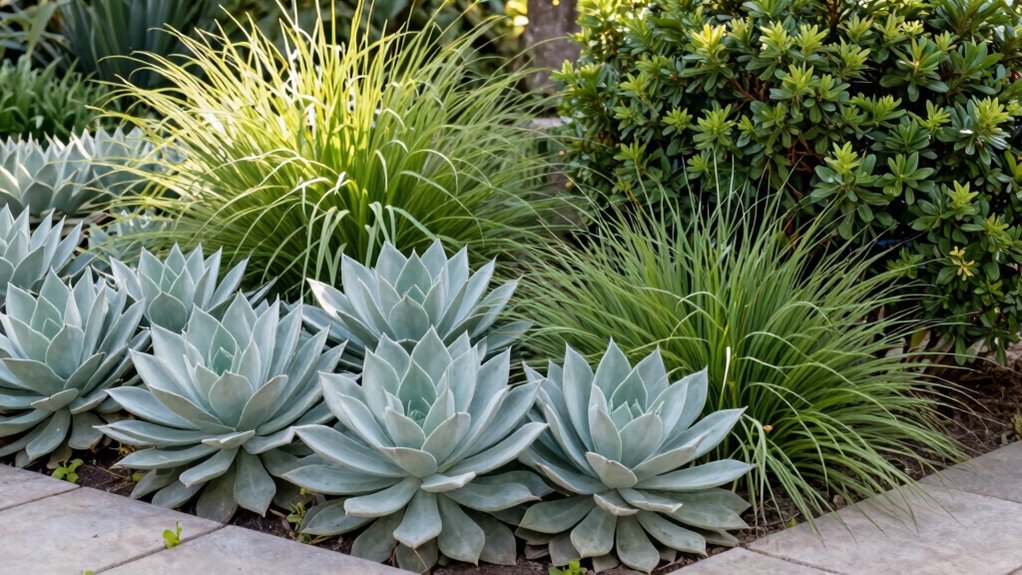
Choosing the right plants can greatly reduce the time and effort required to maintain your garden. When you select plants that naturally thrive with less water and care, you set yourself up for a more manageable gardening experience. One effective approach is to incorporate drought tolerant varieties into your landscape. These plants are specially adapted to withstand dry conditions, so you won’t need to water as frequently, saving you time and resources. Drought tolerant varieties include succulents, lavender, yarrow, and certain native grasses, all of which can add beauty and resilience to your garden without demanding constant attention.
Beyond choosing drought tolerant varieties, practicing companion planting can further simplify your garden maintenance. Companion planting involves pairing plants that support each other’s growth, repel pests, or improve soil health. For example, planting marigolds near vegetables can deter pests naturally, reducing the need for chemical interventions. Similarly, basil and tomatoes grow well together, with basil enhancing tomato flavor and helping to keep pests away. These strategic combinations not only promote healthier plants but also minimize the need for pesticides, watering, and fertilizing, making your garden easier to care for overall.
When you combine drought tolerant varieties with companion planting techniques, you create a harmonious environment that requires less intervention. Drought tolerant plants often have deep root systems that access underground water, and pairing them with other compatible plants can improve soil stability and moisture retention. For instance, planting native grasses with drought tolerant perennials can create a resilient, low-maintenance landscape that withstands dry spells. This approach also encourages biodiversity, which naturally controls pests and weeds, reducing your workload. Additionally, selecting plants that are adapted to your local climate can further enhance your garden’s resilience and sustainability. Incorporating climate-adapted plants can lead to a more self-sufficient garden that requires less supplemental watering and care.
By focusing on plants that are adapted to your local climate and pairing them thoughtfully, you reduce the need for frequent watering, pest control, and fertilization. It’s a smart way to design a garden that looks vibrant and healthy with minimal effort. These choices also promote sustainability, helping conserve water and reduce chemical use. As you plan your garden, keep these principles in mind: select drought tolerant varieties suited to your environment and use companion planting to foster a balanced, low-maintenance ecosystem.
In the end, making mindful plant choices transforms your garden into a space that’s easier to care for, more sustainable, and just as beautiful. You’ll spend less time fussing over plants and more time enjoying the outdoors.
Frequently Asked Questions
Which Plants Are Best for Shaded Garden Areas?
You should go for shade-tolerant species like ferns, hostas, and astilbes, which thrive in low light. Consider drought-resistant varieties such as Japanese spikenard or sweet woodruff for less watering. These plants adapt well to shaded areas, reducing your maintenance efforts. Combining shade-tolerant species with drought-resistant varieties guarantees your garden remains vibrant and manageable, even in challenging shaded spots with limited water.
How Often Should Low-Maintenance Plants Be Watered?
You should water low-maintenance plants according to their specific watering schedule, which often means deep watering once or twice a week. To guarantee their health, check soil moisture retention; if the soil feels dry a few inches down, it’s time to water. Avoid overwatering, as it can lead to root rot. Adjust your watering frequency based on weather conditions, ensuring your plants get consistent moisture without becoming waterlogged.
Are There Specific Plants That Repel Pests Naturally?
You might notice that some plants seem to guard your garden naturally. Certain beneficial companion plants, like marigolds and basil, act as natural pest repellents, deterring unwanted insects without chemicals. These plants not only protect your garden but also attract helpful insects that keep pests in check. Incorporating these into your garden creates a harmonious environment, making pest management easier and your garden more resilient, almost as if nature itself is helping you.
Can These Plants Survive Extreme Weather Conditions?
Yes, many of these pest-repelling plants can survive extreme weather conditions. Drought-tolerant species like lavender and succulents handle dry spells well, while frost-resistant plants such as junipers and certain herbs endure cold temperatures. You’ll find these plants thrive with minimal care, making your garden both pest-free and resilient. Just guarantee you choose species suited to your specific climate zone for the best results.
What Soil Types Are Ideal for Low-Maintenance Plants?
You should focus on well-draining soils like sandy or loamy types for low-maintenance plants. Proper soil preparation involves improving soil structure with organic matter to meet their nutrient requirements without frequent fertilizing. These soils prevent waterlogging and support healthy root growth, making your gardening easier. By choosing the right soil type and preparing it properly, you guarantee your low-maintenance plants thrive with minimal intervention, saving you time and effort.
Conclusion
Choosing hardy, low-maintenance plants is like selecting sturdy, dependable friends for your garden’s journey. They stand tall through storms and bloom with little fuss, turning your outdoor space into a peaceful sanctuary rather than a demanding chore. With these resilient companions, your garden becomes a lush, thriving canvas—an easy-to-manage oasis where beauty and simplicity dance hand in hand. Embrace these plant choices, and watch your garden flourish effortlessly, like a well-tended symphony.
Fall Picks
fall essentials
As an affiliate, we earn on qualifying purchases.