
To prevent wobbles in your garden path, focus on installing sturdy stone edging and preparing a solid base layer. Set the edging deeply into the ground and secure it with a firm foundation to keep its shape. Excavate the area to add crushed stone or gravel, then compact thoroughly for stability. Proper materials and techniques are key to lasting support and minimal shifting, making your path durable over time—continue to explore how these details work together for a long-lasting, wobble-free pathway.

Get decor and gifts delivered free — and shop member deals
- Fast, free delivery on millions of items
- Access to Prime Big Deal Days deals on October 6–7
- Prime Video, Amazon Music and more included
Key Takeaways
- Install a sturdy stone edging deeply anchored into a solid foundation to contain the path materials securely.
- Prepare a well-compacted base layer with crushed stone or gravel to prevent uneven settling.
- Use binding agents like polymeric stabilizers to lock gravel particles and improve surface stability.
- Ensure the edging is level and properly secured to maintain the path’s shape over time.
- Consistently compact and stabilize the gravel surface to prevent shifting and wobbling.

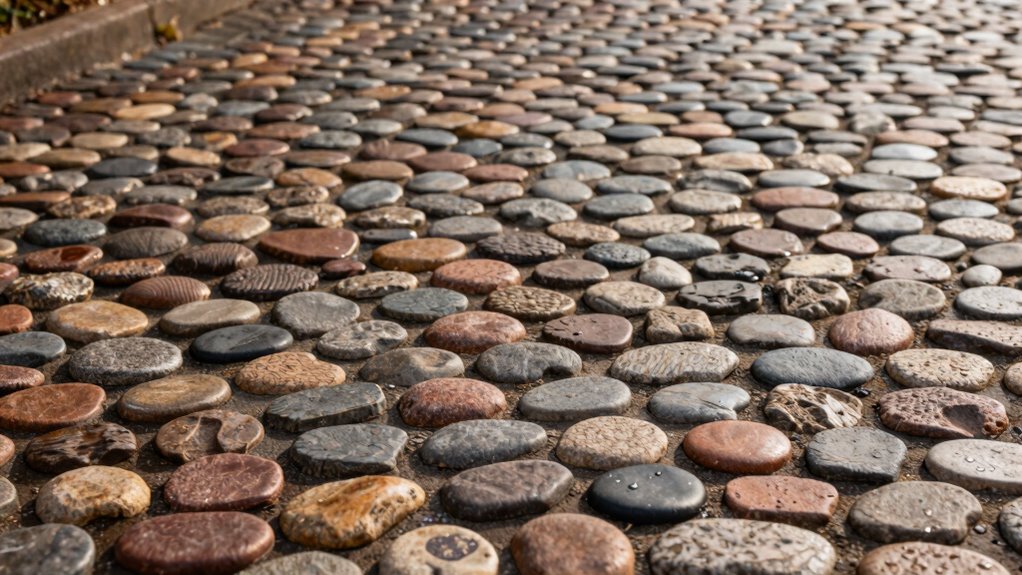
Creating a stable garden path isn’t just about choosing the right materials; it’s also about paying attention to specific details that prevent wobbles. One of the most effective ways to achieve this stability is by incorporating stone edging. Stone edging acts as a firm boundary that holds your path’s materials in place, preventing the gravel or pavers from shifting over time. When you install stone edging, make sure it’s set deeply into the ground and secured with a sturdy foundation. This prevents movement and creates a defined barrier that keeps the path’s shape intact, even with regular foot traffic.
Stone edging provides a sturdy boundary, preventing shifting and maintaining your garden path’s shape over time.
Alongside stone edging, gravel stabilization plays an essential role in maintaining a wobble-free surface. Gravel by itself tends to shift and spread, especially when disturbed by weather or frequent use. To counter this, you need to stabilize the gravel by compacting it thoroughly and adding a binding agent, such as polymeric gravel stabilizer. This material works like glue, bonding the gravel particles together and preventing them from spreading out. When you do this, your gravel layer becomes much more resistant to movement, creating a solid foundation that supports the surface above. Proper compaction techniques are also crucial to ensure the gravel remains firmly in place over time.
Another key detail is ensuring your base layer is properly prepared before adding gravel or pavers. You should excavate the area to a depth that allows for a compacted sub-base, usually about 4 to 6 inches. Fill this with crushed stone or gravel, then use a tamper or compactor to press it down firmly. This initial step is crucial because it prevents the ground underneath from settling unevenly, which can cause wobbles later. Once you have a stable base, applying gravel stabilization on top further locks everything in place. Proper base materials and ensuring proper compaction are vital to long-term stability. Additionally, selecting the appropriate foundation materials helps provide extra support and durability for your garden path. Paying attention to these stabilization techniques will significantly enhance the longevity and wobble-resistance of your pathway.
Frequently Asked Questions
What Materials Are Best for Constructing a Stable Garden Path?
You should choose durable materials like concrete, gravel, or brick for a stable garden path, focusing on proper path material selection. These materials offer stability and longevity. Use edging techniques like bricks or metal borders to keep the path in place, preventing wobbling. Properly compacted base layers and consistent surface levels also help guarantee your path remains steady, making it safe and attractive for years to come.
How Often Should I Inspect and Maintain the Path for Wobble Prevention?
You should inspect and maintain your garden path at least twice a year, ideally in spring and fall. Regular path inspection helps you spot loose or uneven stones early, preventing wobbles. Stick to a maintenance schedule that includes tightening or resetting loose pavers, filling gaps, and checking the foundation. Consistent care guarantees your path remains safe, stable, and visually appealing, reducing the chances of wobbles over time.
Can DIY Techniques Effectively Prevent Wobbles on Uneven Ground?
Yes, DIY reinforcement and ground leveling techniques can effectively prevent wobbles on uneven ground. You can stabilize your path by adding gravel or compacted soil underneath, then use simple tools like a tamper or hand compactor to level the surface. Installing edging or supports also helps keep your path sturdy. Regularly inspecting and re-leveling as needed guarantees your path remains stable and wobble-free over time.
Are There Specific Garden Path Shapes That Resist Wobbling Better?
Certain garden path shapes resist wobbling better, especially those with gentle curves and consistent path curvature. These shapes distribute weight more evenly and reduce stress points. Additionally, incorporating edge reinforcement along the sides strengthens the structure, preventing shifting or wobbling over time. By choosing curvaceous designs and reinforcing edges, you create a more stable, durable path that withstands uneven ground and foot traffic.
How Does Soil Type Affect the Stability of the Garden Path?
Your garden path’s stability hinges on soil composition and drainage efficiency. If the soil is too loose or sandy, it won’t hold the foundation well, leading to wobbles. Poor drainage causes water to pool and weaken the base over time. To keep it steady, choose compact, well-draining soil, and incorporate gravel or crushed stone. This secret guarantees your path stays firm, even when weather tries to shake things up.
Conclusion
Just like the steady hand guiding a ship through turbulent waters, the garden path detail keeps your walk smooth and wobble-free. By paying attention to these subtle design choices, you create a journey that’s both safe and serene—much like the calm of a well-tended garden at dawn. Remember, a solid foundation isn’t just for structures; it’s what transforms a simple path into a timeless, graceful passage. Your garden’s quiet hero awaits your next step.
Fall Picks
fall essentials
As an affiliate, we earn on qualifying purchases.