
To get the most benefit from grab bars, you need to install them based on your actual movement patterns. Think about how you stand, sit, or reach during daily routines, and position the bars accordingly. Proper placement offers better support, reduces the risk of slips, and boosts your confidence. When grab bars match your natural motion, they become a seamless part of your safety system. Keep exploring to discover how tailored installation makes a real difference.

Get decor and gifts delivered free with Prime
- Fast, free delivery on millions of items
- Prime Video, Amazon Music and more included
- Member-only deals all year
Key Takeaways
- Proper placement aligns grab bars with natural reach and movement patterns for intuitive support.
- Installing grab bars near common transfer points enhances safety during sitting, standing, or reaching.
- Tailoring grab bar position to individual routines reduces overextension and fall risks.
- Secure anchoring into studs or appropriate anchors ensures reliable support during use.
- Designing grab bars to match natural movement improves user confidence and independence.
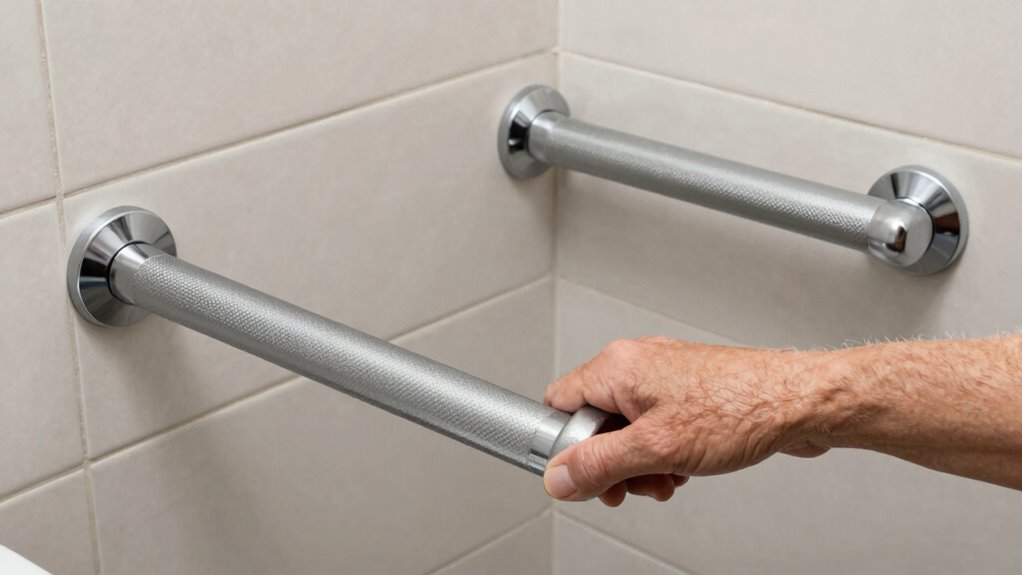
Properly installed grab bars can greatly improve safety, but they only provide maximum benefit when positioned to match how you naturally move. When it comes to bathroom safety, understanding your typical movement patterns is essential. Simply placing grab bars where it seems convenient isn’t enough. Instead, you need to think about how you transfer from standing to sitting, how you steady yourself when entering or exiting the shower, and where you naturally reach for support. This is where assistive technology, like grab bars, becomes most effective. They are designed to serve as reliable anchors that complement your unique movement habits. When installed with your specific needs in mind, they help prevent slips, trips, and falls, which are common bathroom hazards.
Properly placed grab bars support natural movement, reducing bathroom slips and falls.
Your bathroom is a high-risk area because of water, smooth surfaces, and confined spaces. To maximize safety, you should consider the way you move during typical routines. For example, if you often use the sink or toilet, positioning grab bars near these fixtures ensures you have support exactly where you need it. If you tend to hold onto the wall when stepping into the shower, make sure the grab bar is at a comfortable height and aligns with your natural reach. Proper placement means that you’re not stretching or overextending, which can lead to accidents. Instead, the grab bars become an intuitive part of your movement pattern, providing stability when you need it most. Recognizing your natural movement patterns helps in selecting the right placement and type of grab bar for maximum safety. Additionally, understanding ergonomic support needs can guide you toward choosing the most suitable designs to match your specific habits. Paying attention to proper installation techniques also ensures that your grab bars are secure and capable of supporting your weight during use. Moreover, considering user-friendly designs can make the grab bars easier to grasp and more effective during emergencies.
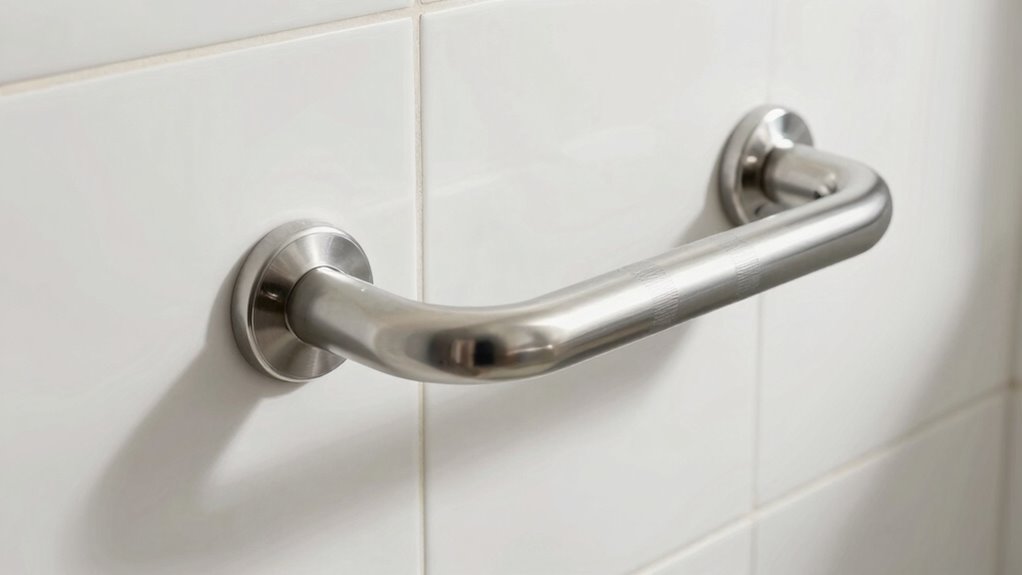
It’s also important to pay attention to the type of grab bar you select. Different styles and shapes cater to various needs and preferences. Some have textured surfaces for better grip, while others are designed to be more discreet. Installing them correctly involves anchoring them into wall studs or using appropriate anchors if studs aren’t accessible. This ensures they can bear your weight safely during use. When you position grab bars based on your real movement patterns, they become an extension of your natural motion, offering support exactly where you need it. This tailored approach to bathroom safety makes a significant difference in reducing risks and fostering independence. Knowing how to choose the right grab bar and properly installing it enhances both safety and confidence in your daily routines.
adjustable grab bars for bathroom
As an affiliate, we earn on qualifying purchases.
As an affiliate, we earn on qualifying purchases.
Frequently Asked Questions
How Do I Choose the Right Grab Bar for My Needs?
To choose the right grab bar, consider your specific needs and space. Look for an ergonomic design that provides a comfortable, secure grip during real movement patterns. Think about aesthetic considerations to guarantee it matches your decor while remaining functional. Measure your space carefully, and opt for sturdy mounting options. Prioritize bars that feel natural to hold and support your movements, making daily activities safer and easier.
Can Grab Bars Prevent Falls Effectively?
Can grab bars truly prevent falls? Yes, when installed correctly, they substantially enhance fall prevention and safety benefits. They provide sturdy support during movement, helping you maintain balance and stability in critical moments. While they aren’t foolproof, proper placement aligned with real movement patterns makes a difference. Keep in mind, combining grab bars with other safety measures creates a safer environment, reducing fall risks effectively.
Are There Different Types of Grab Bars for Various Surfaces?
Yes, there are different types of grab bars designed for various surfaces. You need to take into account surface compatibility, ensuring the bar attaches securely whether it’s tiled, drywall, or textured surfaces. Material options like stainless steel, plastic, or brushed nickel provide durability and style. Choosing the right type ensures safety and stability, especially when supporting real movement patterns. Proper installation tailored to surface type maximizes effectiveness and prevents slips or falls.
How Often Should Grab Bars Be Inspected or Replaced?
You should inspect your grab bars monthly and replace them every 5-10 years, depending on material durability. Skimp on maintenance, and you risk a tragic, slow-motion fall—because who doesn’t love a surprise shower tumble? Stick to strict maintenance schedules, especially if they’re made of weaker materials. Regular checks guarantee they’re still sturdy enough to catch you when gravity finally calls your bluff.
What Installation Height Is Optimal for Different Users?
You should install grab bars at heights aligned with user ergonomics and following installation standards. For most adults, positioning the top of the bar around 33-36 inches from the floor works well, enabling easy gripping during movement. For wheelchair users, place bars at lower heights, about 28-33 inches. Adjust height based on individual needs, ensuring the installation promotes safe, natural movement patterns and provides maximum support.
Conclusion
Imagine trying to dance without knowing the steps—you’d stumble and fall. That’s how improper grab bar placement feels; it’s like trying to move through life without support. When you install grab bars based on real movement patterns, they’re like a trusted dance partner, guiding you smoothly. Data shows that proper placement reduces falls by up to 30%. Prioritize real movement needs, and you’ll create a safer, more confident space where every step feels supported.
Fall Picks
fall essentials
As an affiliate, we earn on qualifying purchases.