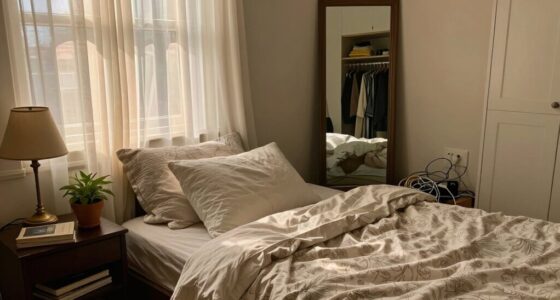
To make your bedroom feel cooler without lowering the thermostat, focus on maximizing airflow and blocking heat. Use ceiling fans in a counterclockwise direction to create a invigorating breeze, and keep window treatments like blackout shades or reflective films closed during hot days to block sun rays. Open windows at night to let in cooler air, and create cross-ventilation. Small adjustments like these can boost comfort and energy efficiency—keep exploring to discover even more strategies.

Get decor and gifts delivered free — and shop member deals
- Fast, free delivery on millions of items
- Access to Prime Big Deal Days deals on October 6–7
- Prime Video, Amazon Music and more included
Key Takeaways
- Use ceiling fans set to rotate counterclockwise to create a cooling breeze and promote sweat evaporation.
- Block heat entry with heavy curtains, blackout shades, or reflective window films during peak sunlight hours.
- Enhance airflow by opening windows on opposite sides for natural cross-ventilation, especially at night.
- Apply shading techniques like awnings or outdoor blinds to reduce direct sunlight on windows.
- Keep window treatments closed during the hottest parts of the day and open windows at night for cooler air.
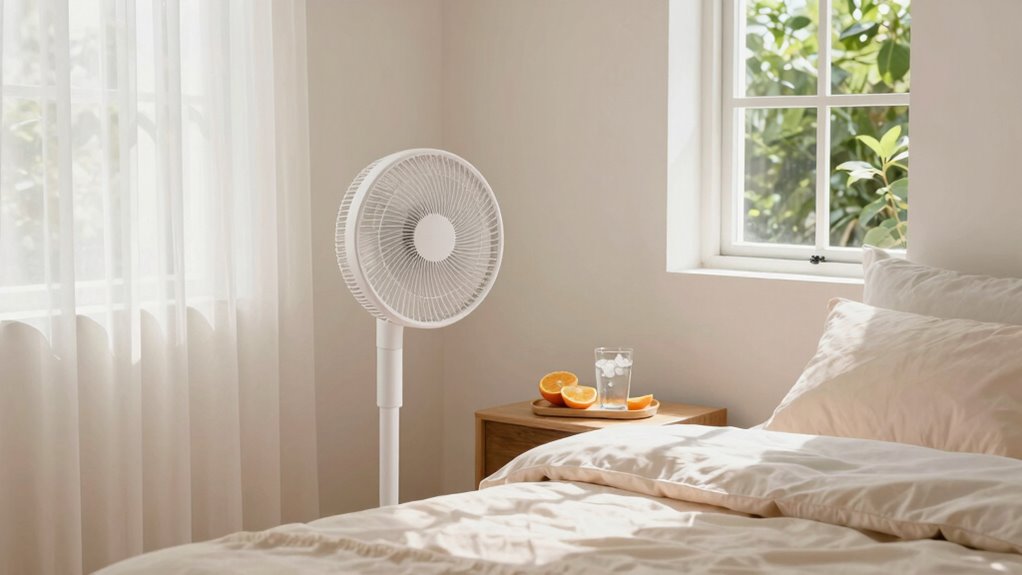
When the summer heat becomes unbearable, lowering your thermostat might seem like the most straightforward solution—but it’s not always the best. Instead of cranking down the AC and wasting energy, you can make your bedroom feel cooler by smarter, more efficient means. One of the easiest ways to do this is by using ceiling fans. Unlike air conditioners, ceiling fans don’t lower the temperature but create a wind-chill effect that makes you feel cooler. By setting the fan to rotate counterclockwise during summer months, you generate a breeze that helps evaporate sweat from your skin, giving your body a cooling sensation. Keep the fan blades clean and ensure they’re properly balanced so they operate quietly and efficiently.
Ceiling fans create a cooling breeze and save energy without lowering your room’s temperature.
Alongside ceiling fans, your window treatments play a crucial role in controlling indoor heat. Heavy curtains, blackout shades, or thermal blinds can block out the sun’s rays during the hottest parts of the day, preventing heat from entering your bedroom. When the sun is shining brightly, close your window treatments to keep the room shaded and cool. Conversely, during cooler evenings, open your windows and curtains to let in the cooler nighttime air, naturally reducing indoor temperature. Installing window films that reflect heat can also help keep your space cooler without sacrificing natural light. Using reflective window films can significantly improve your home’s heat management by bouncing back the sun’s rays before they enter. Additionally, choosing energy-efficient window coverings can further enhance heat control and reduce indoor temperatures.
Another effective trick is to manage airflow and heat transfer through your windows and doors. If you have windows that face the sun, consider applying reflective window films or installing awnings to shade them. Cross-ventilation can be a game-changer—open windows on opposite sides of the room to create a breeze that pulls in cooler air and pushes out warmer indoor air. This simple airflow strategy reduces reliance on mechanical cooling and makes your space feel more comfortable. Additionally, using passive cooling techniques that utilize natural airflow and shading can help maintain a comfortable environment while conserving energy. You might also explore natural cooling methods that leverage the environment around you to help keep your space cool.
Finally, combine these approaches by adjusting your habits throughout the day. Use ceiling fans to circulate air, keep window treatments closed during peak heat hours, and open windows at night when temperatures drop. These small, strategic changes create a cooling environment that feels much more comfortable without turning down the thermostat. You’ll save energy, reduce costs, and enjoy a more pleasant bedroom all summer long.
As an affiliate, we earn on qualifying purchases.
Frequently Asked Questions
Can Specific Colors Make My Bedroom Feel Cooler?
Yes, specific colors can make your bedroom feel cooler. Light shades like blues and greens, rooted in color psychology, evoke calmness and freshness. Using visual illusions, such as painting walls in a cool tone with a matte finish, can enhance this effect. These strategies create an environment that visually appears cooler, helping you feel more comfortable without changing the thermostat. Choose colors wisely to optimize your bedroom’s cooling sensation.
How Does Airflow Impact Perceived Temperature?
Good airflow and air circulation considerably influence how cool your bedroom feels. Proper airflow patterns help move warm, stagnant air out and bring in cooler air, creating a breeze that tricks your senses into feeling cooler. You can improve this by opening windows on opposite sides or using fans strategically. When airflow is steady and well-directed, your room feels more comfortable without changing the thermostat, making it a simple, effective cooling trick.
Do Certain Fabrics Help Keep a Room Cooler?
Yes, certain fabrics can help keep your room cooler. Fabrics with high breathability, like cotton or linen, allow air to flow through, reducing heat buildup. They also have less textile insulation, which means they don’t trap heat against your skin or in your bedding. Choosing lightweight, natural fabrics for sheets and curtains can make a noticeable difference in how cool your bedroom feels without adjusting the thermostat.
Can Plants Reduce Indoor Temperature?
Plants are like natural air conditioners, helping reduce indoor temperature. By placing them strategically around your room, especially near windows or vents, you can maximize their cooling effect. They also lower indoor humidity, making the air feel cooler and more comfortable. Regular watering and choosing the right plants, such as snake plants or pothos, boost this effect, transforming your bedroom into a cooler, calmer oasis without adjusting your thermostat.
What’s the Best Window Placement for Cooling?
You should position windows to maximize shade and airflow, ideally with shaded windows facing the east or west to block direct sunlight during the hottest parts of the day. Use window orientation to your advantage, and add shading devices like curtains or blinds to keep heat out. Keeping windows on the shaded side open during cooler evenings helps promote natural cooling, making your bedroom feel cooler without extra energy use.
Conclusion
By using these simple tricks, you can make your bedroom feel cooler without touching the thermostat. Did you know that blocking sunlight and improving airflow can reduce room temperature by up to 10 degrees? That’s a game-changer for comfort and energy savings. So, next time temperatures soar, try closing blinds, using fans, and choosing light-colored bedding. Staying cool doesn’t have to mean higher bills—just a few smart moves can make all the difference.
Halloween Picks
halloween
As an affiliate, we earn on qualifying purchases.