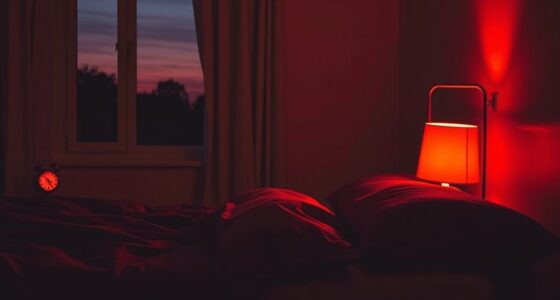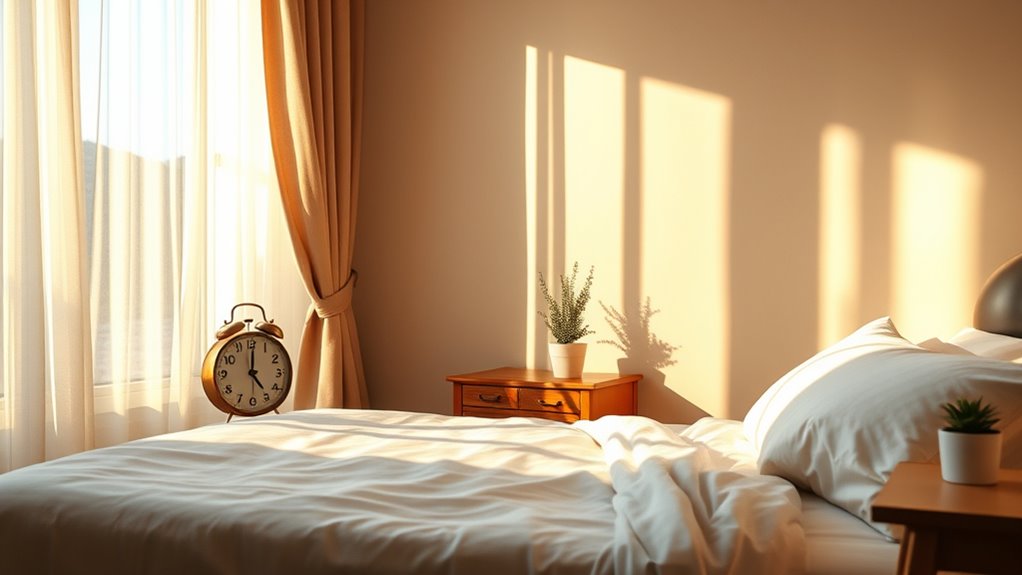

Your body’s internal clock, called the circadian rhythm, is driven by light and darkness, guiding your sleep, alertness, and overall health. Exposure to natural light during the day helps keep this rhythm aligned, while darkness signals your body to produce melatonin, encouraging sleep. Conversely, blue light from screens or bright lights at night can disrupt this cycle. Understanding how light affects your clock can help you improve your sleep and well-being—if you continue exploring, you’ll discover how to optimize your light environment.

Get decor and gifts delivered free with Prime
- Fast, free delivery on millions of items
- Prime Video, Amazon Music and more included
- Member-only deals all year
Key Takeaways
- Light exposure, especially blue light, influences melatonin production, regulating sleep and wake cycles.
- Natural daylight reinforces your internal clock, promoting alertness during the day and sleep at night.
- Darkness triggers melatonin release, signaling your body to wind down and prepare for sleep.
- Disrupted or irregular light exposure can cause circadian misalignment, affecting health and sleep quality.
- Managing light exposure—getting morning sunlight and reducing screen time before bed—supports healthy circadian rhythms.
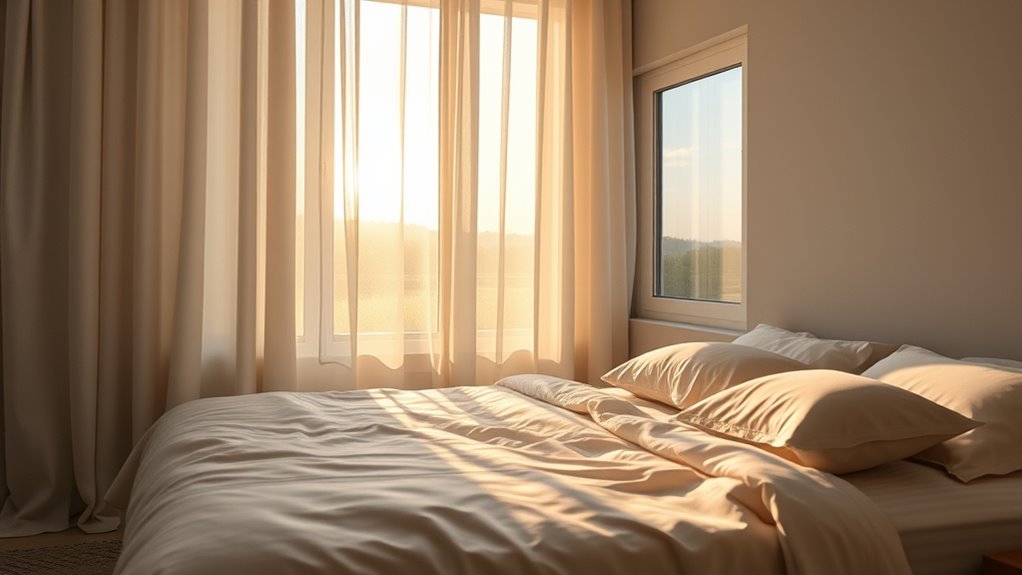
Circadian rhythms are the natural internal processes that regulate your sleep-wake cycle over a roughly 24-hour period, and light plays a crucial role in synchronizing these rhythms. These rhythms help your body know when to feel alert and when to prepare for rest, ensuring your biological functions operate smoothly. One of the key players in this process is melatonin, often called the sleep hormone, which signals your body that it’s time to wind down. When it gets dark outside, your brain increases melatonin production, making you feel sleepy. Conversely, exposure to light suppresses melatonin, helping you wake up and stay alert during the day. This delicate balance between light and darkness keeps your sleep-wake cycle aligned with the natural day-night cycle.
Understanding how light influences melatonin regulation is essential for maintaining healthy sleep patterns. If you’re exposed to bright light late at night, especially blue light from screens, it can interfere with melatonin production. This suppression can delay your sleep onset, reduce sleep quality, and throw off your circadian rhythm. That’s why many experts recommend reducing screen time an hour before bed or using apps and glasses that block blue light. During the day, natural sunlight or bright indoor lighting helps reinforce your body’s internal clock, signaling that it’s time to be awake and active. Regular exposure to natural light can improve your overall sleep quality by supporting the proper functioning of your sleep-wake cycle. Additionally, light exposure influences other bodily functions, demonstrating its importance beyond just sleep regulation.
Your body’s internal clock, or circadian rhythm, isn’t just about sleep. It influences hormone release, body temperature, metabolism, and even cognitive function. When your light exposure aligns with your natural environment, these processes stay well-regulated, making you feel more energized during the day and more restful at night. Disruptions, such as shift work or traveling across time zones, can throw off this balance, leading to issues like jet lag or insomnia. To keep your circadian rhythms in sync, aim to get consistent daylight exposure, especially in the morning, and create a dark, relaxing environment for sleep. This consistency helps your body’s internal clock stay on track, promoting better sleep and overall health.
Frequently Asked Questions
How Do Age and Genetics Influence Circadian Rhythm?
Your age and genetics influence your circadian rhythm through genetic predispositions and age-related changes. As you get older, your internal clock shifts, leading to earlier bedtimes and wake times, and you might experience less deep sleep. Genetics can determine how strongly your circadian rhythm is synchronized with natural light, affecting your alertness and sleep patterns. Recognizing these factors helps you adapt your routines for better sleep and overall health.
Can Artificial Light Fully Replace Natural Sunlight?
Artificial light can’t fully replace natural sunlight, like trying to catch the sun in a jar. While it helps combat light pollution and seasonal affective disorder, it lacks the full spectrum of natural rays your body craves. Natural sunlight triggers your circadian rhythm more effectively, boosting mood and sleep. So, even with screens and LEDs, aim to get outside and soak up real sunlight whenever possible.
What Are Signs of Circadian Rhythm Disruption?
You might notice poor sleep quality, feeling tired during the day, or irregular sleep patterns as signs of circadian rhythm disruption. Hormonal imbalances can also occur, leading to issues like mood swings or weight changes. If your body’s internal clock is off, you may struggle to fall asleep or wake up feeling unrested. Pay attention to these signs to help restore your rhythm and improve overall health.
How Does Shift Work Affect Your Body’s Clock?
Imagine your body’s clock as a delicate lighthouse, guiding you through day and night. When you work shifts, your lighthouse flickers erratically, causing sleep deprivation and melatonin suppression. This disrupts your natural rhythm, making it harder to fall asleep and wake up refreshed. Your body struggles to adjust, leading to fatigue, mood swings, and decreased alertness. Shift work throws your internal lighthouse off course, affecting your overall health.
Can Circadian Rhythms Be Reset After Jet Lag?
Yes, you can reset your circadian rhythms after jet lag. To do so, try taking melatonin supplements to signal your body it’s bedtime, and use light therapy in the morning to help adjust your internal clock. Exposure to natural sunlight or bright artificial light can speed up your recovery, reducing jet lag symptoms. Consistency with sleep schedules and these strategies can help realign your body’s rhythms effectively.
Conclusion
By understanding your circadian rhythms and the power of light, you hold the key to transforming your entire life—your energy, mood, and health hinge on this tiny internal clock. When you harness light wisely, you’re not just improving sleep; you’re activating superhuman vitality, mental clarity, and resilience that can make every day feel like a victory. Don’t underestimate the incredible influence of your body’s clock—it’s the ultimate secret weapon for mastering your destiny.
Halloween Picks
halloween
As an affiliate, we earn on qualifying purchases.