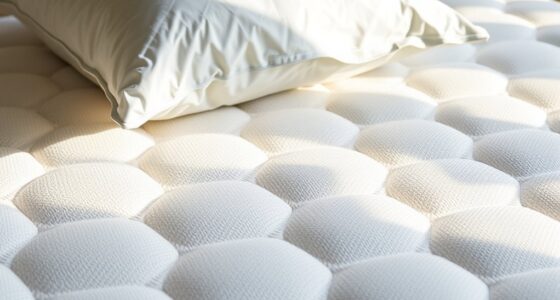
Cooling mattress tech uses phase-change materials (PCMs) to help you stay comfortable all night. These materials absorb excess heat when you start to overheat and release it when you cool down, maintaining a steady temperature. This dynamic process reduces sweating and avoids abrupt temperature shifts that can disturb your sleep. If you want to discover how PCMs can transform your sleep experience, there’s more to explore below.
Key Takeaways
- Phase-change materials (PCMs) absorb, store, and release heat during phase transitions, primarily between solid and liquid states.
- PCMs in mattresses help regulate body temperature by responding dynamically to heat fluctuations throughout the night.
- Incorporating PCMs maintains a consistent sleep environment, reducing overheating and night sweats for improved rest.
- They operate silently and safely, creating a natural cooling effect without external devices or disruptive sensations.
- PCM technology advances sleep comfort by providing energy-efficient, real-time thermal regulation for better sleep quality.
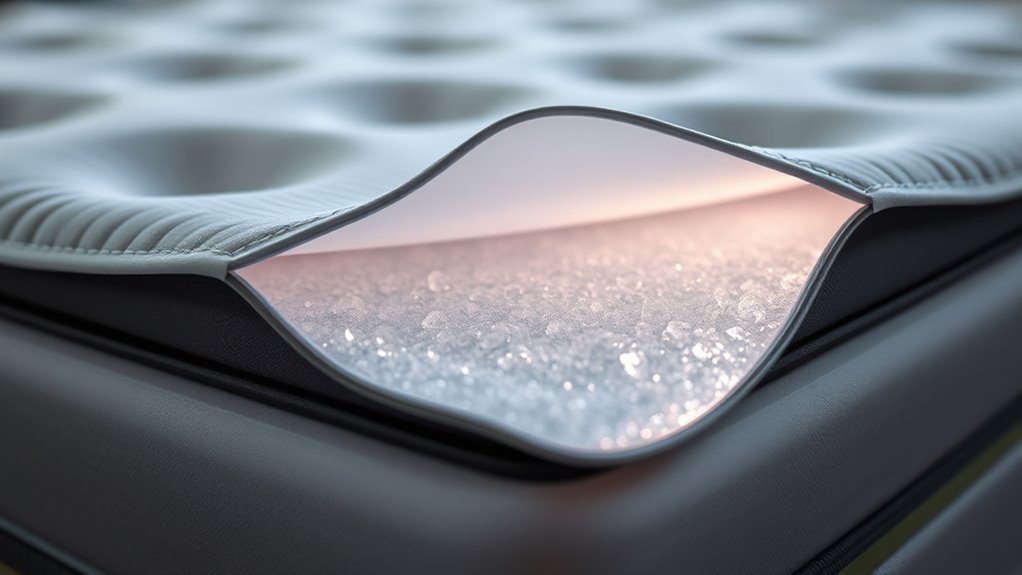
Have you ever struggled to stay cool throughout the night? If so, you’re not alone. Many people find themselves tossing and turning, unable to maintain a comfortable temperature as the night progresses. That’s where cooling mattress tech, especially phase-change materials, comes into play. These innovative materials are designed to enhance temperature regulation, helping you stay cooler and more comfortable while you sleep.
At the core of this technology are phase-change materials (PCMs). These substances have a unique ability: they absorb, store, and release heat as they change phases—typically from solid to liquid or vice versa. When you’re feeling too warm, the PCM in your mattress absorbs excess body heat, shifting from solid to liquid. This process helps to draw heat away from your body, preventing your temperature from rising too high. As your body cools down and the surrounding environment drops in temperature, the PCM reverts back to its solid state, releasing the stored heat. This continuous cycle of absorption and release actively manages your body temperature throughout the night.
Phase-change materials absorb and release heat, actively regulating your body temperature all night long.
The beauty of phase change in mattress tech is its ability to provide dynamic temperature regulation. Unlike traditional materials that passively insulate or trap heat, PCMs respond to your body’s needs in real time. This means your mattress adapts to your changing body temperature, helping you avoid the common problem of waking up sweaty or feeling cold. By maintaining a more consistent internal temperature, you can experience deeper, more restorative sleep. Additionally, the phase-change process can help reduce the need for external cooling devices, making your sleep environment more energy-efficient and cost-effective.
Using phase-change materials in a mattress isn’t just about comfort; it’s about creating an environment that promotes better sleep quality. When your body stays within its ideal temperature range, your sleep cycles become more stable, and you’re less likely to wake up feeling hot or chilled. This technology also reduces the need for external cooling devices or fans, making your sleep environment more natural and energy-efficient.
Incorporating PCM into mattress design is a smart move if you’re someone who naturally sleeps hot or tends to experience temperature fluctuations during the night. The phase-change process is silent, safe, and highly effective at maintaining balance without any noise or disruptive sensations. Overall, phase change technology represents a significant step forward in sleep comfort, offering a practical solution to the age-old problem of temperature regulation during sleep. It’s a clever way to harness science to keep you cool, cozy, and rested every night. For those interested in thermal regulation, this innovative approach offers a promising solution.
Frequently Asked Questions
How Long Do Phase-Change Materials Typically Last in a Mattress?
You might wonder how long phase-change materials last in a mattress. Typically, their material longevity ranges from 2 to 5 years, depending on usage and quality. They actively absorb and release heat, helping you stay cool. Keep in mind, their environmental impact is minimal if produced sustainably, but over time, effectiveness declines. Proper care can extend their lifespan, ensuring you get the most comfort and eco-friendly benefits from your cooling mattress.
Are Phase-Change Materials Safe for People With Allergies?
They say safety first, and you should know that phase-change materials are generally harmless for allergy sufferers. Most products undergo strict testing to address allergenic concerns and guarantee chemical safety. If you have sensitive skin or chemical allergies, check the specific materials used and opt for certified, hypoallergenic options. Overall, these materials are designed to be safe, but always read labels and consult with your doctor if you have serious allergies.
Can Phase-Change Materials Be Recycled or Reused?
You can definitely recycle or reuse phase-change materials, making them a sustainable option. Many are designed for material longevity, which means they can be reused multiple times without losing effectiveness. This supports sustainable recycling practices, reducing waste and environmental impact. While some phase-change materials can be recycled at specialized facilities, others might be repurposed within the same product, extending their lifespan and promoting eco-friendly choices in bedding or cooling systems.
Do All Cooling Mattresses Incorporate Phase-Change Technology?
Not all cooling mattresses incorporate phase-change technology. While some use this innovative material for its cooling benefits, others rely on different methods like gel infusions or ventilation. You should consider material durability and environmental impact; phase-change materials can be effective but may have varying lifespans and eco-friendliness. Ultimately, check the product details to see if it includes phase-change tech, aligning with your sustainability goals and comfort preferences.
How Do Phase-Change Materials Compare to Traditional Cooling Methods?
They say “you get what you pay for,” and when comparing phase-change materials to traditional cooling methods, it’s clear you gain in efficiency. Phase-change materials offer better temperature regulation, maintaining comfort longer, but they may have lower material durability over time. Plus, they tend to have a lesser environmental impact, making them a smarter choice for eco-conscious sleepers. Traditional methods often lack this sustainability and can require more energy.
Conclusion
Think of phase-change materials like a trusty friend who keeps your nighttime world balanced, absorbing your heat just like a cool breeze on a warm day. As you drift into sleep, they work silently in the background, ensuring you stay comfortable and refreshed. With this cooling mattress tech, you’re the captain of your sleep ship, steering through peaceful, cool waters. Embrace this innovation and sail into your best night’s rest, every night.