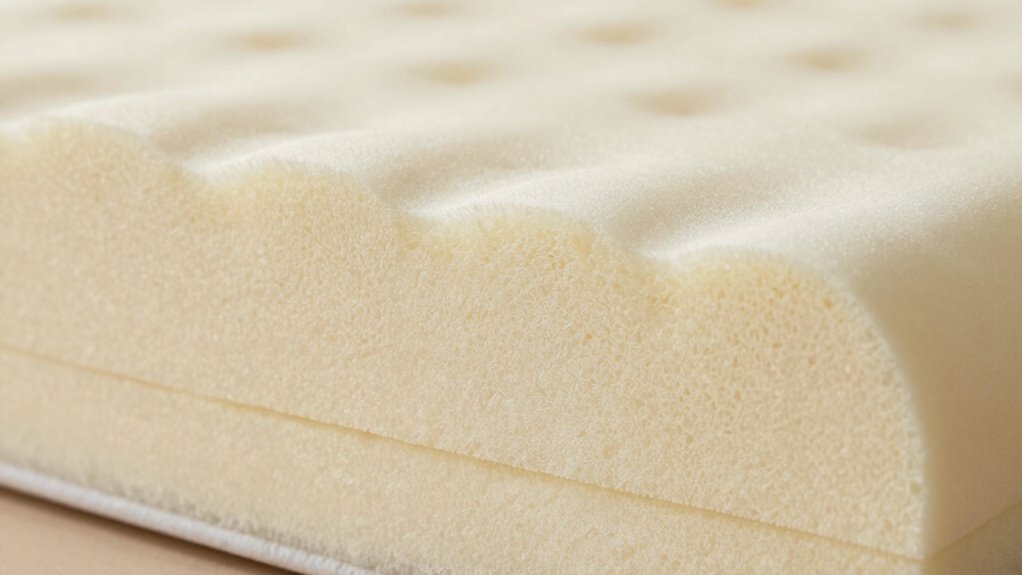

Memory foam density influences how long your mattress keeps its shape and support. Higher-density foams, with more material per cubic foot, tend to be more durable and resist sagging over time. Lower-density foams may feel softer initially but compress easier and wear out faster, leading to indentations. Choosing the right density depends on your preference for support and longevity. If you want to understand how density affects durability and sagging, keep exploring—it’s more important than you might think.

Get decor and gifts delivered free with Prime
- Fast, free delivery on millions of items
- Prime Video, Amazon Music and more included
- Member-only deals all year
Key Takeaways
- Lower-density memory foam compresses more easily, leading to quicker sagging and loss of support over time.
- Higher-density foam maintains its shape longer, resisting indentations and sagging with extended use.
- Softer, lower-density foams tend to wear out faster due to less material per volume, reducing durability.
- Dense foams distribute weight more evenly, decreasing the likelihood of early sagging in high-pressure areas.
- Advances in foam technology can mitigate heat retention in dense foams, helping maintain longevity and comfort.

Have you ever wondered why some memory foam mattresses feel softer or firmer than others? The answer often comes down to the foam’s density. Memory foam density refers to the weight of the foam per cubic foot, usually measured in pounds. Higher-density foams tend to be more durable and supportive, while lower-density versions are softer and more affordable. When choosing a mattress, understanding how density affects comfort and longevity can make a big difference in your sleep quality.
One key aspect influenced by foam density is how well the mattress manages pressure points. A higher-density foam offers better support because it conforms more precisely to your body’s curves, distributing your weight evenly. This reduces pressure points, especially around sensitive areas like your hips, shoulders, and lower back. If you prefer a mattress that minimizes aches and provides consistent support, a higher-density foam is often the better choice. Conversely, lower-density foams may feel softer initially but tend to compress more easily, which can lead to increased pressure on those same points over time.
Higher-density foam provides better support and pressure distribution for more comfortable, lasting sleep.
Durability factors are also closely linked to foam density. Generally, the higher the density, the longer the mattress will retain its shape and supportive qualities. This resilience means it’s less likely to sag prematurely or develop permanent indentations. Lower-density foams, while often more plush and budget-friendly, tend to break down faster. Over months or years, they may develop soft spots or sag, compromising your comfort and requiring replacement sooner. If you want a mattress that maintains its supportive feel for years, investing in a higher-density foam is usually worth the extra cost.
Additionally, foam density can influence the breathability of the mattress, with higher-density foams sometimes trapping more heat, which may affect sleep comfort. However, advancements in foam technology are making it possible to find denser foams that balance durability with better airflow. Your choice should depend on your sleeping preferences and priorities—whether you want a mattress that feels plush and soft or one that offers firm support and durability.
high density memory foam mattress
As an affiliate, we earn on qualifying purchases.
As an affiliate, we earn on qualifying purchases.
Frequently Asked Questions
How Does Memory Foam Density Affect Allergy Potential?
Higher-density memory foam can reduce allergy triggers because it’s less likely to harbor dust mites and mold, thanks to its dense structure. This makes the mattress more hypoallergenic and easier to keep clean. Lower-density foam may trap more allergens, increasing allergy potential. If you’re sensitive, choose a higher-density mattress, as it offers better hypoallergenic properties and helps minimize your exposure to common allergy triggers.
Is Higher Density Memory Foam More Environmentally Friendly?
You get what you pay for, but higher density memory foam isn’t necessarily more eco-friendly. While it lasts longer and reduces replacement needs, eco friendliness considerations include recycling challenges because dense foams are harder to break down and recycle. If you’re eco-conscious, weigh durability against environmental impact, and remember that choosing sustainable materials and responsible disposal methods can make a difference, regardless of foam density.
Can Memory Foam Density Influence Temperature Regulation?
Yes, memory foam density can influence temperature regulation. Higher-density foam tends to trap more heat, leading to increased heat retention, which might make you feel warmer during sleep. Conversely, lower-density foam generally allows better airflow, helping to keep you cooler. If temperature regulation is important to you, consider a mattress with lower-density memory foam or one designed with cooling features to guarantee a more comfortable sleep environment.
Does Memory Foam Density Impact Motion Transfer?
Yes, memory foam density impacts motion transfer because higher foam consistency and material weight absorb movement better, reducing disturbance. When you choose a denser mattress, it dampens your partner’s movements, making it less likely you’ll feel every shift. Lower-density foams tend to transfer more motion, so you might notice more movement if you prefer a softer, less dense mattress. Picking the right density guarantees better sleep stability for you.
Are There Health Risks Associated With Low-Density Memory Foam?
Low-density memory foam can pose health risks, especially if you’re sensitive to allergy triggers or concerned about air quality. It often harbors dust mites, mold, or bacteria, which can worsen allergies or asthma. Additionally, it may off-gas volatile organic compounds (VOCs), affecting indoor air quality. If you’re prone to respiratory issues, choosing higher-density foam or hypoallergenic options helps minimize these health risks and improve sleep safety.
Conclusion
Now that you know how memory foam density affects sagging, you can make smarter choices for your mattress. Remember, don’t judge a book by its cover—higher density isn’t always better for everyone. By understanding the ins and outs, you’ll avoid throwing good money after bad. Keep your eyes open and don’t settle for less than what your sleep deserves. After all, a good mattress is the foundation for a good night’s rest.
Halloween Picks
halloween
As an affiliate, we earn on qualifying purchases.