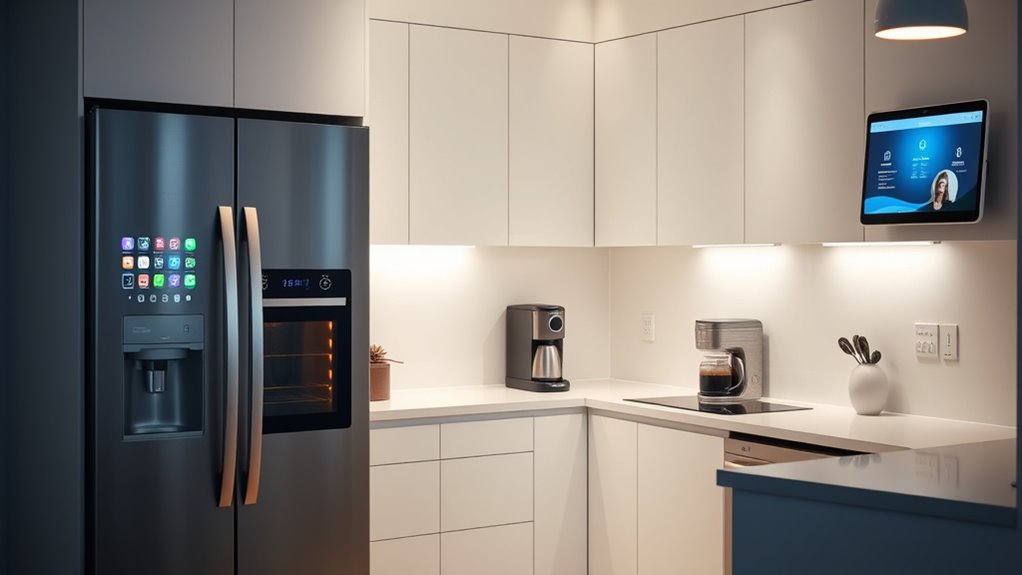

Smart appliances turn your kitchen into a connected space that boosts efficiency and convenience. They use sensors, intelligent algorithms, and seamless communication to optimize energy use, automate tasks, and reduce waste. You can control devices remotely through user-friendly apps or voice commands, making daily routines easier. These features not only save energy and lower bills but also support sustainability. Keep exploring to discover how to create a smarter, more efficient kitchen experience tailored for you.
Key Takeaways
- Smart appliances create connected kitchens that streamline daily tasks and enhance user convenience through seamless device integration.
- Energy-efficient features, like sensors and intelligent algorithms, reduce power consumption and lower utility bills over time.
- User-friendly interfaces and remote control options enable easy management and monitoring of appliances via smartphones or voice commands.
- Device connectivity allows appliances to communicate, optimizing performance and minimizing energy waste automatically.
- Combining automation with sustainable features promotes eco-friendly living while simplifying household management.

Have you ever wondered how your home can become more efficient and convenient? With smart appliances, you can transform your kitchen into a connected hub that streamlines daily tasks and reduces energy consumption. These devices are designed to work seamlessly together, offering an intuitive experience that puts control right at your fingertips. When you choose smart appliances, you’re not just upgrading your kitchen; you’re making a conscious effort to save energy and enhance your lifestyle.
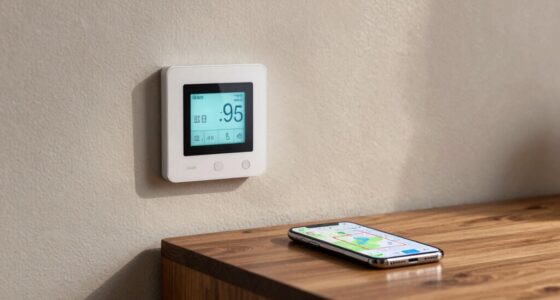
One of the key advantages of smart appliances is their ability to deliver significant energy savings. Unlike traditional devices, these appliances are equipped with sensors and intelligent algorithms that optimize their operation. For example, a smart refrigerator can monitor its contents and usage patterns to adjust power consumption accordingly, reducing waste. Similarly, smart dishwashers and ovens can be scheduled or activated remotely, ensuring they run only when needed. Over time, these small efficiencies add up, lowering your utility bills and reducing your carbon footprint. Plus, many smart appliances provide real-time energy consumption data via their user interfaces, empowering you to make informed decisions about your household’s energy use.
Smart appliances optimize energy use with sensors and algorithms, reducing waste and lowering utility bills.
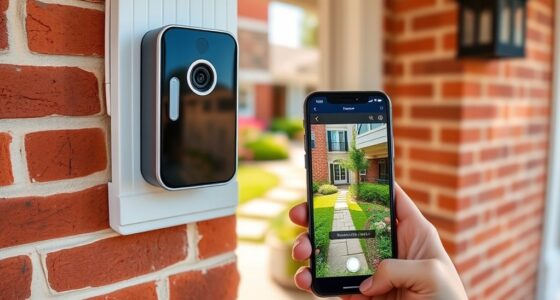
Speaking of user interfaces, they play an essential role in how you interact with your smart appliances. Modern devices feature user-friendly screens, mobile apps, or voice control systems that make managing your kitchen effortless. You don’t need to be tech-savvy to operate these appliances; their interfaces are designed for simplicity and ease of use. Through a smartphone app, you can monitor your appliances remotely, receive alerts about maintenance needs, or adjust settings on the fly. Voice commands, enabled by integration with virtual assistants, allow you to control devices hands-free, adding a new level of convenience. These interfaces also provide a centralized platform to manage multiple appliances at once, creating a cohesive smart kitchen environment. Additionally, the integration of necessary cookies ensures that your device preferences and settings are remembered for a smoother experience.
Furthermore, the connectivity of these appliances means they can communicate with each other, optimizing performance and energy use without your intervention. For instance, your smart oven can sync with your refrigerator to suggest meal preparations based on available ingredients, all while minimizing energy waste. The continuous data exchange and user-friendly interfaces make managing your connected kitchen straightforward and efficient.
In essence, smart appliances combine intelligent technology with accessible interfaces to deliver a more energy-efficient and convenient home experience. They adapt to your routines, help you conserve resources, and simplify complex tasks. As you embrace these innovations, you’ll find that your kitchen becomes not only smarter but also more aligned with your desire for sustainability and ease of use.
Frequently Asked Questions
How Secure Are Connected Kitchen Devices From Hacking?
Connected kitchen devices can be vulnerable to cybersecurity risks, so they’re not entirely foolproof. Hackers might exploit weak passwords or outdated software, risking your privacy concerns. To keep your devices secure, you should regularly update firmware, use strong, unique passwords, and enable two-factor authentication where possible. Staying vigilant helps defend your personal data and ensures your smart kitchen remains safe from potential hacking threats.
What Is the Average Cost of Installing Smart Kitchen Appliances?
The average cost of installing smart kitchen appliances varies widely, typically ranging from $2,000 to $10,000, depending on the devices you choose. You should do a cost comparison to find options that fit your budget. The installation process can be straightforward if you have basic electrical and Wi-Fi setup skills, but for complex systems, hiring a professional guarantees everything connects and functions smoothly.
Can Smart Appliances Be Integrated With Existing Home Systems?
Did you know that over 60% of homeowners plan to upgrade to smart home systems? You can absolutely integrate smart appliances with your existing home systems, allowing voice control and remote access. Most modern smart appliances are compatible with popular platforms like Alexa, Google Home, or Apple HomeKit. This integration makes managing your kitchen more convenient, giving you the ability to control devices effortlessly and customize your cooking environment.
How Energy-Efficient Are Connected Kitchen Gadgets?
Connected kitchen gadgets are quite energy-efficient, helping you reduce overall energy consumption. They often include eco-friendly features like smart timers and automatic shutdowns, which cut down on waste. By optimizing usage and monitoring energy use in real-time, these devices make it easier for you to save energy and lower your utility bills. Overall, they’re designed to be eco-conscious, making your kitchen more sustainable and efficient.
What Maintenance Is Required for Smart Kitchen Appliances?
You should regularly update your smart appliances’ firmware to extend their appliance lifespan and guarantee smooth operation. Keep their software and apps current, and clean sensors and vents as needed. Troubleshooting tips include resetting devices or checking Wi-Fi connections if issues arise. Routine maintenance helps prevent malfunctions, prolongs device lifespan, and keeps your connected kitchen running efficiently. Staying proactive with these steps makes your smart appliances more reliable and easier to manage.
Conclusion
So, as you marvel at your connected kitchen making life easier, remember that all these smart gadgets also mean more chances for tech hiccups or data breaches. It’s funny how a kitchen designed for convenience can remind you that even the smartest appliances aren’t foolproof. Ultimately, your quest for efficiency might just turn into a lesson in patience. After all, even the best tech can sometimes remind us who’s really in charge—us or our gadgets.