To protect your smart home data privacy, you should focus on securing voice commands, ensuring your devices use strong encryption, and adopting good user habits. Use multi-factor authentication, review privacy policies, and regularly update your device firmware to fix vulnerabilities. Control your privacy settings and limit data sharing. Staying aware of these security measures helps shield your personal information from threats. If you want to learn practical tips to enhance your privacy, keep exploring these key strategies.
Key Takeaways
- Review privacy policies and settings to control data collection, sharing, and deletion of voice recordings.
- Enable multi-factor authentication and strong passwords to secure device accounts.
- Use end-to-end encryption for all device communications to protect sensitive data.
- Regularly update device firmware to patch security vulnerabilities and maintain encryption protocols.
- Choose smart home devices with robust privacy controls and transparency about data handling practices.
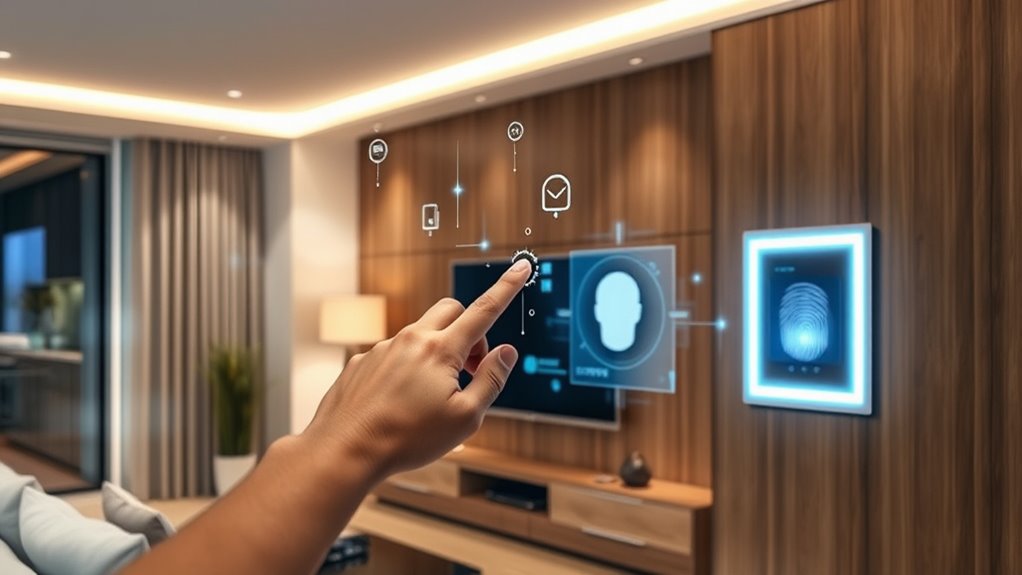
As smart home devices become more integrated into daily life, your privacy is increasingly at risk. With voice assistants, security cameras, and connected appliances, your personal data is constantly flowing through digital channels. One of the most critical aspects of safeguarding your privacy is understanding voice command security. When you give voice commands, those inputs are transmitted to cloud servers for processing. If these transmissions aren’t secured properly, malicious actors could potentially intercept or manipulate your commands, leading to unauthorized access or data breaches. That’s why choosing devices with robust voice command security measures is essential. Look for systems that implement multi-factor authentication or require voice recognition to ensure that only authorized users can control your devices.
Secure your smart home by ensuring voice commands are protected through encryption and multi-factor authentication.
In addition, data encryption techniques play a crucial role in protecting your information. When your smart home devices communicate with servers or other devices, the data should be encrypted end-to-end. Encryption transforms your data into a coded format that’s unreadable without the proper decryption key. This process makes it much more difficult for hackers to decipher sensitive information, such as your voice recordings, camera feeds, or personal routines. Many reputable smart home manufacturers employ advanced data encryption techniques, but it’s wise to verify this before making a purchase. Regularly updating your device firmware also guarantees you benefit from the latest security patches and encryption protocols, closing potential vulnerabilities.
Beyond just device security, you should be mindful of how your data is stored and shared. Review privacy policies to understand what data your devices collect and whether it’s shared with third parties. Opt for devices and platforms that prioritize user privacy and give you control over your data. For example, some systems allow you to delete voice recordings or restrict data sharing altogether. Setting strong, unique passwords for your smart home accounts adds an extra layer of protection, preventing unauthorized access even if encryption is compromised. Additionally, understanding the security features offered by your devices can help you better protect your personal information.
Ultimately, protecting your smart home data privacy requires a combination of technological safeguards and proactive user habits. By prioritizing voice command security and understanding data encryption techniques, you can greatly reduce the risk of your personal information falling into the wrong hands. Stay informed about the latest security features offered by your devices, and don’t hesitate to take advantage of privacy settings. Remember, your privacy isn’t just about keeping secrets—it’s about controlling your personal space in an increasingly connected world.
Frequently Asked Questions
How Can I Identify Which Smart Devices Pose the Highest Privacy Risks?
You can identify high-risk smart devices by checking for device vulnerabilities and understanding their data collection sources. Look for devices with frequent security updates and strong encryption, as these are less vulnerable. Review the manufacturer’s privacy policies to see what data is collected and how it’s used. Be cautious with devices that connect to multiple networks or share data with third parties, since these pose higher privacy risks.
Are There Specific Laws Protecting Smart Home Data Privacy Internationally?
International regulations and privacy laws vary, but some, like the GDPR in Europe, offer strong protections for smart home data. You should stay informed about laws in your country and any regions where your data might be stored or processed. Always check if your devices comply with these privacy laws, and consider choosing products from companies with transparent data policies. This helps guarantee your smart home data remains private and protected.
What Are the Best Practices for Securely Sharing Smart Home Access With Guests?
To guarantee secure sharing of guest access, always set up temporary or restricted permissions through your smart home app. Use guest access features instead of sharing your main login credentials to protect your data. Change or revoke guest access after their stay, and avoid sharing sensitive information. Regularly update your device passwords and enable two-factor authentication for added security. These best practices help keep your smart home data private while welcoming guests.
How Often Should I Update My Smart Home Device Firmware for Security?
You should update your smart home device firmware as soon as updates are available, ideally once a month. Firmware updates include important security patches that fix vulnerabilities and improve device security. Regularly check for firmware updates, and enable automatic updates if possible, to guarantee your devices stay protected against new threats. Staying current with updates helps maintain your smart home’s security and keeps your data safe.
Can Smart Home Data Be Used for Targeted Advertising Without User Consent?
Yes, your smart home data can be used for ad targeting without your consent. Data collection from your devices helps companies understand your habits, allowing them to personalize ads. If you’re concerned about privacy, check device settings and privacy policies to limit data sharing. You have the right to control how your information is used, so stay informed and adjust permissions as needed to protect your privacy.
Conclusion
By staying informed, setting boundaries, and practicing caution, you take control of your smart home data. Protect your privacy by understanding what information you share, securing your devices, and regularly updating your settings. Don’t ignore the risks, don’t underestimate the importance, and don’t assume your data is safe. Instead, stay vigilant, stay proactive, and stay protected. Because your privacy is worth the effort, and your smart home should work for you, not against you.