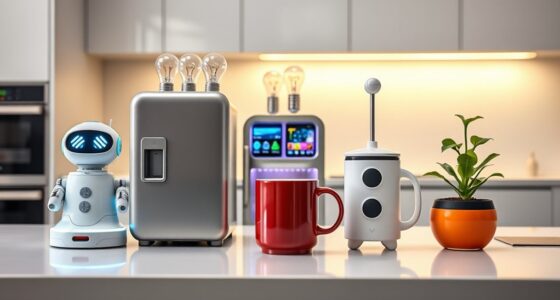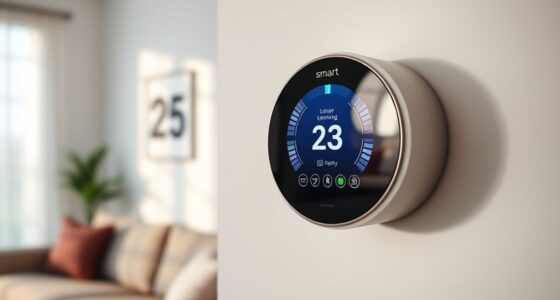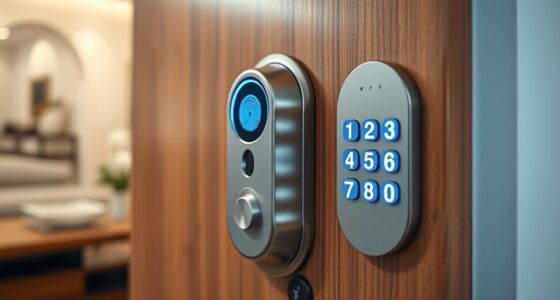

Voice-first home control allows you to manage your smart devices effortlessly using just your voice, providing hands-free convenience. You can turn on lights, adjust the thermostat, lock doors, and control appliances with simple commands. Smart speakers like Amazon Echo or Google Nest connect to your devices, recognize your voice, and respond naturally. This setup makes your home more responsive and personalized. Keep exploring to discover how to optimize your voice-controlled smart home environment even further.
Key Takeaways
- Voice assistants like Amazon Alexa, Google Assistant, and Apple HomeKit enable hands-free control of smart devices.
- Integrating smart speakers as central hubs allows seamless voice commands for lighting, thermostats, and more.
- Custom routines and commands can be set up for quick, personalized device management without manual interaction.
- Voice recognition technology ensures accurate command execution and supports multiple household members.
- Voice-first control creates a more convenient, responsive smart home environment by eliminating the need for apps or switches.
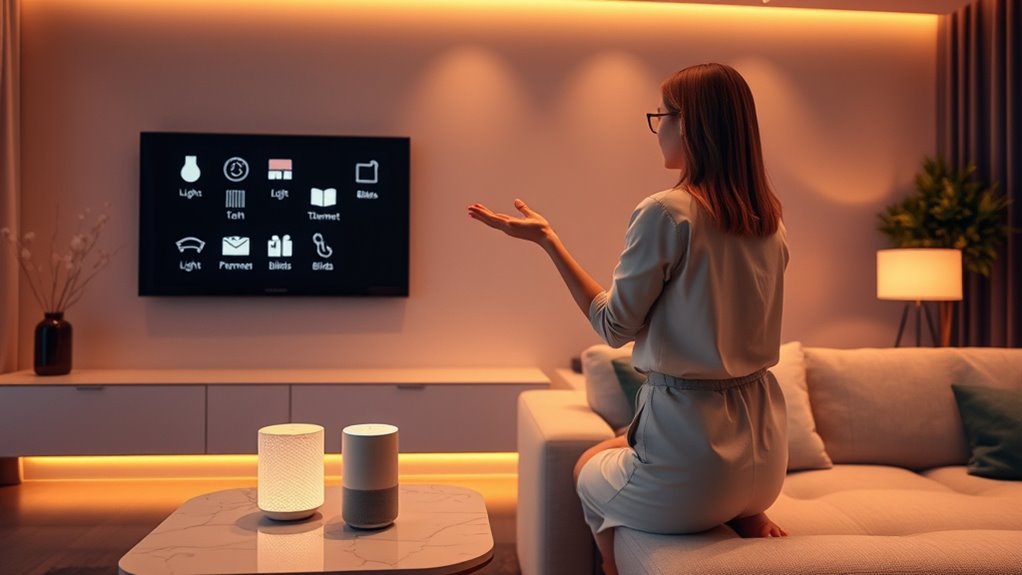
Voice-first home control is transforming how you interact with your living space by allowing you to manage devices and systems simply by speaking. With the rise of smart speaker integration, controlling lights, thermostats, locks, and even appliances has become more intuitive and hands-free. Instead of fumbling for switches or digging through apps, you can just say what you want, and your voice assistant handles the rest. This seamless integration not only simplifies daily routines but also enhances convenience, making your home smarter and more responsive to your needs.
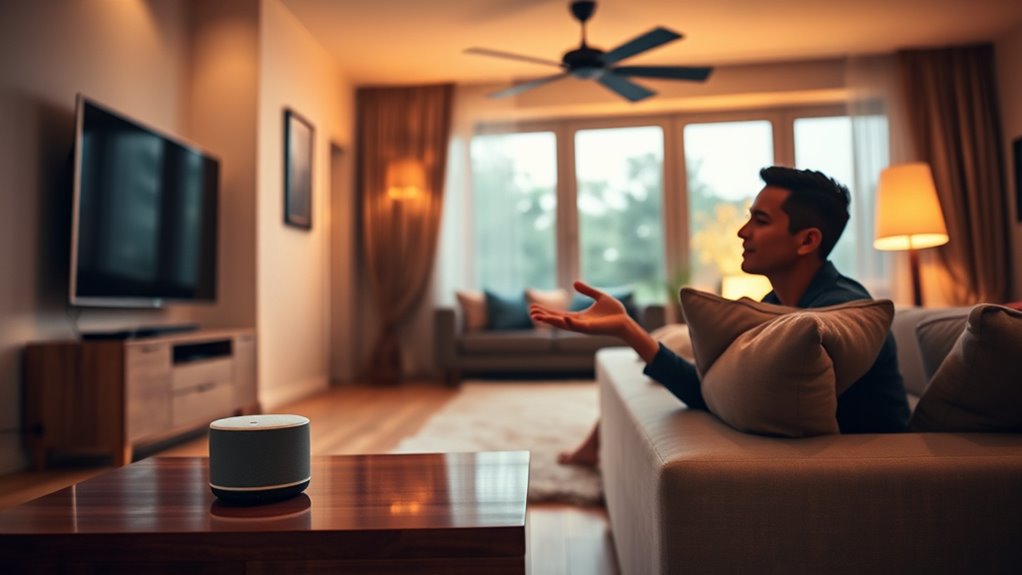
Voice-controlled home systems simplify daily routines with hands-free device management.
One of the most appealing aspects of voice-first home control is how easily you can customize your voice assistant to suit your preferences. Voice assistant customization lets you tailor responses, commands, and routines according to your lifestyle. For example, you can set up specific commands for different household members or create routines that activate multiple devices with a single phrase. Want to turn on the lights, start the coffee maker, and play your favorite morning playlist? Just say your custom phrase, and your voice assistant takes care of everything. This level of personalization makes your smart home feel more natural and aligned with your habits.
Smart speaker integration is the backbone of this hands-free experience. Devices like Amazon Echo, Google Nest, or Apple HomePod act as centralized hubs, connecting various smart gadgets around your house. When you speak, the smart speaker processes your request using advanced voice recognition and then communicates with the appropriate device or system. This integration ensures that you don’t need to juggle multiple apps or remotes; instead, your voice commands are the universal control point. Plus, these speakers often come with the ability to recognize different voices, so your home can respond differently depending on who’s speaking, adding an extra layer of personalization and security.
You’ll find that voice assistant customization extends beyond simple commands. Many platforms allow you to create routines, set up custom skills, or add integrations with third-party services. For instance, you can program your voice assistant to provide personalized weather updates, traffic reports, or news briefings at specific times or with particular phrases. The more you customize, the more your voice-first home adapts seamlessly to your daily schedule, habits, and preferences. This flexibility ensures that your smart home isn’t just a collection of disconnected devices but a cohesive, intuitive environment that responds naturally to your voice.
Additionally, advancements in high refresh rates and low input lag for projectors contribute to a more immersive home entertainment experience, especially in a smart home setup.
In short, voice-first home control, powered by smart speaker integration and voice assistant customization, makes managing your home effortless. It transforms your living space into an interactive environment where your voice is the primary interface, offering convenience, personalization, and a truly modern home experience.
Frequently Asked Questions
How Secure Are Voice-Controlled Smart Home Systems?
Voice-controlled smart home systems are generally secure, but you should stay cautious. Your voice data is often encrypted during transmission, protecting it from hackers. However, third-party integrations can pose risks if they aren’t properly vetted, so always choose trusted services. Regularly update your device firmware and use strong, unique passwords. Being aware of these security measures helps keep your smart home safe and private.
Can Multiple Users Have Personalized Voice Profiles?
You can definitely set up multiple personalized voice profiles, and it’s quite effective. Voice profile setup enhances user recognition accuracy, making sure each person’s commands are correctly identified. This allows multiple users to control smart devices seamlessly, enjoying tailored experiences. While setup might require some initial effort, the system’s ability to distinguish between voices guarantees everyone gets personalized access, making your voice-first home smarter and more user-friendly.
What Privacy Measures Protect Voice Data?
Your voice data is protected through robust encryption, ensuring it stays secure during transmission and storage. Companies also adhere to strict privacy policy compliance, which limits data collection and usage, giving you control over your information. Always review privacy policies to understand how your voice data is handled, and enable any available privacy settings. These measures work together to safeguard your voice data and maintain your privacy in your smart home.
How to Troubleshoot Voice Recognition Issues?
To troubleshoot voice recognition issues, don’t beat around the bush—start with voice training. Revisit your device’s setup and verify your voice profile is accurate, as recognition accuracy depends on it. Speak clearly and consistently, avoiding background noise. If problems persist, update your device’s software or reset the voice recognition settings. Sometimes, a little patience and proper calibration can turn a stumbling block into a smooth experience.
Are Voice Assistants Compatible With All Smart Devices?
Not all smart devices are compatible with every voice assistant, so you might encounter device compatibility issues. Some voice assistants have limitations, meaning they only work with specific brands or types of devices. Before purchasing or setting up, check the compatibility list of your voice assistant to guarantee it can control your desired smart devices. This helps avoid frustration and ensures seamless hands-free control of your smart home.
Conclusion
By embracing voice-first home control, you open the door to a seamless, hands-free lifestyle. It’s like having a personal assistant living in your house, ready to respond whenever you need. As you continue to explore and adapt, your smart home becomes an extension of yourself—intuitive, responsive, and effortless. With voice technology, you’re not just controlling devices; you’re orchestrating harmony in your everyday life, turning your home into a symphony of convenience and comfort.