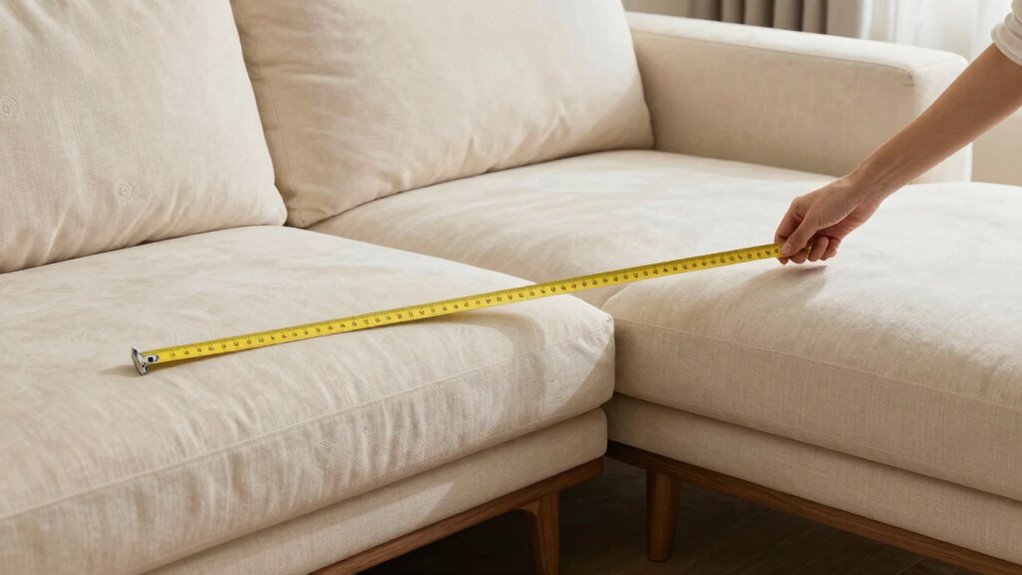

To quickly size a sectional sofa, grab a tape measure and mark the dimensions of your available space. Measure the length and width, leaving enough room for walkways and other furniture. Remember to include extra space for side tables or lamps to avoid overcrowding. Proper measurements help prevent buying a sofa too big or small. Keep these tips in mind, and you’ll get the perfect fit—continue to learn more about getting it just right.

Get decor and gifts delivered free — and shop member deals
- Fast, free delivery on millions of items
- Access to Prime Big Deal Days deals on October 6–7
- Prime Video, Amazon Music and more included
Key Takeaways
- Use a tape measure to quickly determine the length and width of your intended sofa area.
- Measure full sectional dimensions, including chaise or recliner sections, to ensure proper fit.
- Leave ample space around the sofa for walking paths and accessible furniture placement.
- Match sectional size with room proportions, avoiding over- or under-sized furniture for balanced decor.
- Consider fabric patterns and color coordination in relation to your room’s overall design during measurement.
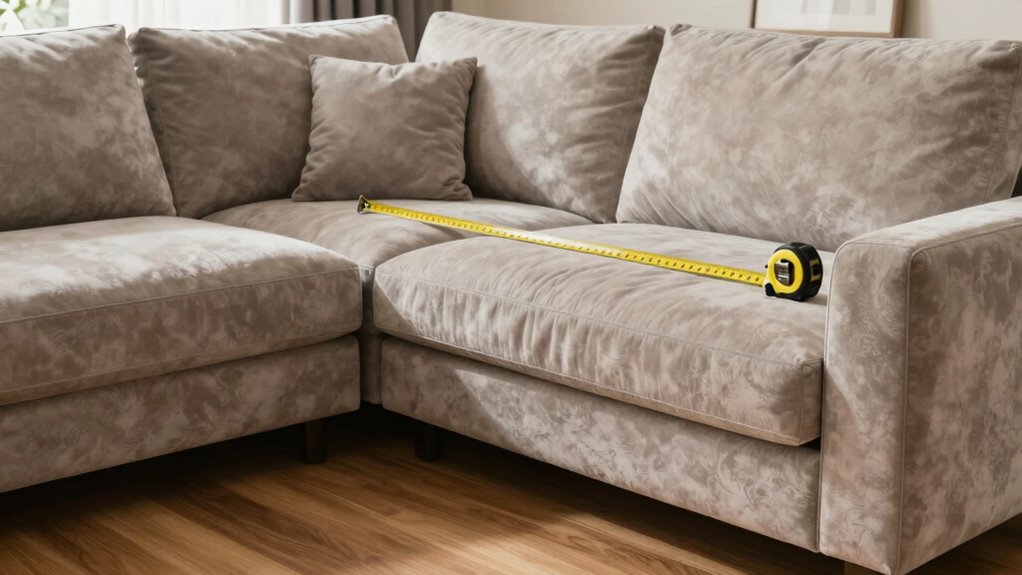
Choosing the right sectional sofa size is vital to guarantee it fits comfortably in your space and meets your seating needs. To start, measure your room carefully. Use a tape measure to determine the available space, noting the length and width of the area where you want to place the sofa. Remember to leave enough room for walking paths and other furniture. Once you have your measurements, consider the size of the sectional itself, including the chaise or recliner sections you might want. This step ensures the sofa won’t overpower the room or feel cramped.
Measuring your space carefully ensures your sectional sofa fits comfortably and suits your needs.
Next, think about fabric patterns and how they will interact with your existing decor. If your room already features busy, bold patterns, opting for a sectional in a solid, neutral fabric can create visual balance. Conversely, if your space is more subdued, a sectional with a subtle pattern or textured fabric can add interest without overwhelming the room. The fabric pattern choice influences the overall vibe and should complement the other textiles in your space.
Color coordination is just as important as size and pattern. Before shopping, consider the color palette of your room. A large sectional in a bold hue might become a statement piece, so choose a shade that harmonizes with your walls, curtains, and other furniture. If your walls are painted in neutral tones, a vibrant or deep-colored sectional can add a pop of personality. On the other hand, if your room already has a lot of color, a sectional in a coordinating neutral can help tie everything together and maintain a cohesive look.
When measuring, don’t forget to include extra space for accessories like side tables, lamps, or décor items. This ensures your sofa won’t block pathways or make the room feel crowded. Additionally, understanding the dimensions of sectional sofas can help you better plan your space and avoid common sizing pitfalls. Remember, a sectional sofa is a significant investment, so taking precise measurements and considering fabric patterns and colors will help you make a choice that’s both functional and stylish.
sectional sofa size measurement tape
As an affiliate, we earn on qualifying purchases.
As an affiliate, we earn on qualifying purchases.
Frequently Asked Questions
Can I Use a Tape Measure for Irregularly Shaped Sections?
Yes, you can use a tape measure for irregularly shaped sections, but be aware of its limitations. Measuring irregularities requires extra care; you’ll need to follow curves and angles carefully, which a flexible tape measure handles better than a rigid one. Keep in mind, tape measure limitations include difficulty capturing precise measurements of complex shapes. Use multiple measurements and take your time to guarantee accuracy when dealing with irregular sections.
What’s the Best Way to Measure for a Corner Sectional?
To measure for a corner sectional, use a measuring tape to find the length of each wall where the sofa will sit. Don’t forget to account for corner angles by measuring from the wall to the center of the corner, ensuring the sectional fits snugly. Measure both walls, noting the angles, and double-check your numbers. This way, you’ll get an accurate fit that matches your space perfectly.
How Do I Account for Wall Protrusions When Measuring?
Tackling wall protrusions is like steering a maze—you need to adapt your measurements. When measuring, include wall protrusions by adding their depth to your main measurements. For example, if a radiator sticks out, measure from the wall to the tip of the protrusion, then add that to your sofa’s dimensions. Always make measurement adjustments for any objects that extend beyond the wall to guarantee your sectional fits perfectly.
Is There a Recommended Tape Measure Length for Large Spaces?
For large space measurements, you should use a tape measure length of at least 25 to 35 feet. This length allows you to measure longer distances without needing multiple measurements or a ladder. When measuring big rooms, opt for a tape measure that’s sturdy and easy to handle, ensuring accurate readings. Having the right tape measure length makes your large space measurement precise and hassle-free.
Can This Method Be Used for Outdoor or Waterproof Sofas?
Yes, you can use this method for outdoor or waterproof sofas. Just like a sailor trusts waterproof materials to withstand the elements, you rely on accurate measurements for outdoor durability. Use a water-resistant tape measure to guarantee your sizing is precise without worry of damage. This quick trick helps you confidently select the right fit, whether you’re planning a cozy patio nook or a seaside retreat, keeping everything snug and secure.
Conclusion
Now that you’ve mastered the 60-second tape measure trick, you’re practically a sectional sofa sizing wizard! No more guessing games or furniture disasters—your living room will be transformed into a perfectly coordinated paradise in seconds. With this simple hack, you’ll avoid the horror of a sofa that’s too big to fit through the door or too small to lounge on. Get ready to conquer your space like a decorating superhero—your dream setup is just a tape measure away!
Fall Picks
fall essentials
As an affiliate, we earn on qualifying purchases.