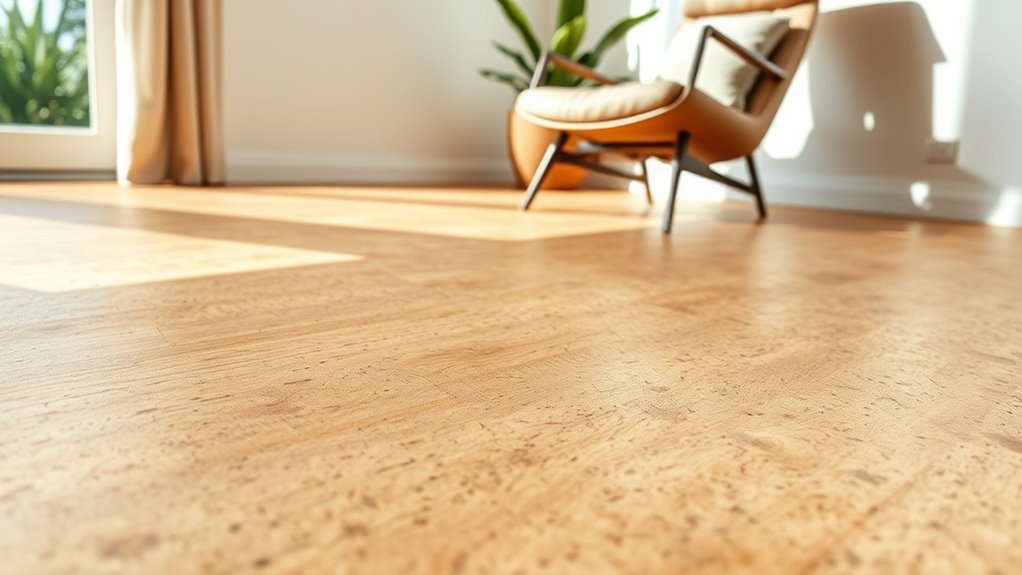

Cork flooring is a genuine environmental choice because it’s renewable, biodegradable, and helps reduce carbon dioxide in the atmosphere. It offers excellent insulation, comfort, and antimicrobial properties, making it practical for homes. While it requires proper installation and care, these benefits far outweigh any trends. If you want to understand how cork can be both eco-friendly and stylish, keep exploring the many advantages this sustainable wonder provides.
Key Takeaways
- Cork flooring is a renewable, biodegradable material harvested sustainably without harming cork oak trees.
- It offers significant environmental benefits like carbon absorption and supporting biodiversity in cork forests.
- While eco-friendly, proper installation and maintenance are essential to maximize durability and water resistance.
- Its comfort, insulation, and antimicrobial properties make it a practical, healthy choice for homes.
- As a trendy interior option, cork combines sustainability with stylish versatility, appealing to eco-conscious design enthusiasts.
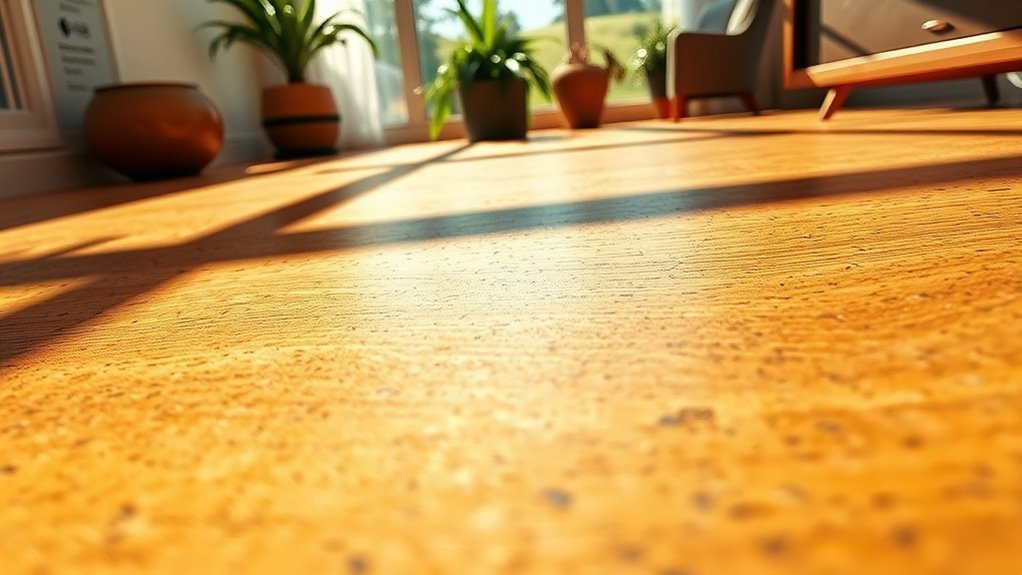
Are you considering a flooring option that’s eco-friendly, comfortable, and stylish? Cork flooring might catch your eye, especially if you’re passionate about sustainability. This natural material is harvested from the bark of cork oak trees, which can be stripped without harming the tree itself. This process makes cork a renewable resource, offering significant environmental benefits. Cork forests also support biodiversity and help combat climate change by absorbing carbon dioxide. Plus, cork flooring is biodegradable, reducing waste at the end of its life cycle. It’s a choice that aligns with eco-conscious values, helping you reduce your carbon footprint while enjoying a warm, inviting space.
However, before jumping in, it’s important to consider the installation challenges associated with cork flooring. While installing cork can be straightforward, it requires proper preparation and care. Cork tiles or planks need a stable, level subfloor to prevent uneven wear or gaps over time. If your subfloor isn’t smooth, you might face issues such as buckling or cracking, which can compromise the durability and appearance of your floor. Additionally, cork is sensitive to moisture, so in areas prone to humidity or spills, extra precautions are necessary. Proper sealing and maintenance become vital to prevent water damage and ensure longevity. Some homeowners find the installation process slightly more complex than traditional options, especially if they’re doing it themselves. It’s often recommended to hire professionals with experience in cork flooring to avoid potential pitfalls.
Proper preparation and professional installation ensure cork flooring’s durability and beauty.
Despite these challenges, many find the benefits outweigh the potential hurdles. Cork’s natural resilience provides excellent comfort underfoot, offering a soft, cushioned feel that’s easier on joints and reduces noise. Its thermal insulating properties help keep rooms warm, making it a cozy option for living rooms, bedrooms, or even kitchens. Moreover, cork flooring is available in a variety of styles, colors, and textures, allowing you to customize your space with ease. Its antimicrobial qualities also resist mold, mildew, and pests, which is a plus for maintaining a healthy home environment. While installation may require some extra planning and care, the end result is a beautiful, sustainable floor that’s as functional as it is stylish.
In addition to its environmental advantages, cork flooring’s ease of maintenance makes it a practical choice for busy households. While installation may require some extra planning and care, the end result is a beautiful, sustainable floor that’s as functional as it is stylish.
Frequently Asked Questions
How Long Does Cork Flooring Typically Last With Proper Care?
Cork flooring typically lasts 25 to 30 years when you consider durability factors and follow proper maintenance tips. To extend its lifespan, avoid excessive moisture, use furniture pads, and clean regularly with gentle cleaners. Proper care prevents dents and scratches, ensuring your cork floors stay beautiful longer. With consistent upkeep, you can enjoy their comfort and eco-friendly benefits for decades, making cork a smart, sustainable choice for your home.
Is Cork Flooring Suitable for High-Moisture Areas Like Bathrooms?
Think of cork flooring as a sponge waiting to soak up trouble—you might wonder if it’s suitable for high-moisture areas like bathrooms. While cork offers some moisture resistance, it’s not entirely waterproof, and installation challenges increase in damp environments. You’ll need proper sealing and extra care to prevent damage. Without these precautions, moisture can compromise the floor, making it less ideal for bathrooms where water exposure is frequent.
What Are the Best Cleaning Methods for Cork Flooring?
To keep your cork flooring looking its best, clean it regularly with a soft broom or vacuum to remove dirt and debris. Use a damp mop with a gentle, pH-balanced cleaner for routine cleaning, avoiding excessive water. For stain removal, act quickly by blotting with a damp cloth and mild soap. Keep cleaning frequency consistent, and always dry the surface thoroughly to prevent damage.
Can Cork Flooring Be Installed Over Existing Flooring?
You can install cork flooring over existing flooring, but you need to consider installation challenges and proper surface preparation. Make certain the existing surface is clean, level, and dry to avoid issues like unevenness or adhesion problems. You might need to remove any old flooring or repair damaged areas first. Taking these steps helps prevent future problems and ensures a smooth, durable installation for your cork flooring.
Is Cork Flooring Resistant to Pests and Mold?
Imagine a family with a basement prone to dampness; cork flooring can help. Cork’s natural properties offer pest resistance and mold prevention, making it an excellent choice for damp environments. Its cellular structure deters pests, while its antimicrobial properties inhibit mold growth. So, you’ll find cork flooring is a smart, resilient option that actively resists pests and mold, ensuring your space stays healthier longer.
Conclusion
Cork flooring isn’t just a trendy choice; it’s a sustainable one, with over 70% of cork harvested without harming the trees. This renewable resource offers durability, comfort, and eco-friendly benefits that can transform your space. While some might see it as a fleeting fad, the facts show cork’s environmental advantages and longevity make it a smart, stylish option. So, if you’re looking to make an eco-conscious change, cork flooring might just be your perfect fit.