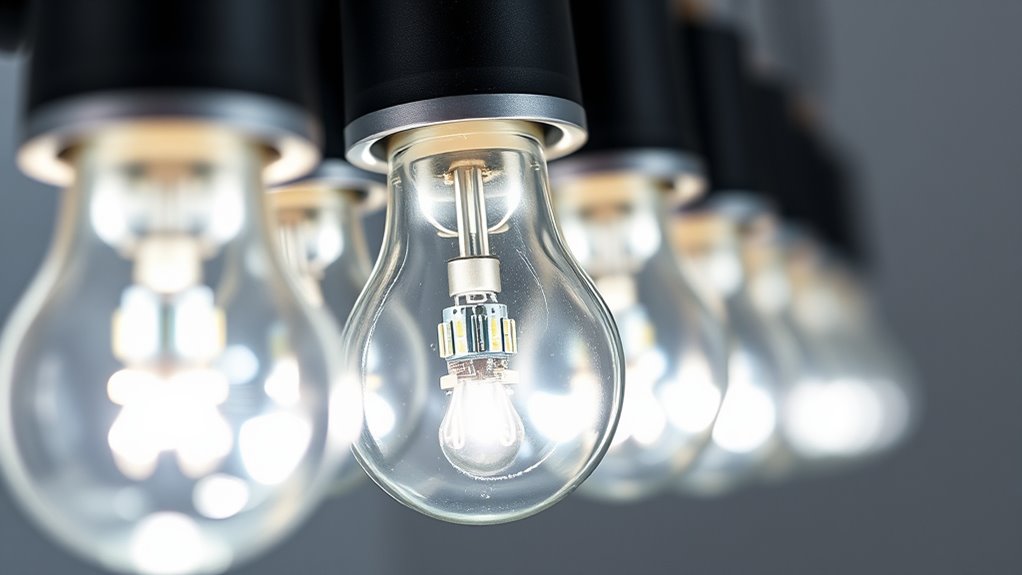

LED bulbs typically last between 25,000 and 50,000 hours, making them much more durable than traditional lights. Their longevity depends on quality, proper installation, and heat management. Cheaper or poorly made LEDs tend to burn out sooner, especially with frequent switching. The main advantage is lower maintenance and long-term savings. If you want to know how to maximize your LED’s lifespan and benefits, continue exploring the factors that influence durability.
Key Takeaways
- LED bulbs typically last between 25,000 and 50,000 hours of use.
- Higher-quality LEDs with proper heat management tend to have longer lifespans.
- Frequent switching on and off can reduce an LED’s overall lifespan.
- Correct installation and stable voltage help maximize LED durability.
- Environmental factors like heat, humidity, and power fluctuations influence LED longevity.

Ever wondered how long your LED lights will last before they need replacing? The lifespan of LED bulbs can vary considerably depending on several factors, but generally, they’re designed to last much longer than traditional incandescent or fluorescent lights. On average, an LED bulb can last anywhere from 25,000 to 50,000 hours of use. This impressive longevity is one of the main reasons many people choose LEDs over other lighting options. It’s not just about saving money on replacements; it’s also about the broader benefits, like energy efficiency and reducing your environmental impact. LEDs consume far less power than incandescent bulbs, which translates into lower energy bills and less strain on power plants. Over their lifespan, this energy efficiency can greatly cut down your carbon footprint, making LEDs a smarter and more sustainable choice.
Understanding how long LEDs last also involves considering their quality and usage conditions. Cheaper or poorly made LEDs might not reach their maximum lifespan, and frequent switching on and off can shorten their life. Conversely, high-quality LEDs with good heat management can perform at their best for decades. Proper installation and avoiding excessive voltage fluctuations can further extend their lifespan. As a result, you get more value from your initial investment and reduce the frequency of replacements, which aligns well with eco-friendly goals. Less frequent replacements mean fewer discarded bulbs ending up in landfills, helping lessen environmental impact. Plus, LEDs emit very little heat compared to incandescent bulbs, which reduces waste heat and makes them more energy-efficient overall. Additionally, advances in technology and manufacturing continue to improve LED durability and performance, making them an even more reliable lighting option.
The environmental impact of LED lighting extends beyond just their long lifespan. Because they last longer and use less energy, LEDs contribute to less resource extraction and manufacturing pollution. They also contain no harmful substances like mercury, unlike some other types of bulbs. This makes disposal safer and easier, further minimizing environmental harm. Additionally, the reduced energy consumption helps decrease greenhouse gas emissions associated with electricity production, especially when paired with renewable energy sources. So, when you choose LED bulbs, you’re not only gaining a longer-lasting, cost-effective lighting solution but also actively supporting environmental conservation.
Frequently Asked Questions
How Do Environmental Factors Affect LED Lifespan?
Environmental impacts, like temperature effects, substantially influence your LED’s lifespan. High temperatures can cause the LED components to degrade faster, reducing their longevity. Conversely, cooler environments help maintain ideal performance and extend their life. Exposure to moisture, dust, or harsh weather conditions can also accelerate wear and tear. To maximize your LED’s durability, guarantee proper ventilation, avoid extreme temperatures, and protect them from environmental hazards.
Can LEDS Be Recycled or Reused After Their Lifespan Ends?
You can definitely recycle and reuse LEDs after their lifespan ends. LED recycling helps recover valuable materials like metals, reducing waste and environmental impact. While LEDs aren’t typically reused as whole units, their components can often be repurposed or refurbished for new applications. By participating in LED recycling programs, you contribute to sustainable practices and help minimize electronic waste, ensuring the materials are reused efficiently and responsibly.
What Are Signs That an LED Light Needs Replacement?
When your LED light begins to show subtle signs, it’s time to consider a replacement. Watch for color fading, which dulls the brightness you once loved, and flickering issues that disrupt your ambiance. These indicators hint that your LED’s glow is waning, and replacing it ensures you maintain a well-lit, comfortable space. Don’t wait until it’s completely dim—heed these signs and keep your lighting fresh.
Do Different Brands or Models Have Varying Lifespans?
You might wonder if different brands or models have varying lifespans. Generally, brand reliability plays a big role, with well-known brands often offering longer-lasting LEDs. Model differences also matter; some designs are built for durability, while others may use lower-quality components. So, when choosing an LED, consider both brand reputation and specific model features to guarantee you get a product that lasts longer and meets your needs.
How Does Frequent Switching Impact LED Durability?
Frequent switching, or power cycling, can reduce your LED’s durability over time. Each time you turn it on and off, thermal stress builds up, which may cause microcracks and degrade internal components. While LEDs are designed for many cycles, excessive power cycling accelerates wear, shortening lifespan. To maximize longevity, try to minimize unnecessary switching and allow your LED to warm up and cool down gradually.
Conclusion
Think of your LED as a guiding star in your home’s night sky. When you give it proper care, it shines brightly for years, symbolizing reliability and innovation. But neglect dims its glow, reminding you that even the brightest lights need attention. Embrace the lifecycle of your LED, knowing it’s more than just a bulb—it’s a beacon of progress and sustainability. Keep it well-maintained, and let it illuminate your path forward.