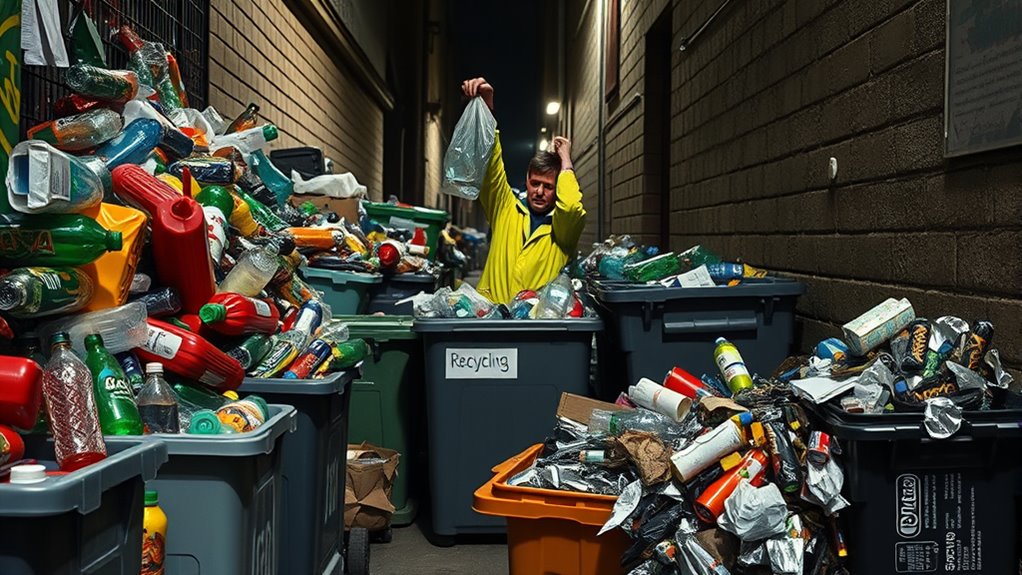

Many so-called eco-friendly recycling habits can actually do more harm than good. Over-recycling wastes resources and causes contamination, making batches unusable. Recycling only certain plastics or mixing non-recyclables can increase waste and lower efficiency. Believing recycling solves all waste issues distracts you from reducing or reusing, while the environmental impact of processing and transportation creates a hidden carbon footprint. If you keep going, you’ll uncover how your habits might be unintentionally harmful.
Key Takeaways
- Over-recycling and improper sorting waste resources, strain facilities, and increase contamination risks.
- Recycling contaminated materials blocks machinery and lowers product quality, making loads less effective.
- Recycling only certain plastics based on labels can lead to contamination and batch rejection.
- Recycling alone doesn’t address overconsumption or waste reduction, creating a false sense of sustainability.
- Recycling processes are energy-intensive, emitting greenhouse gases from chemical processing and transportation.
Over-Recycling and the Waste of Resources
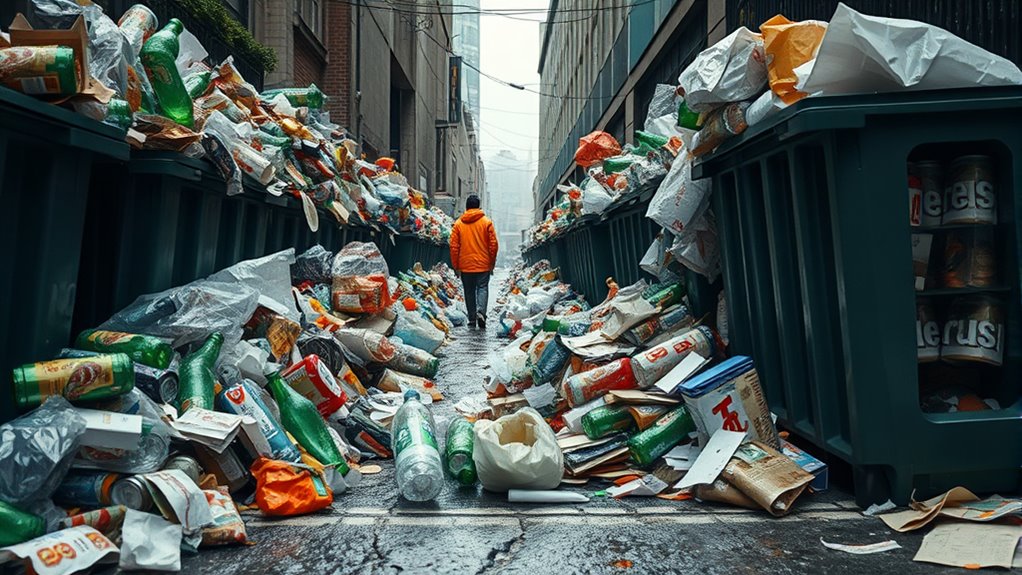
While recycling is often seen as an easy way to help the environment, over-recycling can actually waste resources and do more harm than good. Many people believe that tossing everything into a single stream bin is always beneficial, but it can lead to single stream contamination. When non-recyclables are mixed with recyclables, it can cause entire batches to be discarded, wasting valuable materials and energy. This misconception about recycling’s effectiveness encourages over-recycling without considering whether items are properly sorted. Over-recycling strains recycling facilities and increases the likelihood of contamination, which can halt the recycling process altogether. Instead of blindly recycling everything, it’s better to understand what’s recyclable and how to do it correctly to truly reduce waste and conserve resources. Implementing data-driven strategies can help identify the most effective recycling practices and optimize resource use.
Recycling Contaminated Materials
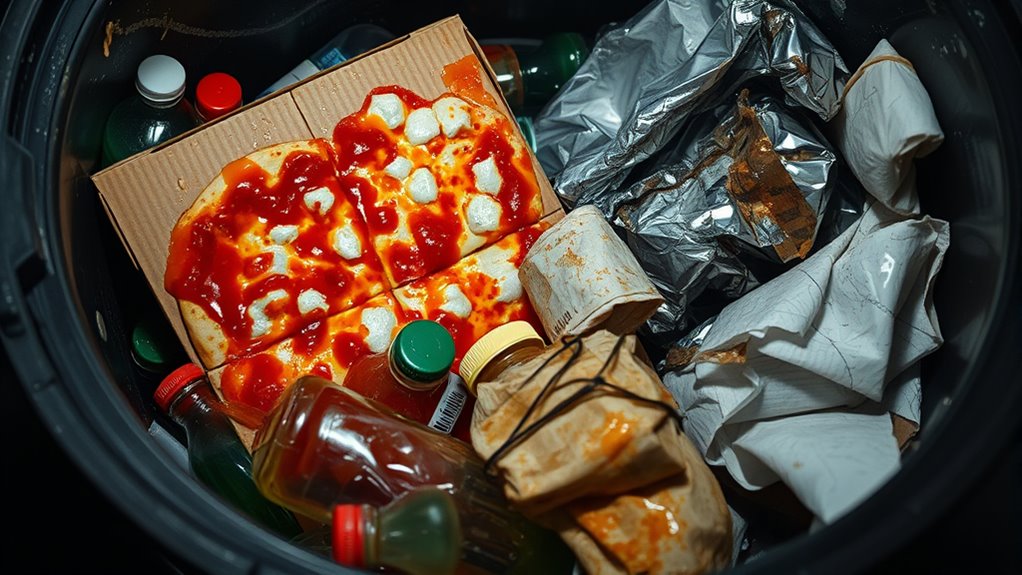
Recycling contaminated materials undermines the entire effort to reduce waste, as impurities can block processing machinery and diminish the quality of recycled products. To improve outcomes, contamination prevention is essential—rinsing containers and removing non-recyclables before disposal helps maintain cleaner loads. When materials are properly cleaned, sorting accuracy increases, guaranteeing recyclables are correctly separated and processed. Avoiding contamination saves time and resources, preventing entire batches from being rejected or sent to landfills. You play a key role in this process by following local guidelines for recycling and double-checking your materials. Incorporating AI-assisted sorting can further enhance the efficiency and accuracy of recycling facilities. By prioritizing contamination prevention, you help make certain that recycling efforts are effective, reducing waste and conserving resources for future use. Properly sorted and clean recyclables truly make a difference.
Recycling Only Certain Types of Plastics
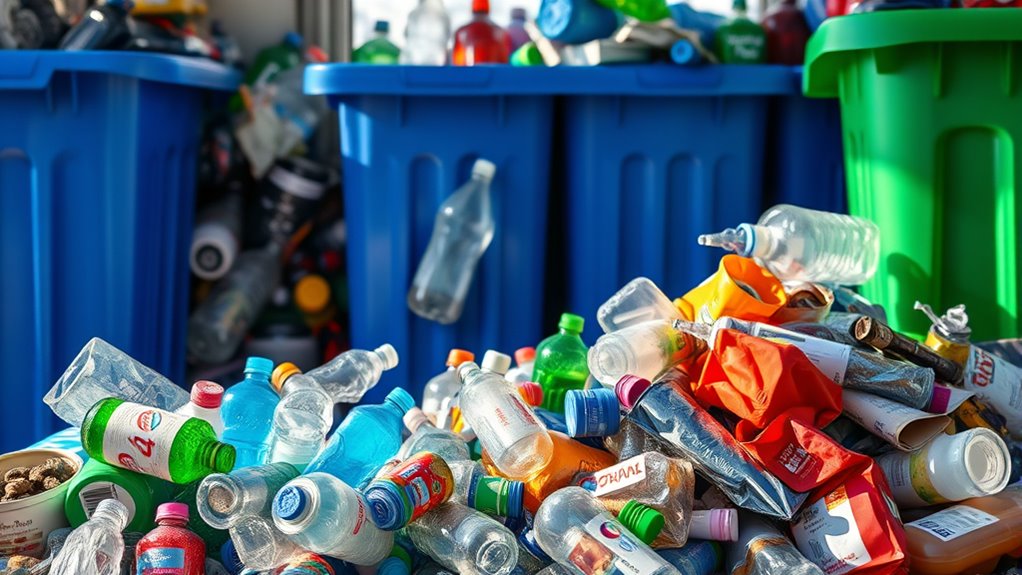
Not all plastics are accepted in recycling programs, so it’s important to know which types your local facility handles. Plastic labeling helps identify recyclable plastics, typically marked with numbers from 1 to 7. However, many plastics with different labels aren’t accepted, leading to recycling contamination when non-recyclables are tossed in. This contamination can cause entire batches to be rejected, defeating the purpose of recycling. Some plastics, like certain polystyrenes or plastics with complex additives, are often rejected despite their label. To improve your impact, always check your local guidelines and avoid including plastics that aren’t accepted. Properly sorting plastics based on labeling ensures your efforts don’t inadvertently harm the recycling process or contribute to waste mismanagement. Incorporating recycling best practices can further help ensure that your efforts are truly effective.
Believing Recycling Solves All Waste Issues
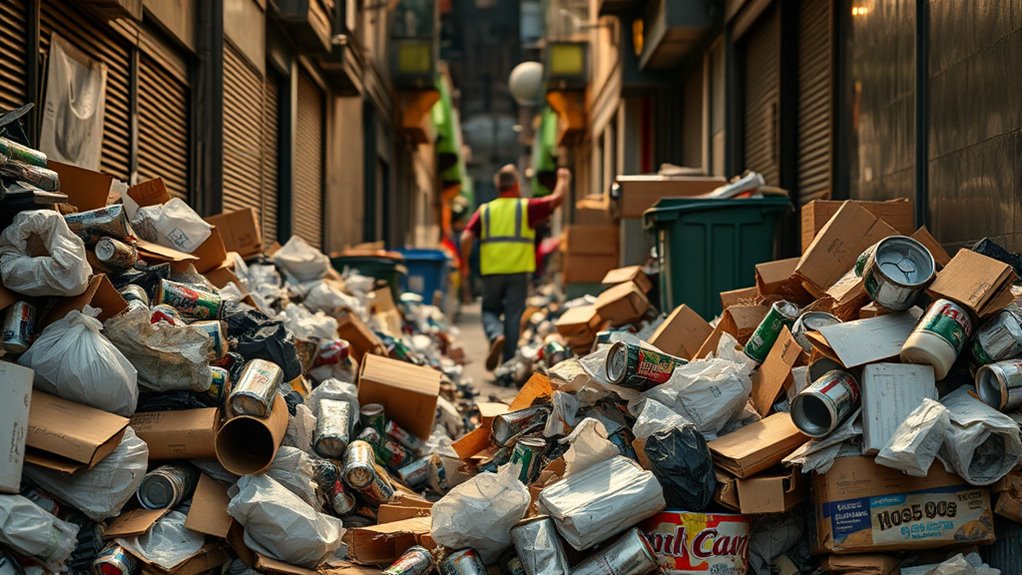
Many people assume that simply recycling their plastic and paper automatically solves the broader waste problem. This belief fosters consumer complacency, where individuals think their small efforts are enough. It creates a false sense of sustainability, making us overlook other critical waste issues like overconsumption and landfill overflow. Relying solely on recycling masks the reality that many materials aren’t recycled efficiently or at all. It also distracts from reducing waste at the source, which is far more effective. By thinking recycling is a catch-all solution, you might neglect the importance of buying less, reusing, and supporting sustainable practices. True environmental progress requires more than just recycling; it demands a holistic approach beyond this limited habit.
The Hidden Carbon Footprint of Recycling Processes
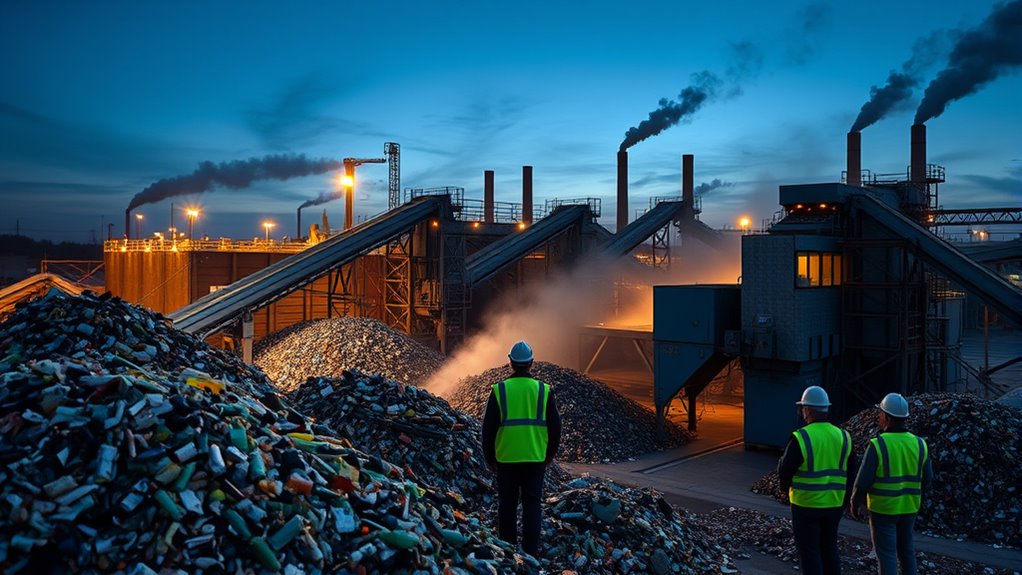
Although recycling is often seen as an environmentally friendly practice, it can inadvertently contribute to a significant carbon footprint. The hidden costs lie in processes like chemical processing and transportation emissions. These stages require energy, often from fossil fuels, increasing greenhouse gases. Consider these points: 1. Chemical processing for materials like plastics consumes large amounts of energy, releasing CO₂. 2. Transportation emissions occur as recycled materials are shipped between facilities, often over long distances. 3. Recycling facilities themselves often rely on fossil fuels for machinery and operations. Additionally, energy consumption during the recycling process can be surprisingly high, further amplifying the environmental impact.
Frequently Asked Questions
How Does Recycling Affect Local Biodiversity and Ecosystems?
Recycling impacts local biodiversity and ecosystems by potentially causing habitat disruption if waste is improperly processed or transported. When non-native materials or invasive species accidentally enter ecosystems through recycling, they can outcompete native species, disrupting habitats. You might not realize that your recycling habits can unintentionally introduce invasive species or disturb delicate habitats, leading to long-term ecological consequences. Being mindful of proper recycling practices helps protect local biodiversity and maintain ecosystem health.
Are There Hidden Health Risks Associated With Recycled Materials?
You might not realize it, but recycled materials can pose hidden health risks. Chemical residues from previous uses may linger, and microbial contamination can develop if recycling processes aren’t properly managed. These hidden dangers could affect your health if you handle or use recycled items without adequate precautions. Always wash and inspect recycled products thoroughly, and support recycling efforts that prioritize safety and proper sanitation to minimize these risks.
What Are the Economic Implications of Over-Recycling Practices?
Think of over-recycling as throwing money down the drain. When you overdo it, you can cause market instability, making recycled materials harder to sell and more unpredictable. Costly subsidies may be needed to keep recycling programs afloat, which strains public budgets. This overemphasis on recycling might divert funds from other essential services, ultimately hurting the economy. Balancing recycling efforts helps avoid these pitfalls while still protecting the environment.
How Effective Are Current Recycling Technologies in Reducing Pollution?
You might think current recycling technologies markedly cut pollution, but they often fall short. They help reduce plastic contamination, yet they require high energy consumption, which can offset environmental benefits. Advanced sorting and processing are improving, but inefficiencies remain. So, while recycling is valuable, it’s not a complete solution, and you should be aware that some processes still contribute to pollution and energy use, limiting their overall effectiveness.
Can Recycling Inadvertently Promote Consumer Overconsumption?
You might think recycling always helps, but it can secretly promote consumer complacency. When you see your efforts as enough, you may indulge more, believing you’re making a real impact. This false sense of environmental gain can lead to overconsumption, undoing progress. Recycling becomes a comfort zone, masking the real issues and encouraging habits that aren’t as green as they seem. Beware—your good intentions could be part of the problem.
Conclusion
So, before you pat yourself on the back for recycling, remember these hidden pitfalls. Over-recycling wastes precious resources, and contaminated or selective recycling can do more harm than good. Believing it’s the ultimate solution blinds you to bigger waste problems, while the carbon footprint of recycling itself can be staggering. Don’t let green habits fool you into thinking you’re saving the planet single-handedly—real change requires awareness and action beyond just recycling.