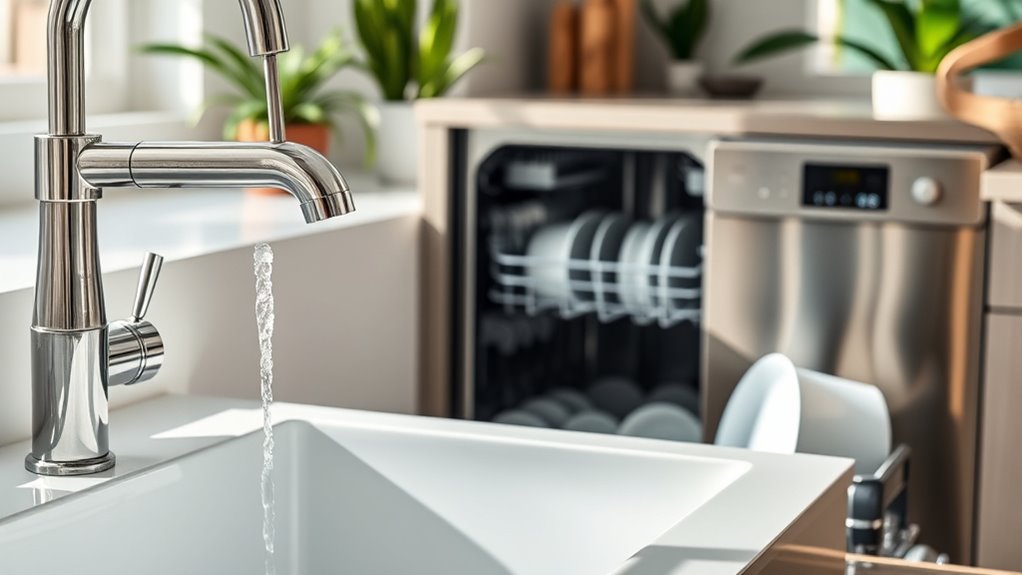

Smart water-conserving faucets and dishwashers help you cut down water use with features like motion sensors, touchless controls, and eco modes. These appliances automatically limit water flow when not needed and adjust spray cycles for efficiency. By choosing models with high efficiency ratings and adaptive settings, you can save water and energy effortlessly. Keep exploring to discover how these innovative solutions can make your household more sustainable and cost-effective.
Key Takeaways
- Smart faucets use motion sensors or touchless controls to limit water flow, reducing waste during everyday use.
- Water-saving dishwashers feature eco modes and adaptive cycles that optimize water and energy consumption.
- Both appliances incorporate advanced technology to adjust flow and cycle duration based on load size and soil level.
- Automated controls and leak prevention features help prevent unnecessary water usage and enhance household conservation efforts.
- Integrating these smart appliances supports overall household water conservation and cost savings through efficient operation.
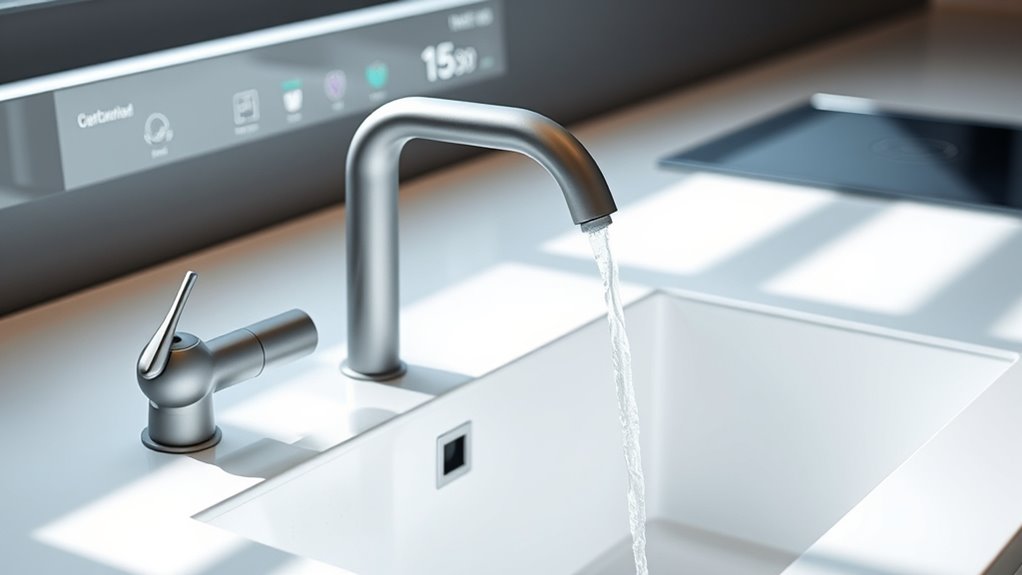
Using water-saving faucets and dishwashers is one of the easiest ways to reduce your household water consumption. Modern dishwashers are built to use considerably less water than older models, especially when they are rated high for dishwasher efficiency. These appliances are designed with advanced spray arms and optimized wash cycles that clean dishes thoroughly while using minimal water. To maximize their efficiency, always run full loads rather than partial ones. Avoid pre-rinsing dishes unless absolutely necessary, as many dishwashers today can handle lightly soiled items without prior rinsing. Selecting a dishwasher with a high energy and water efficiency rating means you’ll use less water and electricity, making it both eco-friendly and cost-effective. Incorporating field‑of‑view and imaging‑scale examples from deep-sky imaging can inspire innovative ways to optimize water use in other household technologies. Additionally, pairing water-saving faucets with smart features can further enhance conservation. Some faucets now include motion sensors or touchless controls, limiting water flow to only when you need it. These features help prevent waste caused by forgetfulness or accidental leaks. For dishwashers, choosing models with adaptive wash cycles or eco modes can remarkably cut down water use without sacrificing cleaning performance. These programs adjust water levels based on load size and soil level, ensuring you’re not wasting water on overly intensive cycles when not needed.
Frequently Asked Questions
How Much Can I Save Annually With Water-Efficient Fixtures?
You can save around $100 to $200 annually with water-efficient fixtures. These fixtures reduce water usage profoundly, leading to substantial water savings over time. The cost benefits include lower water bills and decreased energy costs from heating water. By upgrading your faucets and dishwashers, you not only cut expenses but also contribute to conserving resources, making your home more eco-friendly and economical in the long run.
Are Smart Faucets Compatible With Existing Plumbing Systems?
Yes, smart faucets are generally compatible with existing plumbing systems, but you should check plumbing compatibility and retrofit considerations first. Most smart faucets are designed to fit standard fittings, making installation straightforward. However, it’s wise to review your current plumbing setup and guarantee the faucet’s connection types match. If needed, you might need adapters or minor modifications to ensure proper fit and function. Always consult installation instructions or a professional plumber for best results.
Do Water-Saving Appliances Compromise Cleaning Performance?
Do water-saving appliances compromise cleaning performance? Not necessarily. They’re designed to balance water pressure and cleaning effectiveness, ensuring your dishes still come out spotless. Modern technology allows these appliances to use less water without sacrificing power, so you don’t have to worry about dirt or grime lingering. With the right settings, you can save water and still achieve the sparkling clean results you expect. Isn’t it worth trying?
What Maintenance Is Required for Low-Flow Faucets and Dishwashers?
You should regularly inspect for leaks and replace filters as needed. Check your low-flow faucets and dishwashers monthly for any drips or dribbles, which could waste water and signal a problem. Replace filters every 3-6 months to maintain ideal performance. Also, clean aerators and seals to prevent clogs. Regular maintenance ensures your water-saving appliances work efficiently, saving water and reducing your utility bills.
Are There Government Incentives for Installing Water-Efficient Appliances?
Back in the day, government incentives really encouraged eco-friendly upgrades. Now, you can often find tax credits for installing water-efficient appliances. These incentives aim to promote conservation and may even tie into recycling programs. Check with local or federal programs, as many offer rebates or credits, making it more affordable to upgrade your home. Taking advantage of these benefits helps save water, lowers utility bills, and supports environmental efforts.
Conclusion
Imagine your home as a well-tended garden, where every drop of water is a essential bloom. By choosing smart, water-conserving faucets and dishwashers, you become the gardener tending this delicate ecosystem. These devices are like gentle rainstorms, nurturing without waste. With each mindful use, you safeguard this oasis, ensuring its beauty endures for seasons to come. Embrace these innovations, and let your home flourish like a thriving, sustainable paradise.