
If your compost smells bad, you’re likely making common mistakes like adding too many greens or not balancing with browns, which causes odors and pests. Avoid overfilling the bin, and never include meat, dairy, or oily foods. Make sure to bury food scraps under dry leaves or shredded paper, turn the compost regularly, and maintain proper moisture levels. Keep pests out with a lid, and pay attention to smell clues; more tips await if you continue exploring.

Get decor and gifts delivered free — and shop member deals
- Fast, free delivery on millions of items
- Access to Prime Big Deal Days deals on October 6–7
- Prime Video, Amazon Music and more included
Key Takeaways
- Overloading the compost with food scraps without balancing browns causes odors and attracts pests.
- Adding meat, dairy, or oily foods encourages bad smells and pest infestations.
- Not turning or aerating the compost leads to compacted, smelly, and anaerobic conditions.
- Failing to cover fresh scraps with dry material allows odors to escape and pests to access the bin.
- Ignoring moisture levels—making compost too wet or too dry—hinders microbial activity and causes foul smells.
Home composting might seem like a simple way to reduce waste and create nutrient-rich soil, but when done improperly, it can lead to unexpected problems. Many people fall for common composting myths that can sabotage their efforts. For example, some believe you should toss everything in your bin without considering balance, or that composting is only for experts. These misconceptions can cause unpleasant odors, pests, or slow decomposition. To avoid this, it’s important to understand the basics and implement eco-friendly tips that guarantee your compost stays healthy and odor-free.
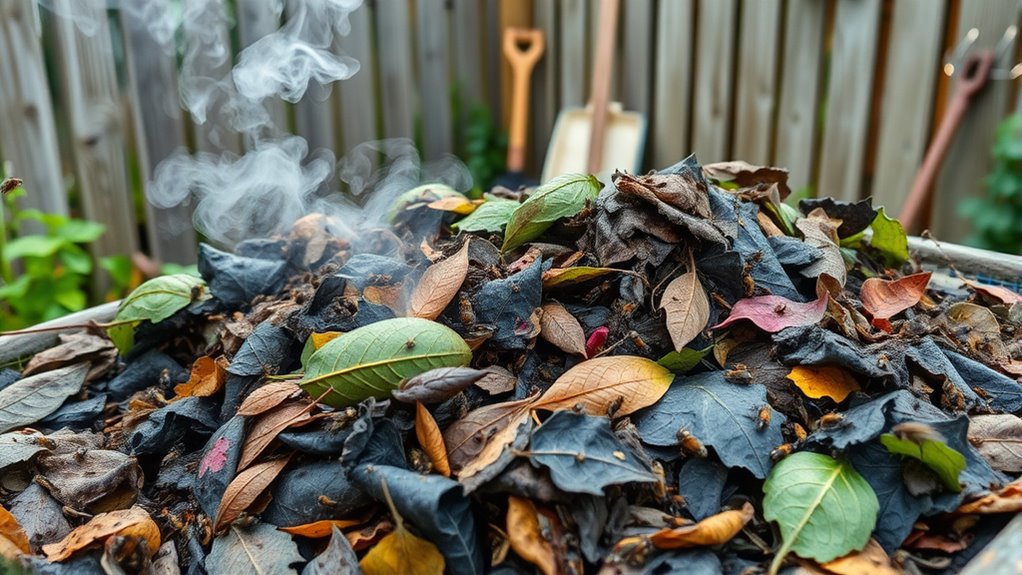
First, dispel those composting myths by recognizing what truly breaks down efficiently. You don’t need a perfect mix of ingredients, but you do need a balance of greens and browns. Greens like fruit scraps and grass clippings provide nitrogen, while browns such as dry leaves and cardboard supply carbon. Failing to balance these materials often results in a smelly, slimy mess. Keep in mind that adding too much of one type can throw off the system. For example, piling in only kitchen scraps might attract pests or produce foul odors, especially if the materials are not buried or covered properly.
Eco-friendly tips are your best allies here. Always cover fresh food scraps with a layer of dry leaves or shredded paper to reduce smells and deter pests. Aeration is vital, so turn your compost regularly to introduce oxygen, which helps microbes work efficiently and prevents anaerobic conditions that cause bad odors. Proper moisture levels also matter; your compost should feel like a damp sponge—not too wet or too dry. If it smells sour or rotten, it’s a sign that the balance is off, and you might need to add more browns or turn the pile more often. Additionally, incorporating microbial activity can significantly improve decomposition and odor control.
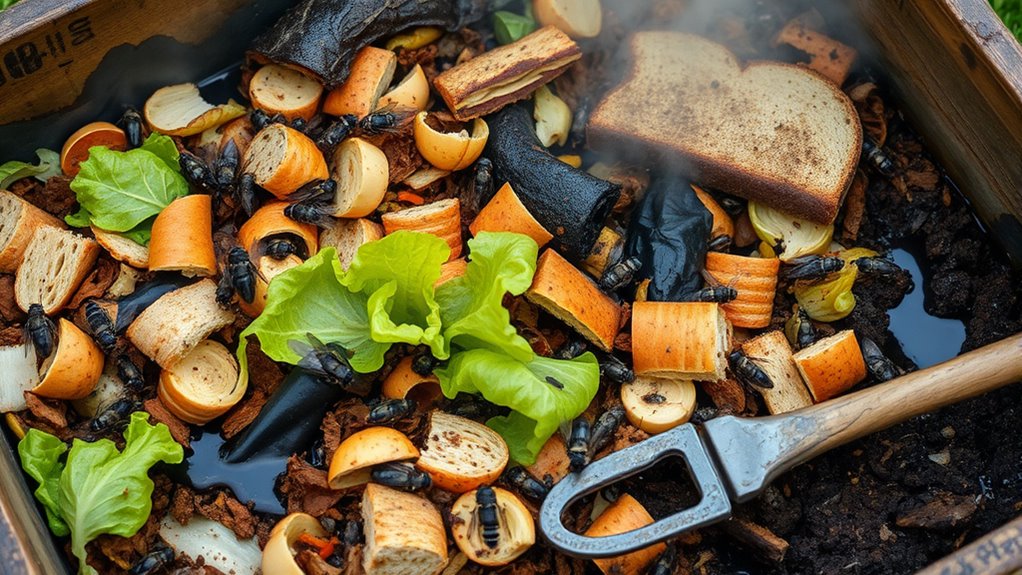
Avoid the temptation to overfill your bin or throw in inappropriate items like meat, dairy, or oily foods, which can create odors and attract pests. Instead, stick to plant-based waste, and consider composting yard waste separately if needed. Using a compost bin with a lid or a well-ventilated design can help control odors and prevent pests from getting in. Remember, patience is key. Composting takes time, and rushing the process or adding too much at once can lead to smelly, unusable compost.
Frequently Asked Questions
How Can I Tell if My Compost Is Too Wet?
If your compost feels overly soggy or has a foul smell, you might have a moisture imbalance. To check, squeeze a handful—if water drips out or it feels like a damp sponge, it’s too wet. Waterlogging issues can slow decomposition and cause odors. To fix this, mix in dry materials like leaves or newspaper, and turn the pile to restore proper airflow and moisture levels.
What Are the Signs of Improper Compost Decomposition?
You’ll notice improper compost decomposition if the compost isn’t heating up properly; low compost temperature indicates this. You might also see a bad odor, which shows oxygen levels are too low. If your compost remains too wet or slimy, it hampers decomposition. To fix this, aerate the pile and add dry materials. Keep an eye on temperature and oxygen to guarantee healthy, efficient composting.
Can Certain Kitchen Scraps Cause Unpleasant Odors?
You might wonder if certain kitchen scraps cause unpleasant odors. In reality, the smell depends on compost bin placement and kitchen scrap selection. Avoid placing your bin in a closed, poorly ventilated area, as odors can build up. Steer clear of greasy, meat, or dairy scraps, which break down slowly and emit foul smells. Properly balancing green and brown materials keeps your compost fresh and odor-free, ensuring a pleasant composting experience.
How Often Should I Turn My Compost Pile?
You should turn your compost pile every 1-2 weeks to maintain a good composting timeline. This helps aerate the pile, preventing odors and speeding up decomposition. The compost pile size influences how often you turn it; larger piles may need more frequent turning to stay balanced. Regular turning ensures efficient breakdown of materials, keeps the process steady, and avoids smelly surprises, making your composting experience more successful and odor-free.
Is It Okay to Add Pet Waste to Compost?
Did you know that pet waste can contain harmful pathogens? When considering pet waste disposal, it’s generally not recommended to add it directly to your compost, as it can compromise compost safety. If you must, use a dedicated, sealed pet waste compost bin and avoid mixing it with edible plants. Proper handling guarantees your compost stays safe and odor-free, protecting both your garden and family.
Conclusion
Home composting can be a rewarding way to recycle, but neglecting proper techniques can turn your yard into a stinky mess. Instead of enjoying fresh, fragrant soil, you might end up battling foul odors and pests. It’s a delicate balance—like a garden in full bloom or a smelly disaster. By avoiding common mistakes, you’ll create a lush, healthy compost and keep your home smelling sweet. Keep it right, and nature will thank you.
Fall Picks
fall essentials
As an affiliate, we earn on qualifying purchases.