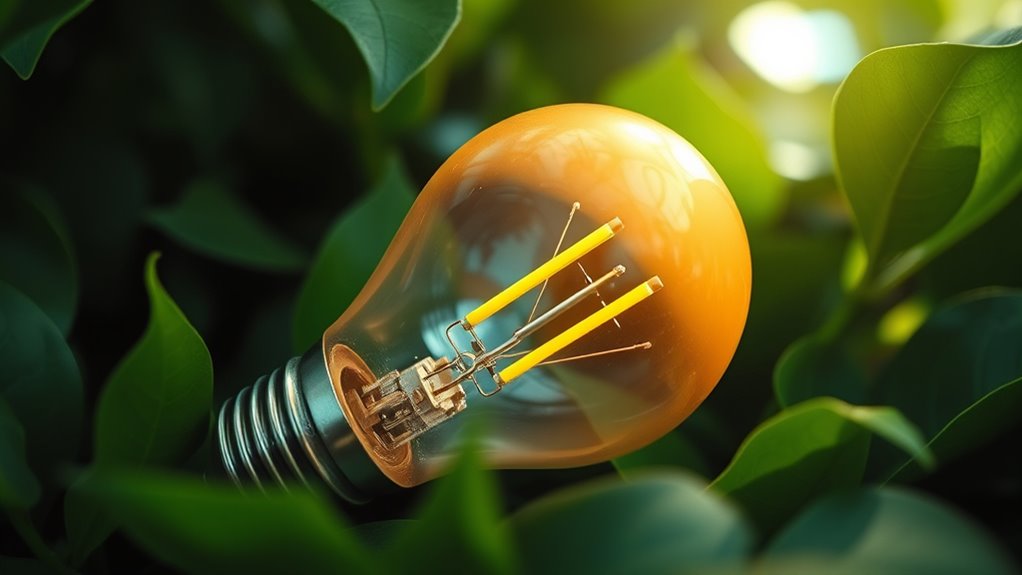

Choosing LED bulbs with low energy use is a smart way to reduce your environmental impact. LED lights are energy-efficient, long-lasting, and help cut down on electricity consumption, which lowers greenhouse gas emissions. They also eliminate the need for frequent replacements, reducing waste. By switching to eco-friendly LED bulbs, you support cleaner energy sources and lessen your ecological footprint. Keep exploring to discover how you can maximize these benefits and make your lighting even more sustainable.
Key Takeaways
- Select LED bulbs with high energy efficiency ratings to reduce electricity consumption.
- Look for bulbs with low wattage and high lumens for optimal brightness with minimal energy use.
- Choose bulbs made from sustainable materials, like biodegradable plastics, to minimize environmental impact.
- Opt for solar-powered LED fixtures to harness renewable energy and eliminate grid dependency.
- Ensure the bulbs have a long lifespan to decrease waste and the frequency of replacements.

Have you ever pondered how your choice of lighting impacts the environment? Every bulb you switch on contributes to energy consumption and waste, but by making thoughtful decisions, you can reduce your ecological footprint. One effective way to do this is by choosing eco-friendly lighting options, particularly LED bulbs with low energy use. LEDs are energy-efficient, long-lasting, and versatile, making them an ideal choice for sustainable living. They consume markedly less power than traditional incandescent bulbs, which means you’re not only saving money on electricity bills but also decreasing the demand for fossil fuels, reducing greenhouse gas emissions.
Beyond just swapping out bulbs, you can further enhance your environmental efforts by incorporating solar-powered fixtures into your outdoor lighting setup. These fixtures harness sunlight during the day, storing energy in rechargeable batteries to illuminate your yard at night without drawing power from the grid. Solar-powered fixtures eliminate the need for wiring and reduce electricity consumption, making them an excellent eco-friendly alternative. Plus, they operate silently and require minimal maintenance, contributing to a cleaner and quieter environment.
Another aspect to contemplate is the materials used in your lighting fixtures. Opting for products made from biodegradable materials ensures that, at the end of their life cycle, they won’t contribute to landfill waste or environmental pollution. Biodegradable materials, like certain bioplastics or sustainably sourced wood, break down naturally over time, reducing the burden on landfills and decreasing pollution. When combined with LED technology and solar power, fixtures made from biodegradable materials create a truly sustainable lighting system that minimizes environmental impact at every stage.
Choosing eco-friendly lighting isn’t just about the bulbs; it’s a holistic approach. Look for fixtures designed with durability and energy efficiency in mind. Many modern LED fixtures are engineered to be both stylish and sustainable, seamlessly fitting into your home or garden. By integrating solar-powered fixtures and choosing options made from biodegradable materials, you’re supporting cleaner energy sources and reducing waste. This all-encompassing approach ensures your lighting choices contribute positively to the environment while providing reliable illumination.
Additionally, understanding the role of contrast ratio in projectors can help you choose the right display for your viewing needs, especially if you aim for high-quality, vibrant images that reduce the need for excessive brightness and energy consumption. Ultimately, making conscious choices about your lighting can profoundly influence your environmental footprint. Switching to LED bulbs with low energy use, incorporating solar-powered fixtures, and selecting products made from biodegradable materials allow you to enjoy well-lit spaces without guilt. It’s a practical, impactful step toward a more sustainable lifestyle. Small changes in your lighting habits can add up to a meaningful difference, helping protect the planet for future generations.
Frequently Asked Questions
How Do LED Bulbs Compare in Lifespan to Traditional Incandescent Bulbs?
LED bulbs last considerably longer than traditional incandescent bulbs, often up to 25,000 hours or more. This means you get better bulb durability and fewer replacements, saving you time and money. Plus, their superior energy efficiency reduces your electricity bills. By choosing LED bulbs, you benefit from a durable, energy-efficient lighting option that outlasts incandescent bulbs, making them a smarter, more eco-friendly choice for your home.
Are LED Bulbs Safe for Outdoor Use in All Weather Conditions?
You’re wondering if LED bulbs are safe outdoors in all weather conditions. The good news is, many LED bulbs are designed with weather resistance, making them suitable for harsh rain, snow, or extreme heat. Their power efficiency doesn’t just save energy—it also guarantees reliability over time. Just check the packaging for outdoor ratings, and you’ll enjoy bright, safe lighting no matter what Mother Nature throws your way.
Can LED Bulbs Be Recycled Easily to Reduce Environmental Impact?
Yes, you can recycle LED bulbs to reduce environmental impact. Many recycling programs accept LED lighting, but you should check local facilities, as regulations vary. LED bulbs contain small amounts of materials like metals that need proper handling, so follow environmental regulations closely. By recycling your LEDs properly, you help prevent hazardous waste and support sustainable practices, making a positive difference for the environment.
Do LED Bulbs Emit Any Harmful UV or Blue Light?
LED bulbs emit minimal UV light, making them generally safe for your skin and eyes. However, blue light impact from LEDs can cause eye strain and disrupt sleep if exposed to it for long periods, especially at night. To guarantee UV safety and reduce blue light impact, consider using bulbs with a warmer color temperature or applying screen filters. Always take breaks and limit exposure to blue light, especially before bedtime.
What Are the Initial Costs Versus Long-Term Savings of LED Lighting?
Think of LED bulbs as your savings champions—an investment that pays off over time. While their initial cost is higher, the energy savings and durability make them a smart choice. The cost comparison shows you’ll save considerably on electricity bills and replacements. So, you might spend more upfront, but long-term, LEDs reduce expenses and carbon footprints, turning your lighting into a symbol of eco-friendly smart choices.
Conclusion
By choosing LED bulbs, you’re illuminating your space with a gentle, steady glow that conserves energy and respects the planet. Picture a warm, inviting room bathed in soft, sustainable light, where every flicker of your bulb sparks a brighter future. As you switch to eco-friendly lighting, you not only brighten your surroundings but also cast a long, green shadow of hope across the world. Your small change can ignite a lasting, positive impact.