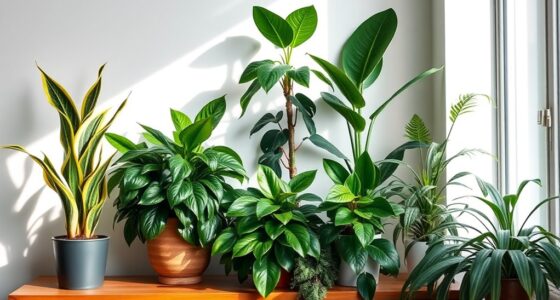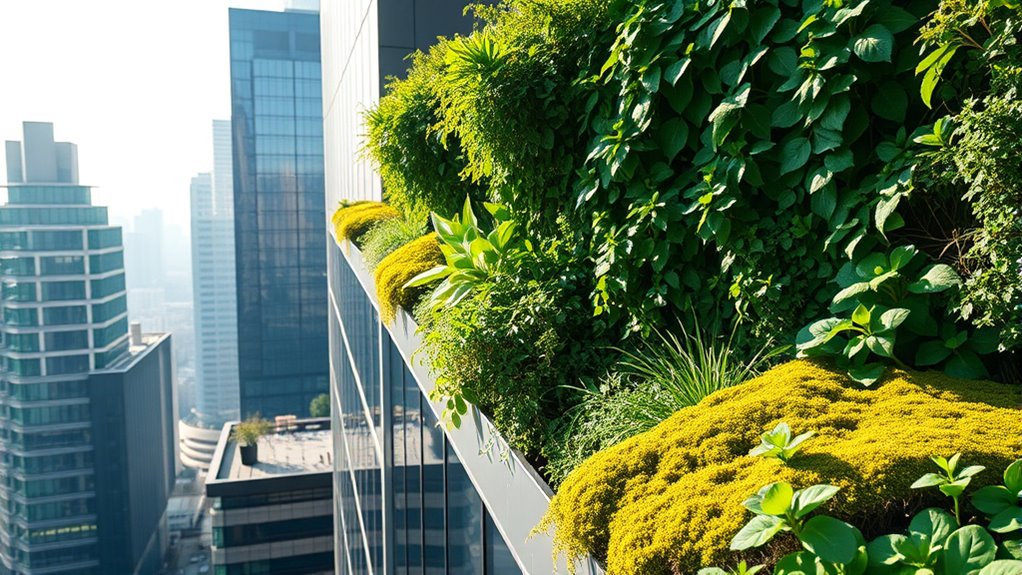

Green roofing and walls, like living roofs and vertical gardens, turn your urban space into a vibrant, sustainable environment. They absorb rainwater, reducing flooding and easing drainage demands. These features boost biodiversity by creating habitats for insects, birds, and pollinators. They also improve air quality and help cool your surroundings, lowering energy costs. Plus, they add visual appeal and support eco-friendly city growth. Want to discover how these green solutions can transform your space? Keep exploring for more insights.
Key Takeaways
- Green roofs and walls absorb rainwater, reducing urban flooding and easing pressure on drainage systems.
- They support biodiversity by creating habitats for insects, birds, and pollinators in urban environments.
- Living roofs and walls improve air quality and lower urban heat island effects through natural filtration and shading.
- These green systems enhance building aesthetics, transforming urban spaces into vibrant, lush environments.
- They contribute to sustainable urban development by promoting eco-friendly, resilient, and energy-efficient infrastructure.
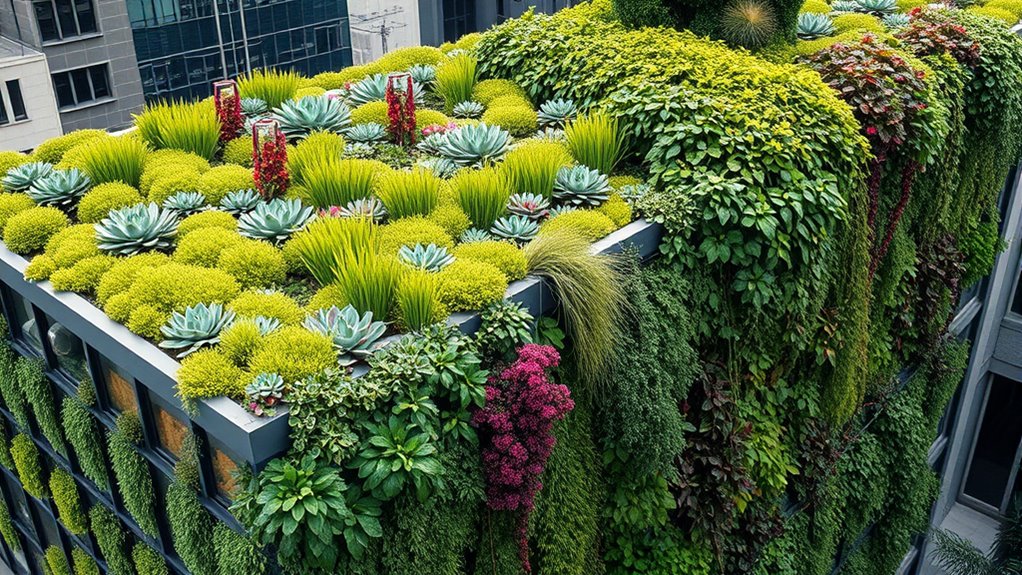
Have you ever considered how green roofs and walls can transform urban spaces? These living systems go beyond just adding greenery; they actively improve the environment around you. One of their key benefits is stormwater management. Traditional roofs often contribute to urban flooding because they can’t absorb heavy rain. Green roofs, however, act like sponges, soaking up rainwater and reducing runoff. This absorption not only lessens the burden on city drainage systems but also helps prevent water pollution, as less stormwater carries pollutants into rivers and lakes. By installing a green roof or a vertical garden, you’re helping to manage stormwater more effectively, making your city safer and more resilient during heavy storms.
Green roofs absorb rainwater, reduce runoff, and prevent urban flooding.
But the advantages don’t stop there. Green roofs and walls also markedly boost biodiversity enhancement. Urban areas often lack natural habitats, which limits the variety of plants and animals that can thrive there. When you introduce living roofs or vertical gardens, you create new microhabitats for insects, birds, and pollinators like bees and butterflies. These habitats support local ecosystems, encouraging biodiversity to flourish amidst concrete and asphalt. By choosing native plants and designing thoughtfully, you can attract beneficial insects and birds, helping to restore a sense of natural balance in your city. This increased biodiversity doesn’t just benefit wildlife; it also enriches your environment, making it more vibrant and lively.
Living roofs and vertical gardens also contribute to better air quality and temperature regulation. Plants naturally filter pollutants and absorb carbon dioxide, improving the air you breathe. They also provide insulation, reducing the need for heating and cooling inside buildings, which cuts down on energy consumption and greenhouse gas emissions. As a result, green roofs and walls help combat urban heat islands, making your neighborhood cooler and more comfortable during hot summer months.
Furthermore, the aesthetic appeal of green roofs and walls can elevate the look of any building, creating a more inviting and calming environment. They offer a unique opportunity to integrate nature into everyday life, turning stark cityscapes into lush, vibrant spaces. Whether you’re a property owner, developer, or city planner, embracing green roofing and vertical gardens allows you to play a part in fostering sustainable urban growth. With their ability to manage stormwater, enhance biodiversity, and improve overall quality of life, these living systems are transforming how we think about urban infrastructure. So, if you’re seeking a way to make your city more sustainable and beautiful, consider the powerful benefits of green roofs and walls.

Yardenaler 6×10 FT Green House for Outdoor, Thicken Polycarbonate Panel Wooden Walk-in Greenhouse Kit with Lockable Door and Adjustable Roof Vent, Backyard Garden, White
- Adjustable Roof for Ventilation: Adjusts up to 45 degrees for airflow
- Sturdy Weather-Resistant Frame: Built to withstand various weather conditions
- Multi-Layer Polycarbonate Panels: High light transmission and UV protection
As an affiliate, we earn on qualifying purchases.
As an affiliate, we earn on qualifying purchases.
Frequently Asked Questions
What Are the Initial Costs of Installing Green Roofs and Walls?
The initial costs of installing green roofs and walls vary widely, but you can expect to pay more than traditional roofing or wall systems. A cost comparison shows higher upfront expenses for materials and installation. However, funding options like grants, incentives, or green loans can help offset these costs. Investing now can lead to long-term savings through energy efficiency and environmental benefits, making green roofs and walls a smart choice.
How Long Do Living Roofs and Vertical Gardens Typically Last?
Imagine a vibrant, lush oasis on your roof or wall—how long might it thrive? Typically, living roofs and vertical gardens last 15 to 40 years, depending on durability factors like materials, maintenance, and climate. Proper upkeep can extend their lifespan, making them a lasting investment. With good care, you can enjoy the beauty and benefits of your green space for decades, turning your building into a living masterpiece.
Are Green Roofs Suitable for All Climate Zones?
Green roofs are generally suitable for various climate zones, but their success depends on climate adaptability and proper plant selection. You should choose plants that thrive in your specific climate, whether it’s hot, cold, or humid. Proper design and maintenance help guarantee your green roof remains healthy and vibrant. With the right approach, you can enjoy the benefits of green roofs regardless of your location’s climate conditions.
What Maintenance Is Required for Living Roofs and Vertical Gardens?
You need to regularly check your living roofs and vertical gardens to keep them thriving. Maintain irrigation schedules to ensure plants get enough water without overdoing it, especially during dry spells. Keep an eye out for pests and apply pest control measures promptly to prevent damage. Also, prune and replace plants as needed, and remove debris to promote healthy growth and extend the lifespan of your green features.
How Do Green Roofs Impact Building Insulation and Energy Efficiency?
Think of green roofs as a cozy blanket for your building—they boost thermal regulation and cut down on energy costs. By insulating against extreme temperatures, they prevent heat from escaping in winter and keep interiors cool in summer. This helps combat the urban heat island effect, making your building more energy-efficient and environmentally friendly. So, green roofs aren’t just beautiful; they’re smart investments in comfort and sustainability.
Conclusion
By choosing green roofs and walls, you can transform your space into a sustainable oasis. Did you know that green roofs can reduce building energy costs by up to 25% and extend roof lifespan? Not only do you create a beautiful, natural environment, but you also contribute to better air quality and urban biodiversity. Embrace living roofs and vertical gardens to make a meaningful impact—your home or office can become a thriving, eco-friendly haven.