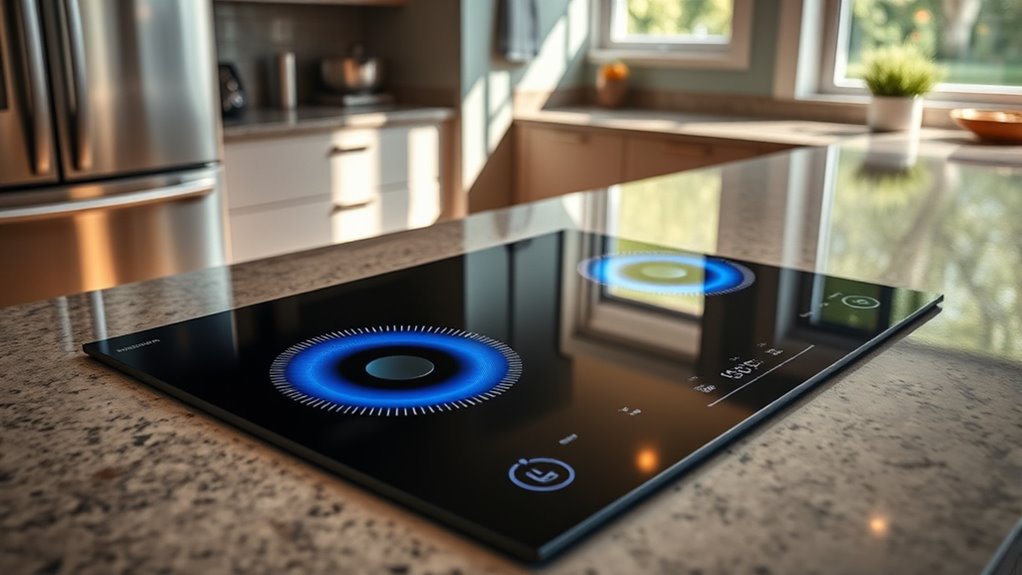

Switching to induction cooking boosts your home’s energy efficiency by converting most electricity directly into heat, reducing waste and lowering bills. It encourages utility companies to upgrade local infrastructure, making the grid more resilient and better suited for renewable energy. Plus, the precise temperature control speeds up cooking and reduces energy use. As induction stoves support smarter energy management, they help move our energy system toward a cleaner, sustainable future — and there’s more to discover if you keep exploring.

Get decor and gifts delivered free — and shop member deals
- Fast, free delivery on millions of items
- Access to Prime Big Deal Days deals on October 6–7
- Prime Video, Amazon Music and more included
Key Takeaways
- Electric stoves with induction technology are more energy-efficient, reducing waste and lowering utility costs compared to gas.
- Induction cooking supports grid modernization by encouraging infrastructure upgrades and smart grid integration.
- Precise temperature control in induction stoves enables faster, more efficient cooking, decreasing overall energy consumption.
- Increased use of electric induction stoves promotes renewable energy adoption and reduces carbon emissions.
- Induction cooking helps utilities manage peak loads and integrate intermittent renewable sources, enhancing grid resilience.

Induction cooking has become increasingly popular, but it also raises questions about its impact on the electrical grid. When you switch to an induction stove, you’re not just upgrading your kitchen—you’re also influencing how the grid operates. Unlike traditional gas stoves, induction cooktops are highly energy-efficient, converting most of the electrical energy directly into heat. This efficiency means less wasted energy and more effective cooking, which is good for your utility bills and helps reduce overall demand on the grid. As more households adopt induction cooking, it encourages grid modernization by pushing utility companies to upgrade infrastructure, implement smarter energy management, and integrate renewable sources more effectively.
Induction cooking boosts energy efficiency and drives smart grid modernization efforts.
Induction stoves require a stable and reliable electrical supply, often demanding higher power levels than conventional electric or gas options. This demand can initially seem like a challenge for existing infrastructure, but it also presents an opportunity. It encourages the development of a more resilient, modernized grid that can handle increased loads while supporting cleaner energy sources. As homes switch to induction, utilities are motivated to improve grid responsiveness, implement smart grid technologies, and manage peak loads more efficiently. These upgrades not only support induction appliances but also pave the way for broader adoption of renewable energy, contributing to a greener, more sustainable energy future.
Furthermore, induction cooking’s precise temperature control results in faster cooking times and less energy waste. You’re able to simmer, boil, or sear with exactness, reducing cooking time and energy consumption. This precision helps balance the load on the electrical grid, especially during peak hours, by smoothing out energy demand spikes. When households use energy more efficiently, the strain on the grid diminishes, making it easier to incorporate intermittent renewable sources like solar and wind.
Additionally, power demand from induction cooktops can motivate utilities to upgrade grid capacity and resilience, supporting long-term sustainability goals. Induction stoves align well with ongoing grid modernization efforts aimed at reducing carbon emissions. They support a shift away from fossil fuel dependence, especially when paired with clean energy sources. Your choice to use an induction cooktop not only benefits your kitchen but also contributes to a smarter, more sustainable energy system. The increased demand for electricity from induction cooktops acts as a catalyst for grid upgrades, prompting utilities to invest in modernization projects that make the entire system more adaptable and eco-friendly.
Frequently Asked Questions
How Does Induction Cooking Impact Household Energy Consumption?
You’ll notice that your cooking habits directly affect household energy consumption. Induction cooking, for instance, increases energy efficiency because it heats cookware directly, reducing waste. This means you use less electricity overall and lessen your environmental impact. By choosing more efficient appliances like induction stoves, you help conserve energy and support a greener environment, making your kitchen both smarter and more eco-friendly.
Are There Safety Concerns Unique to Induction Stoves?
Did you know that induction stoves are generally safer than gas? You won’t have to worry about open flames or gas leaks, reducing fire safety risks. However, electrical hazards remain a concern if the stove isn’t properly installed or maintained. While induction stoves cool quickly and have safety features like auto-shutoff, you should still be cautious with electrical connections to prevent shocks. Overall, they’re a safer choice with proper precautions.
Can Induction Cooktops Be Used With Any Cookware?
You might wonder if induction cooktops work with any cookware. The key is compatible cookware, which must have a magnetic base to work properly. Material considerations are essential—cast iron and magnetic stainless steel work best, while aluminum or glass won’t heat directly. Always check if your pots and pans are labeled as induction-compatible to guarantee efficient cooking and avoid damage.
What Maintenance Is Required for Induction Versus Gas Stoves?
You need to take into account cookware compatibility and maintenance requirements for your stove. For gas stoves, you’ll regularly clean burners, replace parts, and ensure proper ventilation. Induction stoves require less maintenance; just keep the surface clean and check the coils occasionally. Unlike gas stoves, induction cooktops don’t have burners or exposed parts, so they’re easier to maintain overall. Both types demand some upkeep, but induction stoves generally need less attention.
How Do Induction Stoves Perform During Power Outages?
During a power outage, your electric stove’s performance suffers because it relies on electricity for operation. This limits your power outage survival and emergency cooking options, pushing you to seek alternatives like gas or portable fuel appliances. To prepare, keep a backup plan ready, such as a gas grill or camping stove, ensuring you can cook during emergencies and maintain food safety without electricity.
Conclusion
So, next time you’re debating between gas and induction, remember this: plugging into the grid isn’t just powering your stove, it’s fueling the future. Electric stoves beat gas so badly, they might as well be from another planet—faster, cleaner, and smarter. Say goodbye to smoky kitchens and hello to a cooking revolution that’s so good, it’ll make your old gas stove look like a clunky dinosaur. Ready to upgrade your kitchen universe?
Evergreen bestsellers Picks
bestsellers
As an affiliate, we earn on qualifying purchases.