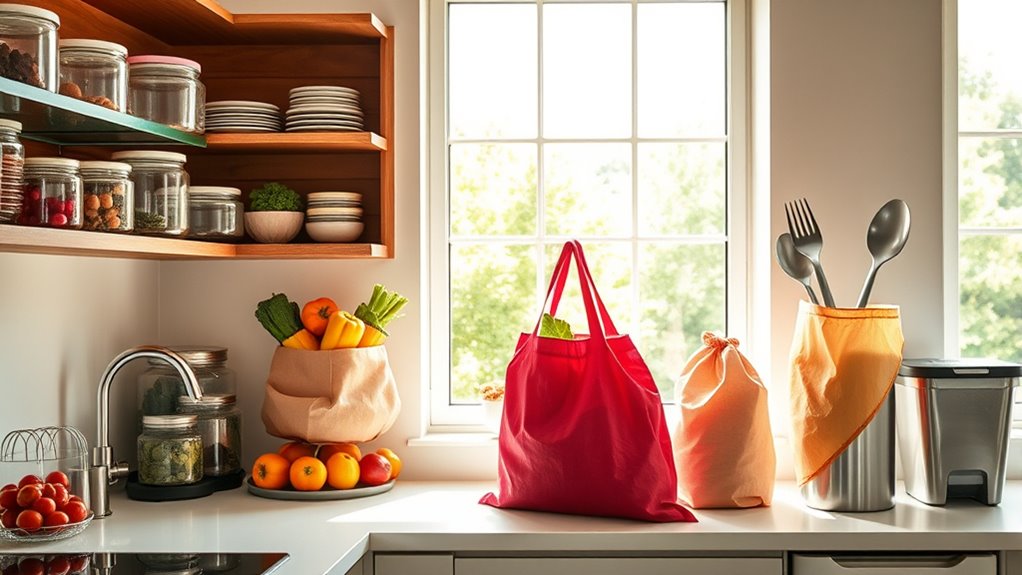

To reduce single-use plastics in your kitchen, switch to reusable glass or stainless steel containers, which keep food fresher and eliminate plastic waste. Use eco-friendly alternatives like biodegradable wraps or compostable containers made from plant fibers. Practice composting food scraps to cut down landfill waste and return nutrients to the soil. Small steps like these promote a healthier environment. Keep exploring ways to make your kitchen more sustainable and see how you can make a lasting impact.

Get decor and gifts delivered free with Prime
- Fast, free delivery on millions of items
- Prime Video, Amazon Music and more included
- Member-only deals all year
Key Takeaways
- Switch to reusable glass or stainless steel containers instead of plastic wrap and sandwich bags.
- Use biodegradable or compostable packaging made from plant fibers for food storage.
- Implement home or community composting for food scraps to reduce landfill waste.
- Choose eco-friendly alternatives like beeswax wraps over single-use plastic wraps.
- Adopt small, consistent sustainable habits to significantly lower plastic pollution in the kitchen.

Reducing single-use plastics in the kitchen is an essential step toward minimizing environmental impact and promoting sustainability. Every day, we rely heavily on plastic wrap, sandwich bags, and disposable containers to store our food. These items often end up in landfills or oceans, contributing to pollution and harming wildlife. To make a meaningful difference, start by switching to reusable storage options. Invest in glass or stainless steel containers that can be used over and over again, eliminating the need for single-use plastic bags or cling wrap. Reusable storage not only cuts down waste but also keeps your food fresher and safer, as these materials are free from harmful chemicals found in some plastics. When shopping for produce or bulk items, consider bringing your own cloth or mesh bags, which are durable and washable, replacing the need for disposable plastic produce bags. These small changes can considerably reduce your plastic footprint over time.
In addition to reusable storage, exploring compostable packaging is another effective way to minimize plastic waste. Many products now come in biodegradable or compostable materials made from plant fibers or other eco-friendly sources. For example, some brands offer compostable food wraps or containers that break down naturally in composting systems, leaving no harmful residue behind. Incorporating compostable packaging into your routine supports waste diversion from landfills and encourages the growth of composting habits in your community. You can also compost food scraps and biodegradable waste in your backyard or community compost bins, reducing the amount of waste sent to landfills and returning nutrients to the earth. Additionally, creating designated composting areas in your home can streamline this process and make it more manageable. By choosing compostable packaging for your groceries and household items, you actively participate in a circular system that emphasizes renewal rather than disposal.
Switching to these sustainable solutions requires a bit of effort initially, but the long-term benefits are undeniable. You’ll lower your plastic consumption, reduce pollution, and promote healthier ecosystems. Keep in mind that small, consistent actions add up; replacing plastic wrap with beeswax wraps, opting for compostable bags, and choosing reusable containers are all steps in the right direction. While it might seem like a minor shift, your conscious choices can inspire others and contribute to broader environmental change. Remember, reducing single-use plastics isn’t about perfection but progress. Every time you make an eco-friendly swap, you’re helping to protect our planet for future generations. Embracing reusable storage and compostable packaging is a simple yet powerful way to make your kitchen more sustainable and environmentally responsible.
reusable glass food storage containers
As an affiliate, we earn on qualifying purchases.
As an affiliate, we earn on qualifying purchases.
Frequently Asked Questions
Are Biodegradable Plastics a Better Alternative for Kitchen Use?
Biodegradable plastics can be a better alternative for kitchen use if you’re aiming for kitchen sustainability, but they aren’t perfect. They break down faster than regular plastics, reducing long-term waste, but only under specific conditions. You should consider factors like proper disposal and production impacts. When used responsibly, biodegradable plastics can help lower your environmental footprint, making them a more eco-friendly choice for your kitchen.
How Can I Compost Plastic Packaging Safely?
Did you know over 300 million tons of plastic waste are produced annually? To compost plastic packaging safely, avoid traditional plastics and opt for compostable packaging marked as biodegradable. These break down in industrial composting facilities, not in your backyard. Proper plastic recycling is essential, but for composting, make certain your packaging is certified compostable, and follow local composting guidelines to prevent contamination.
What Are Eco-Friendly Alternatives for Plastic Wrap?
You can switch to eco-friendly alternatives like beeswax wraps and silicone food covers. Beeswax wraps mold easily around bowls and food, providing a breathable, reusable option. Silicone food covers are flexible, durable, and airtight, perfect for keeping leftovers fresh. Both options reduce plastic waste and are safe for your health. By choosing these sustainable solutions, you help protect the environment while maintaining an effective way to store your food.
How Do I Dispose of Plastic Utensils Properly?
You should check your local recycling center protocols before disposing of plastic utensils, as many don’t accept them due to their material type. Since plastic utensils have a short lifespan, consider reusable options instead. If recycling isn’t an option, dispose of them in the trash, but try to reduce usage altogether. Proper disposal helps prevent environmental pollution and encourages sustainable habits.
Can Reusable Containers Be Microwave-Safe?
Is a reusable container safe for the microwave? Absolutely, but you need to check if it’s made of microwave-safe plastics. Not all plastics are created equal—some can melt or release harmful chemicals. Look for labels indicating microwave-safe plastics, and always follow manufacturer instructions. For added safety, avoid containers with metal accents, and never microwave a reusable container that isn’t explicitly marked as microwave-safe. Your kitchen’s safety depends on it!
Conclusion
Think of your kitchen as a garden. Every piece of single-use plastic is like a weed that chokes out healthy growth. By choosing reusable containers, cloth bags, and eco-friendly alternatives, you’re nurturing a vibrant, sustainable landscape. Each small action is like planting a seed—over time, your efforts bloom into a cleaner, greener environment. Together, you can transform your kitchen into a flourishing oasis, where sustainability thrives and future generations can enjoy nature’s beauty.
Halloween Picks
halloween
As an affiliate, we earn on qualifying purchases.