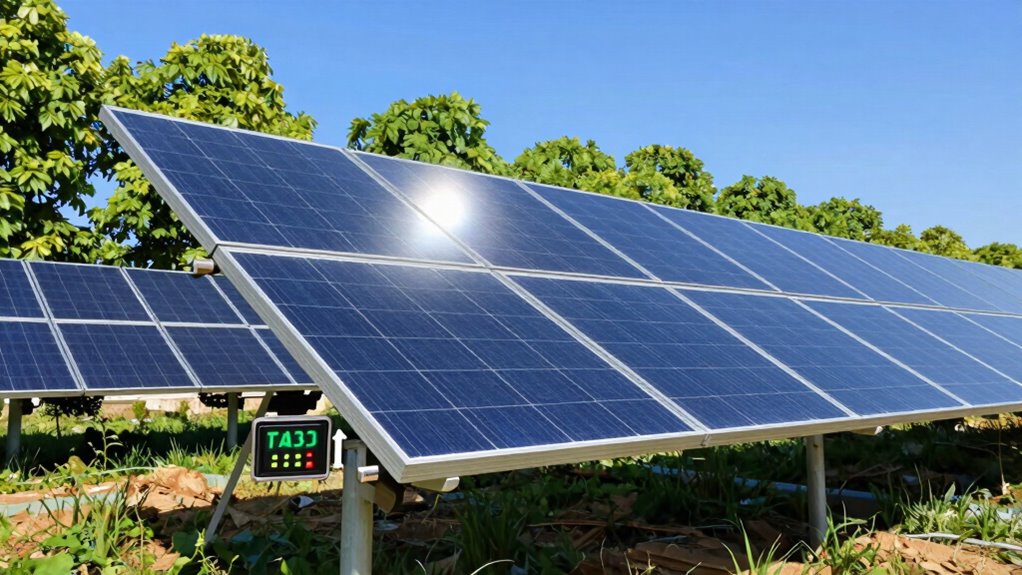

To predict your solar generator’s charging time, start with its battery capacity in watt-hours and divide it by the wattage of your panel multiplied by its efficiency. For example, a 500Wh battery with a 100W panel at 80% efficiency would take around 6.25 hours under ideal conditions. Keep in mind that shading, weather, and panel placement can extend this time. If you want precise estimates tailored to your setup, explore how these variables interact in detail.

Get decor and gifts delivered free with Prime
- Fast, free delivery on millions of items
- Prime Video, Amazon Music and more included
- Member-only deals all year
Key Takeaways
- Calculate expected recharge time by dividing the battery capacity (Wh) by the panel’s effective wattage (panel wattage × efficiency).
- Higher wattage panels (e.g., 100W) reduce recharge time compared to lower wattage panels under ideal conditions.
- Real-world factors like weather, shading, and panel orientation decrease efficiency and extend recharge periods.
- Charging efficiency (percentage) impacts how much sunlight energy is converted into usable power, affecting overall recharge time.
- Proper placement and understanding of variables are essential for accurate predictions of real-world solar generator recharge times.
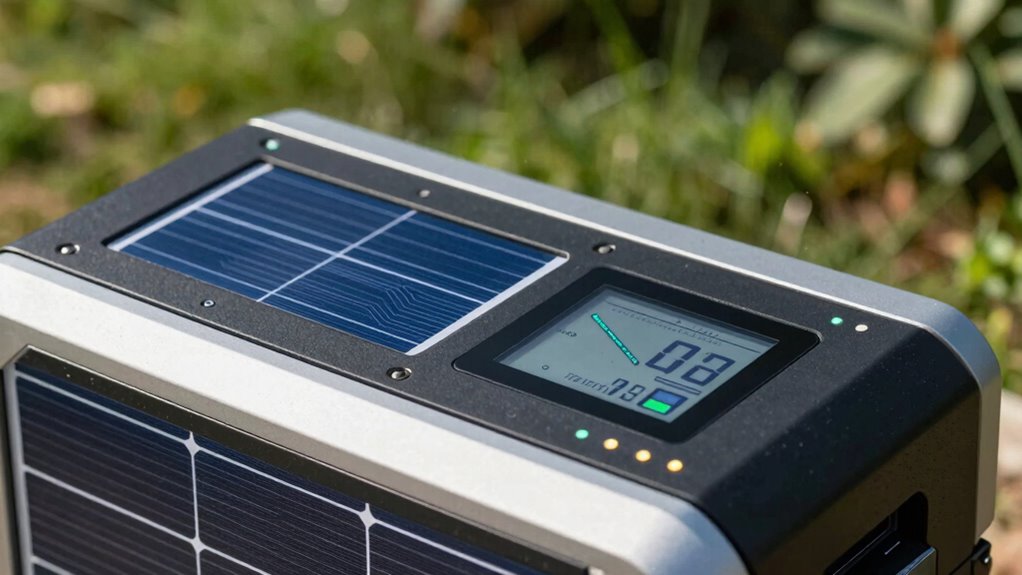
Solar generators are an efficient and eco-friendly way to power your devices using sunlight. When contemplating how long it takes to recharge your solar generator, understanding the relationship between battery capacity and charging efficiency is essential. Your generator’s battery capacity determines how much energy it can store, measured in watt-hours (Wh). A larger capacity means more power for your devices, but it also impacts the time needed to fully recharge the unit. Charging efficiency, on the other hand, indicates how effectively sunlight is converted into usable electrical energy. Higher charging efficiency means you’ll get more energy out of the same amount of sunlight, reducing the time required to replenish your generator’s battery.
To accurately predict real charging times, you need to analyze both these factors together. First, look at the battery capacity. For example, a generator with a 500Wh battery can power smaller devices for hours or larger devices for a shorter period. If you’re using a solar panel with a high wattage output, say 100W, it can theoretically recharge this battery in about five hours under ideal conditions. However, real-world factors like sunlight intensity, shading, and panel orientation can influence this process. This is where charging efficiency plays a critical role. If your solar panel has a charging efficiency of 80%, it means only 80% of the sunlight energy is converted into usable power; the remaining 20% is lost as heat or other inefficiencies.
Knowing this, you can adjust your expectations and plan accordingly. For instance, if your panel’s efficiency drops due to cloudy weather, your charging time will extend beyond the ideal estimate. Conversely, a panel with higher efficiency can cut down the recharge time, even with less sunlight. It’s also important to consider how the solar generator’s battery management system handles incoming energy. Some units optimize charging cycles to maximize efficiency, which can slightly alter the expected time.
The math behind predicting charging times becomes straightforward once you understand these variables. Divide the battery capacity by the effective wattage your panel delivers, factoring in the charging efficiency. For example, a 500Wh battery divided by an 80W effective input (100W panel multiplied by 0.8 efficiency) gives approximately 6.25 hours of ideal sunlight exposure. This calculation helps you set realistic expectations and prepare for varying weather conditions. It’s also helpful to consider solar panel placement and orientation, which can significantly influence efficiency and charging speed. By keeping an eye on both battery capacity and charging efficiency, you can better estimate how long it will take to fully recharge your solar generator, ensuring you’re always ready to power your devices sustainably.
solar generator with high capacity 500Wh
As an affiliate, we earn on qualifying purchases.
As an affiliate, we earn on qualifying purchases.
Frequently Asked Questions
How Do Weather Conditions Affect Solar Generator Charging Times?
Weather conditions considerably influence your solar generator’s charging times. Cloudy, rainy, or snowy weather diminishes sunlight, slowing down the charging process and accelerating solar panel degradation over time. Strong sun boosts energy production, but prolonged exposure can diminish the solar panel’s efficiency. This affects your generator’s energy storage capacity, making it essential to take weather patterns into account when planning your energy needs to guarantee reliable power.
Can Solar Generators Charge During Cloudy or Rainy Days?
You can still charge your solar generator during cloudy or rainy days, but it’s a bit like trying to fill a bucket with a leaky faucet—you’ll need more time. Solar panels are built for durability, so they withstand the elements, though their efficiency drops in low light. Your generator’s energy storage capacity becomes even more essential, ensuring you have power when sunlight isn’t enough.
What Is the Lifespan of a Typical Solar Generator?
A typical solar generator lasts about 8 to 15 years, depending on battery longevity and usage. You can extend its lifespan by following maintenance tips like keeping it clean, avoiding deep discharges, and storing it in a cool, dry place. Regularly monitoring the battery’s health guarantees peak performance. With proper care, your solar generator can serve you reliably for many years, providing renewable energy whenever you need it.
Are There Portable Solar Generators Suitable for Travel?
Yes, you can find portable solar generators perfect for travel, offering portable energy and travel convenience. These compact devices are lightweight, easy to carry, and designed to fit into your adventures seamlessly. They provide reliable power for camping, road trips, or emergencies. With features like multiple outlets and fast charging, they keep your devices running smoothly, ensuring you stay connected and powered up wherever your travels take you.
How Does Temperature Impact Solar Panel Efficiency?
Temperature critically impacts your solar panel efficiency. When it’s too hot, solar panel degradation accelerates, reducing overall output. Conversely, cold temperatures can sometimes boost efficiency if the panels are properly temperature optimized. You should monitor ambient conditions to maintain ideal temperatures, ensuring your panels operate at peak performance and longevity. Proper cooling or shading strategies help prevent efficiency drops caused by extreme heat, giving you the best energy output possible.
Conclusion
Don’t let concerns about unpredictable charging times hold you back. With the right panel math, you can accurately estimate how long your solar generator will take to charge, even on cloudy days. Remember, a little planning goes a long way—so you’re always prepared for power needs, no matter the weather. Embrace the numbers, and you’ll enjoy reliable, clean energy whenever you need it most.
Evergreen bestsellers Picks
bestsellers
As an affiliate, we earn on qualifying purchases.