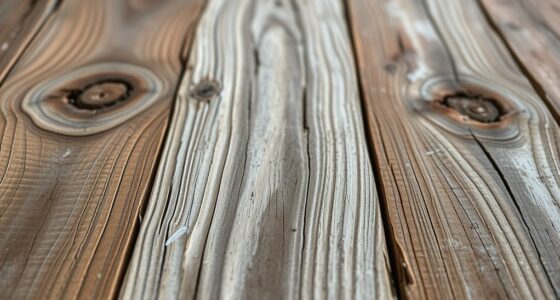
Choosing sustainable flooring options like cork, bamboo, and reclaimed wood lets you create an eco-friendly, stylish home. Cork offers resilience and natural antimicrobial properties, while bamboo provides quick installation and durability. Reclaimed wood adds a warm, aged look with minimal environmental impact. These choices support renewable resources, limit chemical emissions, and improve indoor air quality. If you want to explore how these materials can transform your space sustainably, there’s more to discover below.
Key Takeaways
- Cork, bamboo, and reclaimed wood are renewable, eco-friendly flooring options that minimize environmental impact.
- These materials use sustainable harvesting and installation methods to reduce chemical emissions and energy consumption.
- They offer durable, low-maintenance surfaces suitable for high-traffic and long-term use.
- Their natural properties promote healthier indoor air quality and support ecosystem conservation.
- Aesthetic versatility and longevity make these sustainable options a smart investment for eco-conscious homeowners.
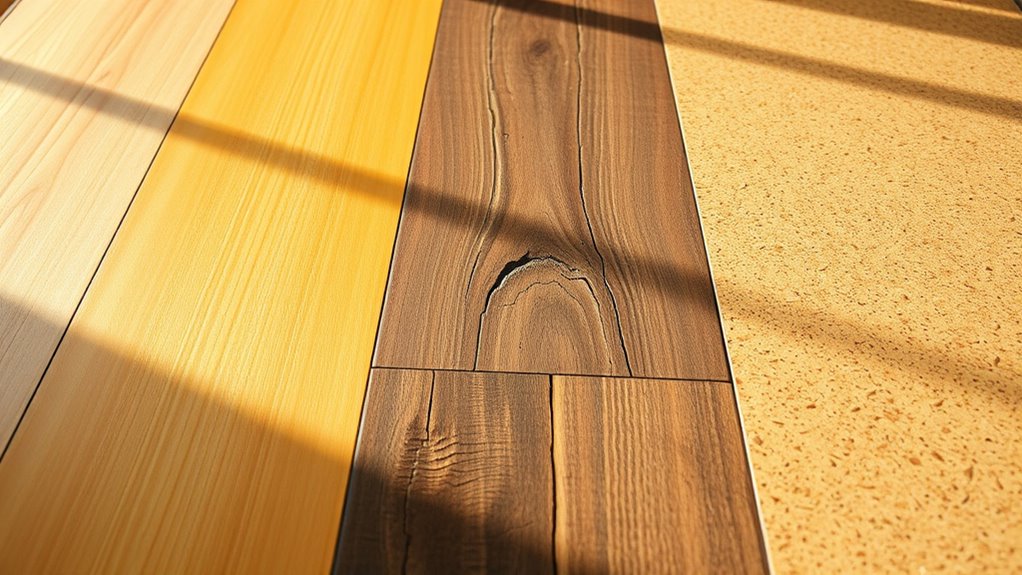
Choosing sustainable flooring options not only reduces your environmental impact but also creates healthier indoor spaces. When you opt for eco-friendly materials like cork, bamboo, or reclaimed wood, you’re making a conscious decision to support renewable resources and minimize waste. These options often feature eco friendly installation methods, which are designed to limit chemical emissions and reduce energy consumption during setup. For instance, cork flooring can be installed with minimal adhesives, improving indoor air quality and making the process safer for you and your family. Bamboo flooring, on the other hand, is typically quick to install because its planks are lightweight and uniform, allowing for straightforward, glue-less or mechanical fastening methods. Reclaimed wood, often repurposed from old buildings or furniture, can be installed using traditional or innovative methods that avoid toxic glues, further emphasizing eco-friendly installation practices. Additionally, sustainable materials are often sourced responsibly, ensuring that their harvesting does not deplete natural resources or harm ecosystems.
Maintenance and durability are vital factors to weigh when choosing sustainable flooring. Cork flooring is renowned for its resilience and natural ability to absorb impacts, making it ideal for high-traffic areas. Its maintenance is simple—regular sweeping and occasional damp mopping keep it looking fresh. Plus, cork has natural antimicrobial properties, which help maintain a healthier indoor environment. Bamboo flooring is also highly durable, especially when properly treated with eco-friendly finishes that protect against scratches and moisture. It can last for decades if maintained correctly, with routine cleaning and periodic refinishing. Reclaimed wood brings a unique character to your space, often boasting dense, aged timber that’s inherently durable. Its maintenance involves gentle cleaning and avoiding excessive moisture, ensuring it remains beautiful over time. Because reclaimed wood is already seasoned, it tends to be more stable, reducing the risk of warping or cracking.
All three options excel in durability when cared for properly, making them practical choices for long-term use. They’re also relatively easy to maintain, which can lower your ongoing costs and efforts. Choosing sustainable flooring doesn’t mean sacrificing style or function; in fact, cork, bamboo, and reclaimed wood each offer distinctive aesthetics that can complement modern or traditional interiors. Plus, their eco-friendly installation methods, combined with their resilience and ease of maintenance, make them smart investments in your home’s health and sustainability. By selecting these materials, you’re not only enhancing your living space but also contributing to a more sustainable future, reducing waste, and conserving natural resources for generations to come.
Frequently Asked Questions
How Does the Durability of Sustainable Flooring Compare to Traditional Options?
Sustainable flooring options like cork, bamboo, and reclaimed wood generally offer good durability, but their wear resistance and impact strength can vary. Cork is soft but resilient, making it ideal for comfort, while bamboo and reclaimed wood tend to have higher impact strength. You might find they hold up well under daily use, but for heavy traffic areas, some traditional options could be more durable. Consider your specific needs to choose wisely.
Are Sustainable Flooring Materials Safe for Children and Pets?
Yes, sustainable flooring materials like cork, bamboo, and reclaimed wood are generally safe for children and pets. They emit low levels of toxic emissions, reducing health risks, and are less likely to trigger allergy issues compared to traditional flooring. Still, it’s wise to choose products with certifications ensuring low VOCs and non-toxic finishes, so your family can enjoy a healthy, eco-friendly home environment without allergy risks or exposure to harmful chemicals.
What Maintenance Routines Are Recommended for Eco-Friendly Flooring?
You wonder how to keep your eco-friendly flooring pristine? Start with gentle, eco-friendly cleaning to prevent damage and preserve its natural beauty. Regular maintenance tips include sweeping or vacuuming to remove debris, avoiding harsh chemicals, and promptly cleaning spills. Keep your floors looking their best by using soft mats in high-traffic areas and avoiding excessive water. These simple routines guarantee your sustainable choice stays vibrant and durable for years to come.
Can Sustainable Flooring Be Installed in High-Moisture Areas?
Yes, sustainable flooring can be installed in high-moisture areas, but you need to take into account moisture resistance and installation challenges. Cork and bamboo often require sealed, water-resistant finishes to prevent damage, while reclaimed wood may need special treatments to improve durability. You should also guarantee proper subfloor preparation and ventilation. Consulting with a flooring expert helps you choose the best sustainable option and avoid issues related to high humidity.
What Are the Long-Term Cost Benefits of Sustainable Flooring Choices?
Choosing sustainable flooring options can lead to significant long-term cost savings, as they often require less maintenance and have durability that extends their lifespan. You’ll also reduce your environmental impact by using eco-friendly materials, which benefits the planet. Over time, these savings and eco-conscious choices add up, making sustainable flooring a smart investment for your home or business while helping you save money and support sustainable practices.
Conclusion
Choosing sustainable flooring options like cork, bamboo, or reclaimed wood gently guides you toward a greener future. These eco-friendly choices subtly weave nature’s beauty into your space, creating a warm, inviting atmosphere that feels both fresh and timeless. By opting for these materials, you’re softly nurturing the environment while adding character and charm to your home. It’s a graceful step toward harmony with nature, where your space not only looks good but also does good.