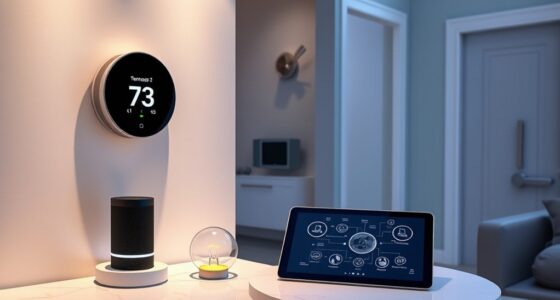

When choosing between edge and cloud processing for your smart device, consider that edge offers faster responses, better privacy, and keeps data local, but may be limited by hardware and less suited for complex tasks. Cloud processing provides powerful analytics, easy storage, and scalability but can introduce latency and privacy concerns. Balancing these benefits and challenges helps optimize performance and security. Exploring further will reveal how to best tailor your device setup to your needs.
Key Takeaways
- Edge processing offers faster response times and enhanced privacy by keeping data on the device itself.
- Cloud processing provides greater computational power and easier management for handling large or complex datasets.
- Combining both approaches in a hybrid system balances low latency, data security, and processing capabilities.
- Edge devices are limited by hardware resources, whereas cloud solutions depend on reliable internet connectivity.
- The choice depends on application needs, prioritizing privacy and speed for edge or scalability and power for cloud processing.
Have you ever wondered whether smart devices process data locally or send it to the cloud? It’s a common question as devices become more integrated into daily life. When your smart speaker listens to your commands, or your security camera detects movement, they’re constantly deciding where to process that data. Processing data locally, on the device itself, offers certain advantages. For starters, it enhances data privacy because your information stays on the device and isn’t constantly transmitted over the internet. This reduces the risk of data breaches or unauthorized access, giving you more control over your personal information. However, local processing isn’t without its challenges. One of the main issues is latency. When data is processed right on the device, responses tend to be faster because there’s no need to send information back and forth to a remote server. This is especially important in applications like security systems or real-time health monitoring, where delays can compromise effectiveness. On the other hand, cloud processing involves sending data to remote servers hosted by service providers. This approach can leverage powerful computing resources, enabling complex AI algorithms and updates without burdening your device’s hardware. The cloud also allows for easier data storage and centralized management, making it simpler to access and analyze large datasets. Yet, relying on cloud processing introduces latency issues, which can be problematic in scenarios demanding immediate responses. The time it takes to transmit data to the cloud and get a response can cause delays, impacting user experience or system performance. moreover, transmitting sensitive data over the internet raises concerns about data privacy and security. Even with encryption, there’s always a risk of interception or hacking, which makes some users and organizations hesitant to send everything to the cloud. Additionally, cybersecurity vulnerabilities can be exploited during data transmission or storage, emphasizing the importance of robust security measures. Ultimately, the choice between edge and cloud processing depends on your priorities. If data privacy and low latency are paramount, local processing might be the better option. But if you need extensive processing power, easy updates, and centralized management, cloud processing can be more advantageous. Many smart devices now use a hybrid approach, processing some data locally while sending other information to the cloud. This balance aims to optimize performance, privacy, and responsiveness. So, as you interact with your smart devices, remember that the decision to process data locally or in the cloud shapes their efficiency, security, and even your overall experience. Understanding these differences helps you make more informed choices about the technology you rely on daily.
Frequently Asked Questions
How Does Latency Impact User Experience in Edge Versus Cloud Processing?
Latency directly affects your user experience by influencing real-time performance. When latency is low, you get quick responses, making interactions smoother and more engaging. Edge processing reduces latency, offering near-instant feedback, which enhances real-time experiences. It also improves bandwidth efficiency by processing data locally. In contrast, cloud processing can introduce delays, disrupting seamless interactions. So, minimizing latency guarantees you enjoy faster, more responsive smart device performance.
What Are the Security Risks Associated With Edge and Cloud Processing?
You face security risks in both edge and cloud processing. With edge devices, you need strong device authentication to prevent unauthorized access, and data encryption guarantees data remains confidential during local processing. In cloud processing, you must safeguard data during transmission and storage, using encryption and secure authentication methods. Both setups require vigilant security measures to protect against hacking, data breaches, and unauthorized data access.
Can Hybrid Processing Models Combine Edge and Cloud Advantages Effectively?
Imagine opening the full potential of your smart devices with hybrid integration. You can seamlessly blend edge and cloud processing, creating processing synergy that maximizes efficiency and minimizes latency. This approach effectively combines the strengths of both, offering faster responses and enhanced security. By embracing hybrid models, you guarantee your devices operate smarter, more resiliently, and adaptively, giving you a smoother, more powerful digital experience.
How Does Data Sovereignty Influence Processing Choices for Smart Devices?
Data sovereignty greatly influences your processing choices for smart devices, as it requires you to keep data within specific borders to meet compliance requirements. You might opt for edge processing to guarantee data remains local, avoiding legal complications, or choose cloud solutions if they comply with regional laws. Your decision hinges on balancing data sovereignty concerns with the need for efficient processing, security, and regulatory adherence.
What Are the Cost Implications of Deploying Edge Versus Cloud Solutions?
You’ll find that deploying edge solutions often involves higher initial deployment expenses due to specialized hardware and setup costs, impacting your overall cost analysis. Conversely, cloud solutions usually have lower upfront expenses but can lead to ongoing operational costs based on data transfer, storage, and usage. Consider your budget and scalability needs carefully, as edge deployments may save you money long-term if processing demands grow, while cloud options offer flexibility.
Conclusion
As you weigh the benefits of edge and cloud processing, remember the tale of Icarus—striving for greatness without caution can lead to a fall. Embracing both approaches wisely, you harness the power of agility and scalability. By balancing edge’s immediacy with the cloud’s vast resources, you craft a smart device ecosystem that’s resilient and efficient. Ultimately, you hold the wings of innovation—use them thoughtfully, and soar beyond limitations.