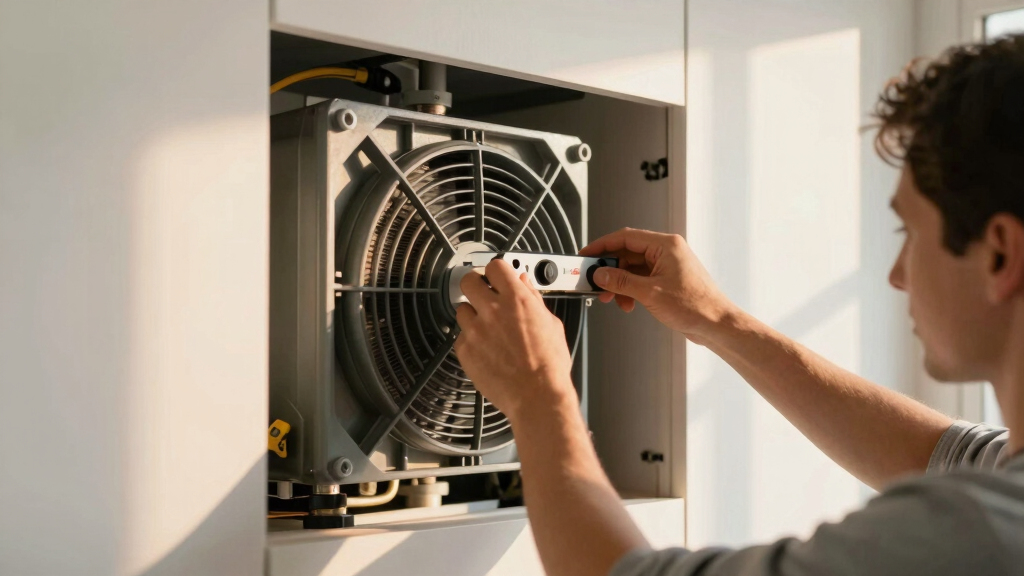

Choosing the best ERV for tight houses requires understanding how these systems manage indoor air quality without compromising energy efficiency. The top pick, the Pioneer ECOasis 50, stands out for its ductless design, making it ideal for retrofit projects. The Awoco ERV System offers excellent energy savings with multiple speed options, perfect for those prioritizing efficiency. However, these systems often involve tradeoffs, such as higher upfront costs or installation complexity. Continue reading for a detailed comparison to help you find the best fit for your airtight home.
Key Takeaways
- Ductless ERVs like the Pioneer ECOasis excel in retrofit scenarios for tight spaces, simplifying installation without extensive ductwork.
- Energy efficiency varies significantly, with some models offering multiple speeds and smart controls, reducing operational costs over time.
- Build quality and filter maintenance are critical for long-term performance, especially in airtight homes where ventilation is constant.
- More advanced systems with WiFi and remote controls provide added convenience but often come with higher price tags.
- Tradeoffs between initial cost, ease of installation, and ongoing maintenance influence the best choice for different homeowner needs.


More Details on Our Top Picks
Panasonic WhisperComfort 60 20-50 CFM Ceiling-Wall Energy Recovery Ventilator/Bathroom Exhaust Fan for Balanced Ventilation FV-06VE1
This Panasonic model stands out for its quiet operation and adjustable airflow, making it ideal for tight homes where noise levels matter. Compared with the Awoco ERV, the WhisperComfort offers more precise control over airflow with three speed settings, yet it doesn’t include a filter or humidity control, which the Awoco provides. Its simple ceiling-wall mount simplifies installation, but it has a limited maximum airflow of 50 CFM, which may not suffice for larger spaces. The unit’s energy efficiency and manual airflow selector make it suitable for homes prioritizing balanced ventilation without complex controls. However, it lacks smart integration and advanced filtering.
Pros:- Very quiet operation at 2.5 sones
- Adjustable airflow with three speed settings
- Simple ceiling-wall mounting for easy installation
Cons:- Limited maximum airflow of 50 CFM, not suitable for larger rooms
- No integrated filter or humidity control features
- Lacks smart home compatibility
Best for: Homeowners seeking a quiet, easy-to-install ERV with adjustable airflow for small to medium spaces.
Not ideal for: Large households or spaces requiring high airflow or smart control features, as its capacity and connectivity are limited.
- Air Flow Capacity:20-50 CFM
- Noise Level:2.5 Sones
- Mounting Type:Ceiling/Wall
- Power Consumption:50 watts
- Speed Settings:3
- Material:Aluminum
- Warranty:30 days
- Control Type:Manual
Bottom line: Perfect for small homes or bathrooms where quiet, balanced airflow is a priority and high capacity isn’t needed.
Awoco 6” Vent Energy Recovery Ventilator (ERV) System Various Speeds 100 CFM with Filter, Energy Saving HVI Certified (ERV)
This ERV offers a solid balance of performance and affordability, providing up to 100 CFM of airflow with two adjustable speeds. Compared to the Panasonic, it includes a washable filter and humidity sensor, which improves indoor air quality, though it produces more noise at 50dB. Its 6-inch round vent adapters simplify ducting, but the unit requires insulated ducts and is somewhat bulkier, which could complicate installation in tight spaces. The dual-speed control grants flexibility for different ventilation needs, but it lacks smart features or remote control. Tradeoffs include higher noise levels and more complex setup than the Panasonic, but it offers better filtration and higher capacity.
Pros:- Provides up to 100 CFM airflow with adjustable speeds
- Includes washable filter and humidity sensor
- Compatible with insulated 6-inch ducts
Cons:- Produces higher noise levels at 50dB
- Requires insulated ducts and more space for installation
- No smart home integration
Best for: Budget-conscious homeowners needing reliable, filtered ventilation with adjustable airflow for medium-sized rooms.
Not ideal for: Homes prioritizing quiet operation or smart connectivity, as this model is louder and lacks app control.
- Air Flow Capacity:40-100 CFM
- Noise Level:50 dB
- Control:2 speeds
- Filter Type:Washable
- Power Consumption:60 watts
- Duct Size:6 inches
- Certification:HVI
- Mounting Type:Wall
Bottom line: Ideal for those needing a cost-effective, filtered ERV with adjustable capacity for medium rooms, accepting some noise and installation complexity.
Heat Recovery Ventilator with Ceramic Heat Exchanger, Wall-Mounted Fresh Air System with WiFi/Remote Control for Home, Attic, Garage – Supply, Exhaust & Recirculation Ventilation Fan
This HRV emphasizes energy savings with a ceramic heat exchanger recovering up to 90% of heat and offers WiFi and remote control for smart operation. Compared to the Awoco ERV, it excels in energy efficiency and remote management, making it suitable for tech-savvy users. Its quiet PWM EC motor ensures low noise, and the magnetic panel facilitates easy cleaning, but its airflow capacity is limited to a maximum of 35 CFM, making it less suitable for larger spaces. Its compact wall-mounted design is ideal for attics and garages, but it lacks advanced filtration or humidity control. Tradeoffs involve lower airflow capacity for higher energy and smart control features.
Pros:- High heat recovery efficiency up to 90%
- WiFi and remote control compatibility
- Quiet PWM EC motor for low noise operation
Cons:- Limited airflow capacity of 35 CFM
- No filtration or humidity control
- Designed for small spaces only
Best for: Homeowners seeking a smart, energy-efficient HRV for small spaces like attics or garages, prioritizing remote control and heat recovery.
Not ideal for: Large households or spaces needing high airflow, as its maximum is 35 CFM and it lacks filtration features.
- Heat Recovery Efficiency:Up to 90%
- Airflow Capacity:up to 35 CFM
- Control:WiFi/Remote
- Motor Type:EC PWM
- Size:21.5 x 11.25 x 12.5 inches
- Weight:16 pounds
- Duct Diameter:6 inches
- Features:Magnetic panel, easy-clean
Bottom line: Excellent for energy-conscious users with small spaces wanting smart control and heat recovery, but unsuitable for larger needs.
Pioneer ECOasis 50 Ductless Energy Recovery Ventilator
This ductless ERV provides up to 35 CFM of airflow with minimal energy use, making it perfect for small rooms or spaces without ducting. Compared with the Awoco ERV, the Pioneer ECOasis offers a more compact, ductless design and Wi-Fi control, but it has a lower airflow capacity and is better suited to smaller rooms or individual spaces. Its 97% heat recovery efficiency is impressive, especially given its size and minimal power draw of 8W. The washable filters and rainproof design add to its convenience and durability, though installation may be limited to spaces where ducting isn’t feasible. Tradeoffs include lower airflow and limited capacity, but with excellent energy efficiency and control.
Pros:- Ductless, space-saving design
- High heat recovery efficiency of 97%
- Wi-Fi control for remote operation
Cons:- Limited airflow of 35 CFM, not suitable for large spaces
- Designed primarily for small areas
- Lower maximum airflow compared to ducted models
Best for: Individuals needing ductless ventilation for small rooms, offices, or tiny homes with energy efficiency as a priority.
Not ideal for: Large open-plan areas or whole-house ventilation, as its airflow capacity is limited to 35 CFM.
- Airflow Capacity:up to 35 CFM
- Heat Recovery:97%
- Control:Wi-Fi
- Power draw:8W
- Size:9 x 19-5/8 x 10-1/8 inches
- Weight:11 lbs
- Features:Ductless, washable filters
- Application:Small rooms or individual spaces
Bottom line: Best for small, ductless applications where energy efficiency and remote control are key, but not for larger or whole-house ventilation needs.
Broan B210E75RT AI 206 CFM Wall or Ceiling Mounted Energy Recovery Ventilator with Top Ports and Superior HRV Core Performance
This ERV excels in high airflow capacity at 206 CFM, suitable for larger or multiple rooms in tight houses. Its VIRTUO technology automates airflow verification and balancing, reducing installation complexity and maintaining consistent performance. Compared to the smaller models, the Broan B210E75RT offers a robust, energy-efficient solution with a superior HRV core efficiency of up to 81%. Its universal port configuration and LCD diagnostics make it versatile for various installations. However, its larger size and higher power consumption mean it’s less suitable for very small spaces or homes with minimal space for mounting. The auto-balancing system is a significant advantage, but the initial setup may be more involved. Tradeoffs include size and complexity for high capacity and smart, reliable operation.
Pros:- High airflow capacity up to 206 CFM
- Auto-balancing and self-adjustment technology
- Universal port configuration for flexible installation
Cons:- Larger size and higher power consumption
- More complex installation process
- Potentially overkill for small spaces
Best for: Homeowners or builders needing a high-capacity, automated ERV for whole-house ventilation in tight spaces with complex airflow requirements.
Not ideal for: Small or ductless homes where capacity exceeds what’s necessary, or homes with space constraints for larger units.
- Airflow:up to 206 CFM
- Efficiency:81%” SRE
- Control:Auto, LCD diagnostics
- Power:Energy-efficient
- Installation:Wall or ceiling
- Size:Variable, wall/ceiling
- Features:Auto-balancing, diagnostics
- Application:Whole house
Bottom line: Best suited for larger homes or demanding ventilation setups where automated, high-capacity airflow is essential, accepting size and complexity.
VENTS-US Frigate ERV 150 Ventilation System – 180 CFM Whole House Fresh Air Intake and Humidity Exhaust for Balanced Indoor Comfort, Includes Washable Filters and Anti-Freeze Protection
This model stands out for its slim, durable steel casing that fits tight spaces, making it ideal for homes with limited ventilation room. Compared to the Frigate HRV 120s, it offers similar heat recovery but adds humidity recovery via an enthalpy core, enhancing comfort in humid climates. Its automatic frost protection and washable filters make maintenance easier, though it runs at 1.9 sones, which is slightly louder than some competitors. The energy recovery core’s ability to recover both heat and moisture reduces heating and cooling costs effectively. Still, its higher wattage (189W) may increase power consumption for some users.
This pick makes the most sense for homeowners seeking a reliable, space-efficient ERV with humidity control and corrosion resistance.Pros:- Slim, corrosion-resistant steel casing fits tight spaces
- Enthalpy core recovers heat and humidity, improving indoor comfort
- Automatic frost protection enhances cold-weather reliability
- Includes washable MERV 6 filters for low maintenance
Cons:- Slightly louder operation at 1.9 sones compared to quieter units
- Higher power draw at 189 watts may increase energy costs
- Complex installation may require professional help
Best for: Homeowners with tight or limited ceiling space who want energy-efficient humidity and heat recovery in cold or humid climates.
Not ideal for: Small residential spaces without room for a ceiling-mounted unit or those seeking ultra-quiet operation under 1.5 sones.
- CFM Capacity:180
- Sound Level:1.9 sones
- Power Consumption:189 watts
- Installation Type:Ceiling mount
- Material:Alloy steel with multilayer aluminum-zinc coating
- Humidty Recovery:Yes
Bottom line: Ideal for homeowners needing a space-saving, humidity-aware ERV that balances performance and durability in cold or humid environments.
Aprilaire V22BEC Energy Recovery Ventilator (ERV), 120 CFM Air Exchanger for Homes up to 6,000 Sq. Ft. – Whole-House Fresh Air Ventilation System (HRV/ERV) with Wall, Ceiling, or Floor Mount Bracket
This ERV excels with straightforward push-button controls that make whole-house ventilation management simple, especially for those new to mechanical ventilation systems. Unlike the VENTS-US Frigate ERV 150, which emphasizes space efficiency, the Aprilaire V22BEC prioritizes ease of operation and flexibility in mounting options—Wall, ceiling, or floor. Its balanced airflow and heat recovery improve indoor air quality while reducing energy costs, but it lacks the humidity recovery feature found in some other models, which could be a drawback in high humidity areas. Its design helps maintain consistent indoor temperatures and humidity, making it suitable for a variety of climates. However, it’s less compact and may require more space for installation.
This system is perfect for users seeking a reliable, easy-to-operate ERV that enhances indoor air quality without complex controls.Pros:- Simple push-button controls for easy operation
- Flexible mounting options (wall, ceiling, floor)
- Balanced air exchange with heat recovery reduces costs
- Suitable for large homes up to 6,000 sq ft
Cons:- Lacks humidity recovery, limiting effectiveness in humid environments
- Bulkier design requires more installation space
- No smart home compatibility
Best for: Homeowners who want a user-friendly, versatile ERV with straightforward controls and flexible mounting options.
Not ideal for: Users in very tight spaces or those needing humidity recovery features for humid climates.
- CFM Capacity:120
- Control Type:Push button
- Mounting Options:Wall, ceiling, floor
- Heat Recovery:Yes
- Home Size Compatibility:Up to 6,000 sq ft
- Humidity Recovery:No
Bottom line: Best suited for homeowners seeking a straightforward, adaptable ERV with reliable air exchange in larger homes.
VENTS-US Frigate HRV 120s Heat Recovery Ventilator – Whole House Ventilation Fan with Up to 118 CFM and Freeze Protection
This HRV is tailored for homes in colder climates, featuring electronic anti-frost protection that cycles the supply fan to prevent freezing, a key advantage over models like the Frigate ERV 150. It offers reliable, continuous balanced ventilation with a maximum airflow of 118 CFM and a durable, corrosion-resistant steel casing. Its three-speed control allows for customizable operation, and the heat recovery core preconditions incoming air efficiently, reducing heating costs. Compared to the ERV, it emphasizes heat recovery over humidity, which might be less ideal in humid environments. Its lower power consumption at 19 watts on low speed enhances energy efficiency but might limit airflow in larger homes. Nonetheless, its robust construction and frost protection make it a top choice for cold, high-humidity areas.
This system is best for cold regions where freeze protection and durable construction are priorities.Pros:- Electronic anti-frost protection prevents freezing
- Durable corrosion-resistant steel casing
- Three-speed control for tailored airflow
- Efficient heat recovery at up to 73%
Cons:- Lacks humidity recovery capability
- Slightly lower airflow compared to ERV 150
- Installation complexity for some users
Best for: Homeowners in cold climates needing reliable freeze protection and high durability in a heat recovery system.
Not ideal for: Warm or humid climate residents who require humidity recovery or ultra-quiet operation.
- CFM Capacity:118
- Power Consumption:19W
- Control:Three-speed
- Frost Protection:Yes
- Housing Material:Steel with anti-corrosion coating
- Heat Recovery Efficiency:Up to 73%
Bottom line: This HRV is ideal for cold, high-humidity homes where frost protection and durability are essential.
VENTS-US Frigate ERV 80 R – Whole House Energy Recovery Ventilation System, Up to 100 CFM – Continuous Supply of Fresh Air While Exhausting Equal Amounts of Stale Air
This compact, quiet ERV operates at just 1.4 sones, making it ideal for bedrooms or offices where noise is a concern. Its balanced ventilation supports indoor air quality by bringing in fresh air and exhausting stale air at up to 100 CFM, comparable to larger units like the Frigate ERV 150, but with less airflow capacity. Its steel, corrosion-resistant casing ensures durability, while the low noise level enhances comfort. However, it offers no humidity recovery, which might be a disadvantage in humid climates or for those seeking moisture control. Its manual control panel allows for independent fan speed adjustments, but it lacks smart home compatibility and advanced features. This unit suits spaces requiring quiet operation over maximum airflow.
It makes the most sense for quiet, small to medium rooms where noise-sensitive environments are a priority.Pros:- Very low noise operation at 1.4 sones
- Compact, corrosion-resistant steel casing
- Balanced air exchange for improved indoor air quality
- Simple manual control for adjustable speeds
Cons:- Limited airflow capacity at 100 CFM
- No humidity recovery feature
- Lack of smart home compatibility
Best for: Homeowners needing a quiet, efficient ERV for bedrooms, offices, or spaces where silence is critical.
Not ideal for: Homes in humid climates or those requiring humidity recovery or smart controls.
- CFM Capacity:100
- Noise Level:1.4 sones
- Power:69W
- Size:Compact
- Housing Material:Steel
- Humidity Recovery:No
Bottom line: Best for quiet operation in small or noise-sensitive areas where airflow needs are moderate.
VENTS-US Frigate ERV 150 EC Ventilation System – 186 CFM Whole House Fresh Air Intake and Humidity Exhaust with EC Motors for Balanced Indoor Comfort
This ERV is distinguished by its high airflow capacity of 186 CFM and EC motors that ensure energy-efficient operation. Unlike the VENTS-US Frigate ERV 150 with standard motors, the EC motors significantly reduce power consumption, making it suitable for larger or more energy-conscious homes. Its balanced ventilation and enthalpy core recover both heat and moisture, providing year-round comfort and cost savings. The durable steel casing with anti-corrosion coating ensures longevity, especially in high-humidity environments. The system’s advanced features include automatic frost protection, making it well-suited for cold climates. However, it may be more costly upfront and slightly more complex to install, requiring proper electrical connections for the EC motors. This model is ideal for large homes or those seeking maximum energy efficiency combined with high airflow.
It is most appropriate for homeowners prioritizing high performance and energy savings.Pros:- High airflow capacity of 186 CFM for large homes
- EC motors offer significant energy savings
- Enthalpy core recovers both heat and moisture
- Durable, corrosion-resistant construction
Cons:- Higher initial investment compared to standard ERVs
- Complex electrical setup for EC motors
- Installation may require specialized professionals
Best for: Large households or energy-conscious owners needing high airflow with low power consumption and moisture recovery.
Not ideal for: Small homes or users with limited installation space or budget constraints, due to higher initial cost.
- CFM Capacity:186
- Motor Type:EC
- Power:186W
- Enthalpy Core:Yes
- Energy Efficiency:High
- Housing Material:Steel with anti-corrosion coating
Bottom line: Perfect for large or energy-efficient homes seeking high capacity and moisture recovery with low operating costs.
How We Picked
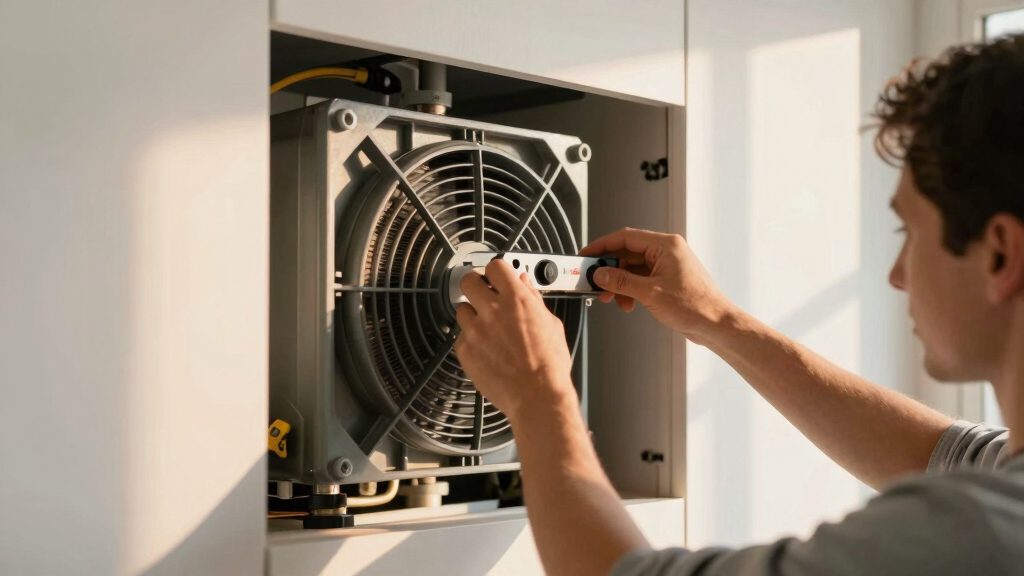
We evaluated these ERVs based on performance in airtight environments, focusing on energy efficiency, ease of installation, build quality, maintenance requirements, and overall value. Systems that excelled in managing air exchange without compromising energy conservation were prioritized. We also considered user feedback and industry certifications to identify units suited for tight houses, which demand high sealing and controlled ventilation. The ranking reflects a balance of these factors, favoring systems that deliver reliable, efficient ventilation with practical installation and ongoing operation costs.Factors to Consider When Choosing Best ERV For Tight Houses
When selecting an ERV for a tight house, it’s important to consider how the system balances air exchange with energy conservation. Airtight homes require careful choice to prevent moisture buildup, odor, and stale air, all while maintaining efficiency. Here are key factors to keep in mind that go beyond product specs and help you choose the best system for your specific needs.Installation Compatibility and Ducting
Assess whether the ERV system can be integrated into your existing home setup. Ductless models like the Pioneer ECOasis are ideal for retrofits or spaces where ductwork is impractical. Conversely, traditional ducted units may provide more comprehensive ventilation but require more extensive installation. Understanding your home’s layout and your comfort with installation complexity is key to avoiding costly modifications later.
Energy Efficiency and Operating Costs
Look for models with variable speed settings, smart controls, and high-efficiency heat exchangers. These features reduce energy consumption and operational costs over time, which is especially important in tightly sealed homes that rely heavily on mechanical ventilation. Consider the system’s power usage and how it aligns with your long-term budget to avoid surprises.
Air Quality and Filtration
Since airtight homes trap indoor pollutants, effective filtration is essential. Systems with washable or replaceable filters, and options for humidity control, will maintain healthier indoor environments. Also, consider whether the model provides fresh air intake and exhaust balance to prevent excess humidity or dryness, which can impact comfort and building durability.
Smart Features and User Controls
Advanced features like WiFi connectivity, remote control, and programmable settings can enhance convenience, especially if you want to optimize ventilation based on occupancy or weather conditions. However, these features often come at a premium—balance your desire for smart controls with your budget and technical comfort level.
Cost and Maintenance
Initial purchase price is only part of the equation. Consider ongoing costs such as filter replacements, maintenance, and potential repairs. Ductless systems tend to have lower installation costs but may require more frequent filter changes. Conversely, ducted units might have higher upfront costs but less frequent maintenance. Weigh these factors based on your willingness to perform upkeep and your budget constraints.
Frequently Asked Questions
How do I know if an ERV is suitable for my airtight home?
ERV systems designed for tight houses typically feature high-efficiency heat exchangers, low operating noise, and options for ductless or ducted installation. Check if the system is rated for airtight environments and has certifications like HVI, which verify its performance in energy conservation and air exchange. Additionally, consider the system’s airflow capacity relative to your home’s size—this ensures proper ventilation without over- or under-ventilating.
Can I install an ERV myself in a tight house?
While some ductless ERVs are designed for DIY installation, many ducted models require professional expertise to ensure proper sealing, placement, and connection to existing ductwork. Incorrect installation can lead to air leaks, reduced efficiency, or moisture issues. If you’re comfortable with basic electrical work and following detailed instructions, a ductless model might be feasible, but in most cases, professional installation guarantees optimal performance and compliance.
Are ductless ERVs as effective as ducted systems for tight homes?
Yes, ductless ERVs can be highly effective for tight houses, especially when retrofitting or in smaller spaces. They provide targeted ventilation without requiring extensive ductwork, reducing installation costs and complexity. However, for larger homes or those requiring whole-house ventilation, ducted systems may deliver more balanced airflow. Your home’s size and layout should guide the choice—ductless models excel in retrofit scenarios and specific zones.
What maintenance should I expect with an ERV in a tight house?
Regular maintenance involves cleaning or replacing filters and inspecting the heat exchange core for dirt or debris. Since airtight homes often have higher indoor pollutant levels, filters may need more frequent attention to maintain indoor air quality. Additionally, checking for any air leaks around installation points helps preserve efficiency. Some systems include self-diagnostics or alerts for filter changes, simplifying upkeep.
Is a higher-priced ERV always better for a tight house?
Not necessarily. While higher-priced models often feature better energy efficiency, smart controls, and superior build quality, the best choice depends on your specific needs and home size. For small retrofit projects, a cost-effective ductless ERV may suffice. Conversely, larger or more complex homes might benefit from premium systems with advanced features. Consider your budget, installation complexity, and long-term operating costs before deciding.