
The best Matter smart home devices make it easier to connect accessories across supported platforms, but they still differ in what they can control and what your home needs to run them. I’d put the Aqara Smart Home Hub M3 first for its broad hub features, including Zigbee, Thread, infrared control, and wired networking; the Kasa KP125M stands out for plug-in energy monitoring, while Tapo’s Matter switches suit buyers who want built-in lighting control. The main tradeoffs are between simple plug-and-play setup and more involved wiring or hub setup, as well as basic on/off control and added features. Check that each device matches your Matter controller, network, wiring, and intended use. Read on for the full breakdown of all 15 picks and how to choose among them.

Get decor and gifts delivered free — and shop member deals
- Fast, free delivery on millions of items
- Access to Prime Big Deal Days deals on October 6–7
- Prime Video, Amazon Music and more included
Complete the kit


Key Takeaways
- The Aqara Hub M3 is the most feature-rich pick, but its hub role makes it a different kind of purchase from a standalone plug or bulb.
- The Kasa KP125M and Meross plug add energy monitoring, which can help track device consumption; simpler plugs trade that insight for fewer setup and app choices.
- Tapo covers more installed-lighting needs with a standard switch, a 3-way dimmer kit, and a hub with infrared control, while plug-in options avoid electrical work.
- Linkind offers several straightforward Matter bulbs and plugs, but buyers should compare each package and intended use instead of treating the brand’s products as interchangeable.
- Matter compatibility does not erase setup differences: switches may need a neutral wire or specific circuit type, while hubs and infrared controls add their own configuration requirements.
| Linkind Matter Smart Light Bulbs, Compatible with Apple Home, Alexa, Google Home |  | Best for Straightforward White Lighting | Bulb shape and base: A19, E26 | Light output: 800 lumens | Power: 8.5 watts | VIEW LATEST PRICE | See Our Full Breakdown |
| OREiN Matter Smart Light Bulb, A19 RGBTW Color Changing Light Bulbs, 4 Pack |  | Best for Color and Room-Wide Effects | Pack size: 4 bulbs | Bulb shape and base: A19, E26 | Light output: 800 lumens per bulb | VIEW LATEST PRICE | See Our Full Breakdown |
| Kasa Matter Smart Plug with Energy Monitoring, KP125MP4, 15A/1800W Max |  | Best Matter Plug for Energy Tracking | Maximum load: 15A / 1800W | Matter compatibility: Matter-certified platforms | Compatible platforms: Apple Home, Alexa, Google Home, SmartThings | VIEW LATEST PRICE | See Our Full Breakdown |
| TP-Link Tapo Matter Smart Light Switch 2-Pack | 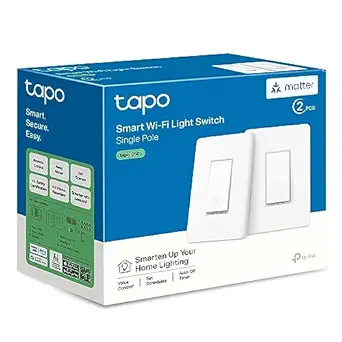 | Best for Hardwired Room Lighting | Pack size: 2 switches | Matter compatibility: Apple Home, Alexa, Google Home, Samsung SmartThings | Connectivity: 2.4 GHz Wi-Fi | VIEW LATEST PRICE | See Our Full Breakdown |
| Meross Matter Smart Plug with Energy Monitoring and Easy Setup |  | Best for Simple Matter Plug Setup | Maximum load: 1800W | Operating voltage: 120V | Connectivity: Matter, Bluetooth, 2.4 GHz Wi-Fi | VIEW LATEST PRICE | See Our Full Breakdown |
| Tapo Matter Smart 3-Way Dimmer Switch Kit, S515D KIT |  | Best for Multi-Location Lighting | Matter compatibility: Matter-certified; works with Alexa, Apple HomeKit, Google Home, and Samsung SmartThings | Lighting control: 3-way control with 0–100% dimming | Wiring: Neutral wire required | VIEW LATEST PRICE | See Our Full Breakdown |
| Tapo Smart IR & IoT Hub with Chime, Matter-Certified, H110, Universal Remote |  | Best for Legacy IR Appliances | Matter certification: Matter-certified | Supported devices: 18 appliance types and more than 8,000 brands | Connectivity: 2.4 GHz Wi-Fi | VIEW LATEST PRICE | See Our Full Breakdown |
| TP-Link Tapo Matter Supported Smart Plug Mini, 15A/1800W, Compact, Works with Apple Home, Alexa & Google Home, UL Certified, 3-Pack |  | Best Value Multi-Pack | Pack size: 3 smart plugs | Maximum load: 15A/1800W | Connectivity: 2.4 GHz Wi-Fi | VIEW LATEST PRICE | See Our Full Breakdown |
| Aqara Smart Home Hub M3 with Matter Support, Zigbee, Thread, IR Blaster, Wi-Fi, PoE |  | Best Premium Multi-Protocol Hub | Protocols: Zigbee, Thread, Matter, Bluetooth, and Wi-Fi | Connectivity: WPA3 Wi-Fi, PoE, and USB-C port | Zigbee capacity: Up to 127 devices | VIEW LATEST PRICE | See Our Full Breakdown |
| Linkind Matter Smart Plug, 4 Pack |  | Best for Smart Night Lights | Pack size: 4 smart plugs | Maximum load: 15A/1800W | Voltage: 120 volts | VIEW LATEST PRICE | See Our Full Breakdown |
| Kasa Matter Smart Light Switch, KS205P3, Single Pole, Neutral Wire Required |  | Best Matter Switch for Single-Pole Circuits | Model: KS205P3 | Connectivity: Wi-Fi; Matter compatible | Compatible platforms: Amazon Alexa, Apple HomeKit, Google Assistant, iOS | VIEW LATEST PRICE | See Our Full Breakdown |
| Linkind Matter Smart Light Bulb, 60W Equivalent, 800 Lumens, Color Changing |  | Best for Colorful Matter Lighting | Connectivity: Matter; 2.4 GHz Wi-Fi | Compatible platforms: Apple Home, Alexa, Google Home | Brightness: 800 lumens | VIEW LATEST PRICE | See Our Full Breakdown |
| GE Cync Smart Plug, WiFi Smart Outlet, Matter, Alexa & Google, 3 Pack |  | Best Matter Plug Multipack | Pack size: 3 smart plugs | Connectivity: Bluetooth, Matter, Wi-Fi | Compatible platforms: Amazon Alexa, Android, Apple HomeKit, Google Assistant, SmartThings | VIEW LATEST PRICE | See Our Full Breakdown |
| Linkind Matter Smart Plug | 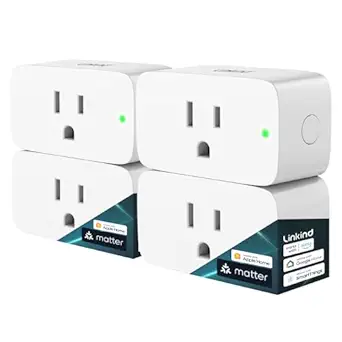 | Best for Local Control During Internet Outages | Connectivity: Matter; 2.4 GHz Wi-Fi; IPv6 | Power capacity: 1,800 W | Current limit: 15 A | VIEW LATEST PRICE | See Our Full Breakdown |
| Tapo Smart Wi-Fi Power Strip, Matter, P316M, Energy Monitoring |  | Best Matter Power Strip for Energy Monitoring | Model: P316M | AC outlets: 6 controllable outlets | USB ports: 3; 5 V, 2.4 A | VIEW LATEST PRICE | See Our Full Breakdown |
| Matter smart home device | Connectivity | Compatible platforms |
|---|---|---|
| Linkind Matter Smart Light Bul | Matter; Bluetooth and 2.4 GHz Wi-Fi | Apple Home, Alexa, Google Home |
| OREiN Matter Smart Light Bulb | Matter and 2.4 GHz Wi-Fi | Alexa, Apple Home, Google Home, SmartThings |
| Kasa Matter Smart Plug with En | — | Apple Home, Alexa, Google Home, SmartThings |
| TP-Link Tapo Matter Smart Ligh | 2.4 GHz Wi-Fi | — |
| Meross Matter Smart Plug with | Matter, Bluetooth, 2.4 GHz Wi-Fi | Apple Home, Alexa, Google Home, SmartThings |
| Tapo Matter Smart 3-Way Dimmer | 2.4 GHz Wi-Fi | — |
| Tapo Smart IR & IoT Hub with C | 2.4 GHz Wi-Fi | — |
| TP-Link Tapo Matter Supported | 2.4 GHz Wi-Fi | — |
| Aqara Smart Home Hub M3 with M | WPA3 Wi-Fi, PoE, and USB-C port | — |
| Linkind Matter Smart Plug | — | — |
| Kasa Matter Smart Light Switch | Wi-Fi; Matter compatible | Amazon Alexa, Apple HomeKit, Google Assistant, iOS |
| Linkind Matter Smart Light Bul | Matter; 2.4 GHz Wi-Fi | Apple Home, Alexa, Google Home |
| GE Cync Smart Plug | Bluetooth, Matter, Wi-Fi | Amazon Alexa, Android, Apple HomeKit, Google Assistant, SmartThings |
| Linkind Matter Smart Plug | Matter; 2.4 GHz Wi-Fi; IPv6 | Apple Home, Alexa, Google Home, SmartThings, AiDot |
| Tapo Smart Wi-Fi Power Strip | — | — |
More Details on Our Top Picks
Linkind Matter Smart Light Bulbs, Compatible with Apple Home, Alexa, Google Home
For rooms that need dependable everyday light rather than color effects, I’d put the Linkind Matter Smart Light Bulbs ahead of the color-changing OREiN four-pack. These A19 bulbs provide tunable white light and dim from 1% to full brightness, so a single bulb can suit both brighter work hours and softer evening scenes. Matter compatibility with Apple Home, Alexa, and Google Home makes them a flexible choice for households using different assistants; the AiDot app adds scheduling and scene presets.
The tradeoff is a narrower lighting feature set than OREiN’s RGB bulbs: Linkind is for white-light adjustment, not colorful effects or music sync. Setup uses both Bluetooth and Wi-Fi, and the bulbs require a 2.4 GHz network. I’d also avoid pairing them with traditional dimmer switches, which may cause flickering or buzzing.
Pros:- Tunable white light with dimming from 1% to 100%
- Works with Apple Home, Alexa, and Google Home through Matter
- AiDot app supports remote control, schedules, and scene presets
- 800 lumens from 8.5 watts, with a stated 25,000-hour operating life
Cons:- Does not offer the color effects or music sync found on the OREiN bulbs
- Requires 2.4 GHz Wi-Fi and Bluetooth during setup
- May flicker or buzz on traditional dimmer switches
Best for: Households that want adjustable white light and Matter control across Apple Home, Alexa, or Google Home without needing color effects.
Not ideal for: Buyers seeking RGB lighting, a 5 GHz-only Wi-Fi setup, or bulbs for existing traditional dimmer switches.
- Bulb shape and base:A19, E26
- Light output:800 lumens
- Power:8.5 watts
- Incandescent equivalent:60 watts
- Light control:Tunable white; dimming from 1% to 100%
- Connectivity:Matter; Bluetooth and 2.4 GHz Wi-Fi
- Compatible platforms:Apple Home, Alexa, Google Home
- Operating life:Up to 25,000 hours
Our verdict“Choose Linkind for flexible, tunable everyday white light across major Matter platforms, but pick OREiN if color effects matter more.”
OREiN Matter Smart Light Bulb, A19 RGBTW Color Changing Light Bulbs, 4 Pack
The OREiN Matter Smart Light Bulb four-pack is my pick for buyers who want a coordinated color setup, not just smart dimming. Each A19 bulb supports more than 16 million colors alongside adjustable white temperatures, making it better suited than the white-focused Linkind bulbs for accent lighting, themed scenes, or music-synced effects. Matter support brings the set into Apple Home, Alexa, Google Home, and SmartThings, while the four-bulb bundle makes it easier to outfit several fixtures with the same lighting options.
That extra versatility comes with setup and network limits: the bulbs need 2.4 GHz Wi-Fi, and QR-code scanning plus app configuration may be part of onboarding. Like the Linkind option, these bulbs may not work properly on traditional dimmer switches. Their stated 800-lumen output suits many everyday fixtures, but buyers should choose based on color flexibility rather than expecting a brighter alternative.
Pros:- Four A19 bulbs support more than 16 million colors and adjustable white temperatures
- Matter compatibility includes Apple Home, Alexa, Google Home, and SmartThings
- Music sync enables dynamic lighting effects
- 800 lumens per bulb and a stated operating life of about 25,000 hours
Cons:- Requires a 2.4 GHz Wi-Fi network
- QR-code and app configuration may add setup steps
- May flicker with traditional dimmer switches
Best for: People furnishing several indoor fixtures who want Matter-connected RGB lighting, adjustable whites, and music-synced scenes.
Not ideal for: Buyers who only need tunable white bulbs, use 5 GHz-only Wi-Fi, or have traditional dimmer switches on the fixtures.
- Pack size:4 bulbs
- Bulb shape and base:A19, E26
- Light output:800 lumens per bulb
- Power:9 watts per bulb
- Light type:RGBTW color-changing LED
- Connectivity:Matter and 2.4 GHz Wi-Fi
- Compatible platforms:Alexa, Apple Home, Google Home, SmartThings
- Operating life:Approximately 25,000 hours
Our verdict“Choose OREiN over the white-only Linkind bulbs when color scenes and multi-room coverage are the priority.”
Kasa Matter Smart Plug with Energy Monitoring, KP125MP4, 15A/1800W Max
I rank the Kasa KP125M as the stronger fit for buyers who want a Matter plug that can also show how much power a connected device uses. Its energy monitoring adds a practical layer that a basic plug does not provide, while local LAN control can keep operation available during an internet outage. It supports Apple Home, Alexa, Google Home, and SmartThings, giving it broader stated platform coverage than the Meross plug, whose data also notes a need for a compatible hub on some platforms.
The Kasa is rated for loads up to 15A/1800W, so it can handle many household devices, but that ceiling still rules out equipment that exceeds the rating. Setup requires a compatible smart home app and device, so it is not a standalone monitor. Its compact, flame-retardant design helps it fit into everyday outlet setups, though buyers should check that their intended appliance stays within the electrical limit.
Pros:- Energy monitoring helps track connected-device power use
- Matter compatibility covers Apple Home, Alexa, Google Home, and SmartThings
- Local LAN control can maintain operation during internet outages
- Compact, flame-retardant design with a two-year warranty
Cons:- Maximum supported load is 15A or 1800W
- Requires setup through a compatible smart home app and device
- Energy monitoring depends on using the plug with a connected device
Best for: Matter users who want to track the power use of lamps, appliances, or other compatible devices across multiple smart home platforms.
Not ideal for: People who need a plug for equipment exceeding 15A or 1800W, or who want a standalone energy monitor without smart home setup.
- Maximum load:15A / 1800W
- Matter compatibility:Matter-certified platforms
- Compatible platforms:Apple Home, Alexa, Google Home, SmartThings
- Control:App and voice control
- Local operation:LAN control
- Design:Compact, flame-retardant
- Warranty:2 years
Our verdict“Pick the Kasa KP125M over the Meross plug if energy tracking and stated LAN control are your main priorities.”
TP-Link Tapo Matter Smart Light Switch 2-Pack
For fixed ceiling lights or fixtures controlled from a wall, the TP-Link Tapo Matter Smart Light Switch two-pack addresses a different need from the Kasa and Meross smart plugs: it replaces the switch rather than adding smart control at an outlet. Matter support reaches Apple Home, Alexa, Google Home, and SmartThings, while LAN control and schedules give the lights app and voice control without relying on an internet connection for every command. The two-pack is useful when a room or pair of rooms needs the same upgrade.
The main hurdle is the installation requirement. Each switch needs a neutral wire and a 100–120 VAC circuit, so this is not a universal retrofit; buyers should check their wiring before choosing it. Unlike the plugs in this roundup, it is intended for hardwired lighting and offers no energy monitoring. I’d select it over a plug only when the goal is controlling a wall-switched light circuit.
Pros:- Two Matter switches support Apple Home, Alexa, Google Home, and SmartThings
- LAN control and scheduling support everyday local operation
- App-guided installation is provided
- UL-certified and rated for 100–120 VAC circuits
Cons:- Requires a neutral wire at each installation point
- Limited to 100–120 VAC circuits
- Hardwired installation is less flexible than the Kasa or Meross plug-in options
Best for: Homeowners with neutral wiring who want to add Matter voice, app, and schedule control to two fixed lighting circuits.
Not ideal for: Renters, households without neutral wires at the switch boxes, or anyone seeking a simple plug-in device with energy monitoring.
- Pack size:2 switches
- Matter compatibility:Apple Home, Alexa, Google Home, Samsung SmartThings
- Connectivity:2.4 GHz Wi-Fi
- Input voltage:100–120 VAC
- Wiring:Neutral wire required
- Control features:Voice, app, LAN, timers, schedules, Multi-Admin
- Certification:UL Certified
Our verdict“Choose the Tapo two-pack over a smart plug when you have neutral wiring and want Matter control at the wall switch.”
Meross Matter Smart Plug with Energy Monitoring and Easy Setup
The Meross Matter Smart Plug suits buyers who want a straightforward plug-in route to app or voice control plus energy monitoring. Its stated compatibility spans Apple Home, Alexa, Google Home, and SmartThings, and it includes Bluetooth alongside 2.4 GHz Wi-Fi for setup and connectivity. Like the Kasa KP125M, it supports energy tracking and a maximum load of 1800 watts; the Kasa, however, explicitly lists local LAN control and a two-year warranty, details not provided for this Meross model.
Meross’s main compromise is platform setup: the product data says some platforms require a Matter-compatible hub. It also does not support Thread, relying instead on 2.4 GHz Wi-Fi, and its stated device requirements start at iOS 16.1 or Android 8.1. The compact, fire-retardant design is useful for everyday outlet placement, but I’d check platform and phone compatibility before choosing it over Kasa.
Pros:- Energy monitoring provides visibility into connected-device consumption
- Matter compatibility includes Apple Home, Alexa, Google Home, and SmartThings
- Compact, fire-retardant plug-in design
- Supports app and voice control, with Bluetooth and Wi-Fi listed for connectivity
Cons:- Some platforms require a Matter-compatible hub
- Uses 2.4 GHz Wi-Fi and does not support Thread
- Requires iOS 16.1 or later or Android 8.1 or later
Best for: Smart home owners with a compatible Matter platform who want a compact plug with energy monitoring and app or voice control.
Not ideal for: Buyers who need Thread connectivity, use a platform requiring a hub they do not have, or run older phone software.
- Maximum load:1800W
- Operating voltage:120V
- Connectivity:Matter, Bluetooth, 2.4 GHz Wi-Fi
- Compatible platforms:Apple Home, Alexa, Google Home, SmartThings
- Control:Voice and app
- Energy monitoring:Real-time monitoring
- Phone requirements:iOS 16.1+ or Android 8.1+
- Color:White
Our verdict“Choose Meross for a compact, energy-monitoring Matter plug if your platform supports its hub requirements; choose Kasa for explicitly listed LAN control.”
Tapo Matter Smart 3-Way Dimmer Switch Kit, S515D KIT
I’d pick this kit for a hallway, staircase, or other room where a light is controlled from two locations. Its 0–100% dimming, schedules, fade on/off, and away mode offer more control than the Tapo Matter Smart Light Switch 2-Pack, which is a better fit when standard switching is enough. Matter support spans Alexa, Apple Home, Google Home, and SmartThings, while energy monitoring adds a way to track the connected lighting’s use. The tradeoff is installation: this kit requires neutral wiring, and fitting a 3-way dimmer may call for an electrician. It also relies on 2.4 GHz Wi-Fi, so it is less suitable for homes seeking a no-wiring smart lighting upgrade.
Pros:- Controls and dims a 3-way lighting circuit from two locations
- Matter support works with Alexa, Apple Home, Google Home, and SmartThings
- Scheduling, fade on/off, and away mode add flexible lighting control
- Energy monitoring provides visibility into lighting use
Cons:- Neutral wiring is required
- Installation may need an electrician, particularly for buyers unfamiliar with 3-way wiring
- Requires 2.4 GHz Wi-Fi
Best for: Homeowners replacing a two-location light control who want dimming, schedules, and Matter compatibility across major platforms
Not ideal for: Renters or buyers without neutral wiring, or anyone seeking a plug-in lighting upgrade without electrical work
- Matter compatibility:Matter-certified; works with Alexa, Apple HomeKit, Google Home, and Samsung SmartThings
- Lighting control:3-way control with 0–100% dimming
- Wiring:Neutral wire required
- Connectivity:2.4 GHz Wi-Fi
- Energy monitoring:Supported
- Lighting features:Scheduling, fade on/off, and away mode
Our verdict“Choose this kit for a two-location lighting circuit that needs dimming and Matter control, provided your wiring supports installation.”
Tapo Smart IR & IoT Hub with Chime, Matter-Certified, H110, Universal Remote
The H110 fills a gap that smart plugs and switches cannot: it can bring supported infrared appliances into app control and automations. Tapo lists support for 18 appliance types and more than 8,000 brands, making this a broader choice for compatible IR equipment than the Aqara Smart Home Hub M3, whose standout is combining several smart-home protocols with an IR blaster. The H110 also includes a 93 dB alarm and real-time alerts, which may suit a household that wants an audible notification alongside remote access. Its limits matter, though: it is not a universal bridge for every device, and its stated coverage centers on IR and supported IoT categories. Setup and everyday functions depend on 2.4 GHz Wi-Fi and the Tapo app.
Pros:- Supports 18 appliance types and more than 8,000 brands
- Matter-certified with voice control support for Alexa, Google Assistant, and Siri
- Built-in 93 dB alarm and real-time alerts
- Tapo app supports remote access and automation
Cons:- Full functionality depends on a 2.4 GHz Wi-Fi connection
- Setup may take more work than adding a simple Matter plug
- Control is limited to IR and supported IoT device categories
Best for: Households with compatible IR-controlled appliances that want app access, voice commands, and automations without replacing those devices
Not ideal for: Buyers whose main goal is a multi-protocol Zigbee and Thread hub, or homes with appliances outside the supported IR and IoT categories
- Matter certification:Matter-certified
- Supported devices:18 appliance types and more than 8,000 brands
- Connectivity:2.4 GHz Wi-Fi
- Alarm:Built-in 93 dB alarm
- App support:iOS and Android
- Control:IR and supported IoT devices; remote access, voice commands, and automations
- Security:Advanced cybersecurity features
Our verdict“Pick the H110 to add app and voice control to supported IR appliances, not as a replacement for a Zigbee- and Thread-focused hub.”
TP-Link Tapo Matter Supported Smart Plug Mini, 15A/1800W, Compact, Works with Apple Home, Alexa & Google Home, UL Certified, 3-Pack
This three-pack suits buyers who want to add Matter control to several lamps or small appliances in one go. The compact plug body is designed to avoid blocking adjacent outlets, and the 15A/1800W rating gives each plug a clearly stated load limit. Matter support covers Apple Home, Alexa, Google Home, and SmartThings, while Bluetooth onboarding can simplify initial setup. Compared with the Linkind Matter Smart Plug, 4 Pack, the Tapo set is the straightforward pick when a night light is not part of the plan; the Linkind adds that feature, while this model emphasizes a compact, UL-certified outlet. The main tradeoff is a 2.4 GHz Wi-Fi requirement. Full smart control also depends on a compatible platform, so these plugs are less compelling for buyers who want standalone operation.
Pros:- Three plugs provide coverage for multiple outlets
- Matter support spans Apple Home, Alexa, Google Home, and SmartThings
- Compact design helps keep neighboring outlets accessible
- UL-certified with a stated 15A/1800W maximum load
Cons:- Connects over 2.4 GHz Wi-Fi only
- Full functionality depends on a compatible smart home ecosystem
Best for: Households adding Matter-controlled lamps or appliances in several rooms and seeking compact, UL-certified plugs
Not ideal for: Buyers who need 5 GHz Wi-Fi support, an integrated night light, or a smart plug with energy monitoring
- Pack size:3 smart plugs
- Maximum load:15A/1800W
- Connectivity:2.4 GHz Wi-Fi
- Protocols and platforms:Matter; Apple Home, Alexa, Google Home, and SmartThings
- Certification:UL certified
- Setup:Bluetooth onboarding
- Operation:Voice control, scheduling, and local LAN operation
Our verdict“Choose this three-pack for compact Matter control across several outlets, as long as 2.4 GHz Wi-Fi meets your setup needs.”
Aqara Smart Home Hub M3 with Matter Support, Zigbee, Thread, IR Blaster, Wi-Fi, PoE
The Aqara Hub M3 is the most capable coordinator in this group for buyers building around more than Matter alone. It combines Zigbee, Thread, and Matter, supports up to 127 devices on each of its Zigbee and Thread networks, and adds a 360° IR blaster with feedback and learning. That makes it a wider-ranging hub than the Tapo H110, which focuses on IR and supported IoT appliance control rather than a stated Zigbee-and-Thread device capacity. PoE, WPA3 Wi-Fi, and encrypted local storage give buyers flexible installation and a privacy-minded local option. This breadth comes with added setup complexity, and the supplied data notes that the IR function may handle only one AC device at a time. A power adapter is not included, so wireless placement can require an extra purchase.
Pros:- Supports Zigbee, Thread, Matter, Bluetooth, and Wi-Fi
- Capacity of up to 127 Zigbee and 127 Thread devices
- 360° IR blaster includes feedback and learning
- PoE connectivity and encrypted local storage support flexible, privacy-minded setups
Cons:- IR control may be limited to one AC device at a time
- Power adapter is not included
- Placement and setup may take more planning than a basic Matter device
Best for: Smart-home enthusiasts combining Matter, Zigbee, and Thread devices who want PoE or Wi-Fi connectivity and local encrypted storage
Not ideal for: Beginners seeking a simple plug-and-play controller, or buyers who need to control multiple AC units through IR at once
- Protocols:Zigbee, Thread, Matter, Bluetooth, and Wi-Fi
- Connectivity:WPA3 Wi-Fi, PoE, and USB-C port
- Zigbee capacity:Up to 127 devices
- Thread capacity:Up to 127 devices
- IR blaster:360° IR with feedback and learning
- Local storage:8GB encrypted storage
- Compatibility:Apple HomeKit, Alexa, SmartThings, and Home Assistant
- Warranty:12 months
Our verdict“Choose the M3 for a growing mixed-protocol smart home that can benefit from its device capacity and wired connectivity.”
Linkind Matter Smart Plug, 4 Pack
Linkind’s four-pack combines a Matter smart outlet with an integrated night light, making it a distinct choice for bedrooms, hallways, or guest rooms where both functions are useful. Its dusk-to-dawn sensing and scheduling reduce the need to manage the light manually, while the outlet supports remote control and a stated 15A/1800W load. Compared with the TP-Link Tapo Matter Smart Plug Mini, this set gives up the focus on a compact plug that avoids blocking neighboring outlets in favor of built-in ambient lighting. The tradeoff is that the night light’s brightness is adjusted through the app, and full voice-assistant integration requires a Matter-certified hub. It also uses 2.4 GHz Wi-Fi only, so buyers should check their network and ecosystem setup before choosing it.
Pros:- Four-pack combines smart outlets and integrated night lights
- Matter support enables smart-home integration
- Dusk-to-dawn sensing and scheduling automate lighting
- Stated 15A/1800W capacity supports a range of compatible plug-in devices
Cons:- Full voice-assistant integration requires a Matter-certified hub
- Supports 2.4 GHz Wi-Fi only
- Night-light brightness can be adjusted only through the app
Best for: Households outfitting several bedrooms or hallways that want Matter-controlled outlets with built-in automatic night lighting
Not ideal for: Buyers who need 5 GHz Wi-Fi, app-free night-light adjustment, or a plug that does not occupy a wall outlet
- Pack size:4 smart plugs
- Maximum load:15A/1800W
- Voltage:120 volts
- Wi-Fi:2.4 GHz only
- Smart home protocol:Matter
- Plug type:Type B
- Night-light features:Integrated light with dusk-to-dawn sensing; brightness adjustment through the app
- Certification:FCC and ETL
Our verdict“Pick this four-pack when integrated automatic night lights matter more than a plug-only design or app-free brightness control.”
Kasa Matter Smart Light Switch, KS205P3, Single Pole, Neutral Wire Required
The Kasa KS205P3 is the most direct way in this group to add Matter control to a hardwired light, rather than to a lamp or appliance plugged into an outlet. It supports Apple Home, Alexa, Google Home, and SmartThings, so one switch can fit into different smart-home setups while adding schedules, remote access, and voice control. Compared with the Tapo Matter Smart 3-Way Dimmer Switch Kit, this is a simpler on-off option for a single-pole circuit, not a fix for controlling one light from multiple locations or adjusting brightness. The tradeoff is installation fit: it requires a neutral wire and does not support multi-way setups. I’d choose it when the wiring matches and smart control of a ceiling light matters more than dimming.
Pros:- Matter support connects the switch with major smart-home platforms.
- Scheduling, remote access, and voice control add options beyond manual switching.
- A hardwired switch controls the light even when household members use the physical wall control.
- The single-pole on-off design is straightforward for compatible circuits.
Cons:- Requires a neutral wire, which some switch boxes do not have.
- Supports only single-pole circuits, not multi-way lighting.
- Wi-Fi performance depends on the home network setup.
Best for: Homeowners with a neutral wire and a single-pole light circuit who want Matter control at the wall.
Not ideal for: Renters, homes without a neutral wire in the switch box, or anyone needing multi-way control or dimming.
- Model:KS205P3
- Connectivity:Wi-Fi; Matter compatible
- Compatible platforms:Amazon Alexa, Apple HomeKit, Google Assistant, iOS
- Circuit:Single-pole, one-way
- Operation:On-off
- Input voltage:100–120 VAC
- Maximum wattage:600 W
- Installation requirement:Neutral wire required
Our verdict“Choose the KS205P3 if you have a neutral wire and want simple Matter control for a single-pole light, but skip it for dimming or multi-way circuits.”
Linkind Matter Smart Light Bulb, 60W Equivalent, 800 Lumens, Color Changing
For buyers who want color scenes without replacing a wall switch, the Linkind Matter Smart Light Bulb offers a flexible entry point: it provides 800 lumens, app and voice control, dimming, and a broad palette of colors. Its 104 preset scenes and music-sync feature give it more ways to change a room’s mood than the Kasa KS205P3, which only switches a compatible light on or off. That flexibility comes with a different limitation: this bulb needs steady power at the fixture, so a wall switch turned off can cut off smart control. It also uses 2.4 GHz Wi-Fi and is generally incompatible with traditional dimmer switches. I’d pick it for a lamp or fixture where color matters; for plain scheduled lighting, a Matter switch may be a better fit.
Pros:- Works with Apple Home, Alexa, and Google Home through Matter.
- Offers dimming and 16 million color options for flexible room lighting.
- The 104 preset scenes and music sync support varied lighting effects.
- Stated lifespan is over 25,000 hours.
Cons:- Requires a 2.4 GHz Wi-Fi network.
- Generally incompatible with traditional dimmer switches.
- Smart features depend on the fixture remaining powered.
Best for: People setting up a colorful bedroom, gaming area, or living-room lamp who want app and voice control across major platforms.
Not ideal for: Households that regularly switch the bulb off at the wall, use traditional dimmers, or need bright task lighting beyond its 800-lumen output.
- Connectivity:Matter; 2.4 GHz Wi-Fi
- Compatible platforms:Apple Home, Alexa, Google Home
- Brightness:800 lumens
- Equivalent wattage:60 W
- Colors:16 million
- Preset scenes:104
- Stated lifespan:Over 25,000 hours
- Dimming:App controlled; generally incompatible with traditional dimmer switches
Our verdict“Choose this Linkind bulb for colorful, app-controlled lighting in a fixture that stays powered, rather than for a conventional dimmer setup.”
GE Cync Smart Plug, WiFi Smart Outlet, Matter, Alexa & Google, 3 Pack
The GE Cync Smart Plug 3-pack suits buyers who want to automate several lamps or small appliances across a home without adding a hub. Matter support and compatibility with Alexa, Google Assistant, Apple Home, and SmartThings make the plugs adaptable if the household uses more than one platform. Compared with the Linkind Matter Smart Plug, which highlights local-network control during internet outages and protective features, GE’s clearest advantage is the included three-plug set and stated 1,800-watt capacity. Both are aimed at everyday plug-in devices, not every appliance in the house: GE specifies a 15 A limit, so high-draw equipment is not a suitable match. Wi-Fi is also needed for remote features. I’d favor this set for distributing basic schedules and voice control across multiple rooms.
Pros:- Three plugs let buyers automate devices in multiple locations.
- Matter support spans Apple Home, Alexa, Google Assistant, and SmartThings.
- Remote control and scheduling support everyday routines.
- Compact design leaves the second wall outlet available.
Cons:- Remote features require a Wi-Fi connection.
- The 15 A limit rules out some high-power appliances.
- The supplied product data does not list energy monitoring.
Best for: Households that want to automate several lamps or other compatible small appliances with one Matter-enabled plug set.
Not ideal for: Buyers seeking energy monitoring, documented operation through internet outages, or plugs for appliances exceeding the 15 A limit.
- Pack size:3 smart plugs
- Connectivity:Bluetooth, Matter, Wi-Fi
- Compatible platforms:Amazon Alexa, Android, Apple HomeKit, Google Assistant, SmartThings
- Operation:On-off
- Operating voltage:120 V
- Maximum wattage:1,800 W
- Current limit:15 A
- Control features:Remote control, scheduling, voice control
Our verdict“Pick the GE three-pack for straightforward Matter control of several everyday plug-in devices, not for energy tracking or high-draw equipment.”
Linkind Matter Smart Plug
The Linkind Matter Smart Plug stands out for its stated ability to keep Matter-device communication on the local network during internet outages. That makes it a stronger fit for buyers who want routine control to depend less on an external connection than the GE Cync Smart Plug 3-pack, whose product details emphasize remote control and scheduling. It also lists short-circuit and overload protection and supports Apple Home, Alexa, Google Home, SmartThings, and AiDot. The setup requirement is the catch: the network needs 2.4 GHz Wi-Fi and IPv6, and most listed platforms require a Matter-certified hub. AiDot is the stated hub-free option. With a 1,800 W, 15 A capacity, it fits many common plug-in devices, but not equipment above that limit.
Pros:- Local Matter communication can continue during internet outages.
- Works with major platforms and the AiDot app.
- Lists short-circuit and overload protection.
- Supports voice commands, schedules, timers, and remote control.
Cons:- Requires 2.4 GHz Wi-Fi and an IPv6 network.
- Most listed smart-home platforms require a Matter-certified hub.
- The 15 A, 1,800 W limit excludes some high-power devices.
Best for: Smart-home owners who want local-network Matter control and already have, or plan to use, a compatible hub and IPv6 network.
Not ideal for: Buyers without a Matter-certified hub for their preferred platform, without IPv6, or seeking a multipack.
- Connectivity:Matter; 2.4 GHz Wi-Fi; IPv6
- Power capacity:1,800 W
- Current limit:15 A
- Compatible platforms:Apple Home, Alexa, Google Home, SmartThings, AiDot
- Control features:Voice control, remote control, scheduling, timer
- Local control:Matter devices can communicate over the local network during internet outages
- Safety features:FCC certified; fire-resistant materials; short-circuit and overload protection
Our verdict“Choose this plug when local control and its listed protections matter and your network and hub meet its requirements.”
Tapo Smart Wi-Fi Power Strip, Matter, P316M, Energy Monitoring
The Tapo P316M is the most capable choice here for a desk or media area with several devices: it combines six controllable AC outlets, three USB ports, scheduling, and energy monitoring in one strip. Unlike the GE Cync Smart Plug 3-pack, which spreads control across separate wall outlets, this model keeps plugged-in equipment together and adds power-use visibility. Matter compatibility and local LAN control also suit a home that wants platform flexibility and local management. Its tradeoffs are practical rather than subtle: the cord is only 3 feet, total capacity is limited to nine devices, and the supplied details do not mention surge protection. I’d choose it for organized device control and energy tracking, but not as a substitute for a surge protector where that protection is required.
Pros:- Six controllable AC outlets and three USB ports consolidate device connections.
- Energy monitoring helps users track connected equipment’s power use.
- Matter compatibility and local LAN control support smart-home integration.
- Scheduling and voice control allow routine automation.
Cons:- The 3-foot cord may limit placement options.
- The strip supports up to nine devices total.
- The supplied product data does not specify surge protection.
Best for: Home-office and media-center users who want several devices on one Matter-compatible strip with energy monitoring.
Not ideal for: Buyers who need a long cord, more than nine connected devices, or clearly specified surge protection.
- Model:P316M
- AC outlets:6 controllable outlets
- USB ports:3; 5 V, 2.4 A
- Maximum connected devices:9
- Power cord length:3 feet
- Energy monitoring:Yes
- Connectivity and control:Matter; local control via LAN
- Voice compatibility:Siri, Alexa, Google Assistant, Bixby
Our verdict“Choose the Tapo P316M for a concentrated device setup that benefits from Matter control and energy monitoring, but not when surge protection or extra cord reach is a requirement.”
How We Picked
I compared these devices by the jobs they do, how they fit into a Matter home, and what a buyer must have before setup. The key factors were stated Matter support, platform compatibility, useful extras such as energy monitoring or infrared control, installation demands, and whether the device serves a single room or a broader home setup. I also separated standalone accessories from products that need a hub or electrical work, since those differences affect who can use each pick.
The ranking favors versatility and buyer usefulness, not a claim that one product is best for every household. The Aqara Hub M3 ranks highly for its wider control options, while the Kasa energy-monitoring plug and Tapo’s switch choices earn attention for more focused jobs. Simple bulbs and plugs remain practical entry points, but they rank below options with a clearer advantage unless low-complexity control is the buyer’s main goal. Before buying, confirm the exact model’s Matter support, controller compatibility, wiring requirements, and any hub or network needs.
| Matter smart home device | Compatible platforms |
|---|---|
| Linkind Matter Smart Light Bul | Apple Home, Alexa, Google Home |
| OREiN Matter Smart Light Bulb | Alexa, Apple Home, Google Home, SmartThings |
| Kasa Matter Smart Plug with En | Apple Home, Alexa, Google Home, SmartThings |
| TP-Link Tapo Matter Smart Ligh | — |
| Meross Matter Smart Plug with | Apple Home, Alexa, Google Home, SmartThings |
| Tapo Matter Smart 3-Way Dimmer | — |
| Tapo Smart IR & IoT Hub with C | — |
| TP-Link Tapo Matter Supported | — |
| Aqara Smart Home Hub M3 with M | — |
| Linkind Matter Smart Plug | — |
| Kasa Matter Smart Light Switch | Amazon Alexa, Apple HomeKit, Google Assistant, iOS |
| Linkind Matter Smart Light Bul | Apple Home, Alexa, Google Home |
| GE Cync Smart Plug | Amazon Alexa, Android, Apple HomeKit, Google Assistant, SmartThings |
| Linkind Matter Smart Plug | Apple Home, Alexa, Google Home, SmartThings, AiDot |
| Tapo Smart Wi-Fi Power Strip | — |
Factors to Consider When Choosing Best Matter Smart Home Devices
These products span simple plug-in controls, lighting upgrades, and hubs that connect different device types. I’d start with the room or task you want to improve, then check the requirements that can turn an easy purchase into a return: electrical wiring, controller support, network setup, and the need for a hub.
Match the device to the job, not just the Matter label
Matter describes a way supported devices can work with compatible smart home platforms; it does not make every product perform the same task. A plug controls power to something connected to an outlet, while a bulb changes the light itself and a switch controls a wired lighting circuit. A hub may connect additional device types or provide control features a basic accessory cannot. Decide whether you need to automate a lamp, replace a wall control, monitor energy use, or bring infrared devices into a smart home. Buying by function first helps avoid paying for capabilities your setup will not use.
Check the controller and onboarding path before checkout
Matter devices still need a compatible controller or platform to add them to a home and manage automations. Compatibility claims can vary by model and platform, so verify the exact product listing and the controller’s current support rather than relying on the word Matter alone. If you plan to use more than one ecosystem, check whether the device supports sharing or adding it across the platforms you care about. Keep the setup code and product documentation somewhere accessible; losing those details can make later setup or recovery harder. A device that pairs readily with your current system may suit you better than a feature-rich pick that adds configuration steps.
Treat wiring and circuit layout as a buying requirement
Smart wall switches require more planning than plug-in accessories because they interact with the home’s wiring. Check whether a model needs a neutral wire, whether the circuit is single-pole or 3-way, and whether its included kit matches your switch location. A 3-way setup can involve more than one wall control, so do not assume a single-pole switch is a substitute. If you cannot identify the wiring safely, pause and ask a qualified electrician rather than guessing from a product photo. Buyers who want to avoid installation work can start with smart plugs or bulbs, accepting that those may not replace a wall switch’s everyday function.
Decide whether energy monitoring will change your decisions
Energy monitoring is useful when you have a specific reason to track consumption, such as comparing how much an appliance draws or spotting a device that stays on. It adds little value if you only need scheduled on-and-off control and never expect to check the data. Check whether the monitoring is available in the app or platform you plan to use, since access and presentation can affect whether you will use it. Also match the plug’s electrical rating to the connected load; a monitoring feature does not make an unsuitable device safe for a high-draw appliance. Paying for measurement makes most sense when you have a clear question the readings can answer.
Weigh a hub’s extra reach against the added setup
A hub can be a useful bridge when one device needs a separate radio or when you want to control equipment such as infrared-based electronics. The tradeoff is another device to configure, power, and maintain, plus possible overlap with features already provided by your existing controller. Before choosing a hub, list the devices it will actually connect and confirm support for those exact products. Thread and Zigbee support are not interchangeable labels; each product still needs a compatible path into your home. If your goal is only to control a few lamps or appliances, standalone Matter accessories may be simpler.
Compare coverage, outlets, and installation before choosing a bundle
Multipacks can simplify outfitting several rooms, but only if the included device type fits each location. A compact plug may be preferable when adjacent outlets need to stay accessible, while a power strip can organize multiple devices in one area. A bulb pack is convenient for matching fixtures, yet the bulb must fit the socket and suit the room’s lighting needs. Think about Wi-Fi coverage and where accessories will sit, especially if a hub or router is tucked away. Choose a bundle around actual placement plans rather than the number of devices in the box.
Frequently Asked Questions
Do I need a Matter hub to use every device in this roundup?
No: many Matter plugs, bulbs, and switches can join a compatible smart home through a suitable controller without buying a separate hub for each product. A hub such as the Aqara M3 serves a broader role, including support for other connection types and infrared control. Your existing smart home platform may already provide the controller function, so check its requirements before adding hardware. A separate hub makes sense when you need its specific radio or control features, not simply because a device carries the Matter label.
Which type of Matter device is easiest to start with?
A plug-in accessory is usually a lower-commitment starting point because it avoids changing a wall circuit. A smart plug can automate a compatible lamp or appliance, while a bulb changes lighting directly and may offer dimming or color features. The right first device depends on the task: a bulb will not help if you want to control a non-smart appliance, and a plug will not give a fixture smart-bulb features. Confirm that your controller supports the device and that the connected load is appropriate.
Should I choose an energy-monitoring plug or a basic Matter plug?
Choose energy monitoring if you plan to inspect consumption or use the readings to compare devices and routines. If your goal is only to schedule power or control an appliance remotely, a basic plug may cover the need with less emphasis on data features. Check where the readings appear and whether that interface works with your preferred smart home setup. Also compare the plug’s electrical rating with the device you intend to connect. Monitoring is an extra, not a substitute for checking load limits.
Can I replace a regular wall switch with any Matter smart switch?
No. Switches can differ by wiring requirements and circuit type, including whether they need a neutral wire and whether they support single-pole or 3-way wiring. The Kasa KS205P3, for example, specifies a neutral wire and single-pole use, while the Tapo S515D kit is aimed at 3-way dimming. Check the wiring at the switch box and the product’s installation instructions before buying. If you are unsure about the circuit or safe installation, consult a qualified electrician.
When does a smart hub make more sense than buying standalone Matter devices?
A hub makes more sense when you have devices that need a bridge, want to manage several connection types, or need a feature such as infrared control. It may also make a more complex setup easier to organize if the hub supports the devices you own. For a small collection of ordinary plugs and bulbs, a hub can add cost and configuration without solving a real problem. Make a list of the devices and functions you expect it to support, then verify compatibility for each one. This avoids buying a hub based on a feature list alone.
Conclusion
For the best overall combination of control options, I’d choose the Aqara Smart Home Hub M3 if you need a hub and will use its added connectivity or infrared features. For best value on practical plug-in control, compare the Linkind multipack and Tapo compact plug bundle against how many outlets you need; choose the Kasa KP125M or Meross if energy monitoring matters. The best premium fit is the Aqara hub for a more involved, mixed-device home, while the best choice for beginners is a straightforward Matter bulb or plug matched to an existing controller. For specific needs, pick the Tapo 3-way kit for compatible dimmer wiring, a Tapo hub for infrared control, or the Matter power strip when several devices share one location. Match the job, platform, and installation requirements first, then choose the product that adds the feature you will actually use.
Halloween Picks
halloween
As an affiliate, we earn on qualifying purchases.