
If you’re seeking the best smart sleep tracker under mattress, you’ll find options ranging from non-wearable sensors to advanced pads with sleep cycle analysis. The Non-Wearable Sleep Tracker stands out for its no-subscription model and real-time monitoring, making it ideal for those wanting a straightforward setup. The Withings Sleep pad offers detailed sleep cycle insights and is great for users who want comprehensive analysis. Tradeoffs typically involve ease of installation versus depth of data, and whether a device is more suited for casual tracking or detailed health monitoring. Keep reading for a detailed comparison to help you find the best fit for your sleep needs.
Key Takeaways
- The most accurate models combine sensors with detailed sleep cycle analysis, but often come at a higher cost.
- Non-wearable options provide hassle-free installation with less maintenance but may lack some advanced metrics.
- Devices tailored for elderly or fall prevention focus on alert and safety features, not sleep quality per se.
- Ease of setup and app usability vary widely — simpler devices may sacrifice some data depth.
- Price points differ significantly; premium models deliver more features but may not be necessary for casual sleepers.
| Non-Wearable Sleep Tracker (Under Sheet) – No Subscription | Real-Time Heart Rate, Breathing & Sleep Stage Monitoring for Adults & Kids |  | Best Overall for Privacy-Conscious Users | Monitoring Features: Sleep stages, heart rate, breathing, snoring, movement | Connectivity: Bluetooth | Subscription: None | VIEW LATEST PRICE | See Our Full Breakdown |
| Withings Sleep – Sleep Tracking Pad Under The Mattress with Sleep Cycle Analysis |  | Best for Simplicity and Integration | Monitoring Features: Sleep cycles, snoring, heart rate, breathing | Connectivity: Wi-Fi | App Integration: Health Mate app | VIEW LATEST PRICE | See Our Full Breakdown |
| Withings Sleep – Sleep Tracking Pad Under The Mattress With Sleep Cycle Analysis | 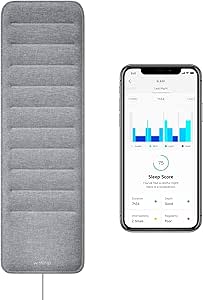 | Best for Cardiovascular and Snore Monitoring | Monitoring Features: Sleep phases, snoring, breathing disturbances, heart rate | Sensor Type: Pneumatic sensor | Connectivity: Wi-Fi | VIEW LATEST PRICE | See Our Full Breakdown |
| Lunderg Under Mattress Bed Alarm Pad – Pager NOT Included – Wireless Under Mattress Sensor Pad – Replacement or Extra Pad |  | Best for Fall Prevention and Caregiving | Range: Up to 300 feet | Sensor Type: Pressure sensor | Connectivity: Wireless | VIEW LATEST PRICE | See Our Full Breakdown |
| Lunderg Under Mattress Bed Alarm for Elderly Adults – Wireless Sensor Pad with Early Alert & Pager – Bed Alarms and Fall Prevention for Elderly and Dementia Patients |  | Best for Fall Prevention with Integrated Alarm System | Range: Up to 300 feet | Sensor Type: Pressure sensor | Connectivity: Wireless | VIEW LATEST PRICE | See Our Full Breakdown |
| Beautyrest Sleeptracker Monitor – Wearable-Free Sleep Tracker – Intuitive App and Alexa Enabled |  | Best Overall for Non-Wearable Sleep Monitoring with Personalization | Compatibility: Smartphones | Sensor Type: Non-wearable sensors | App: Intuitive, detailed sleep reports | VIEW LATEST PRICE | See Our Full Breakdown |
More Details on Our Top Picks
Non-Wearable Sleep Tracker (Under Sheet) – No Subscription | Real-Time Heart Rate, Breathing & Sleep Stage Monitoring for Adults & Kids
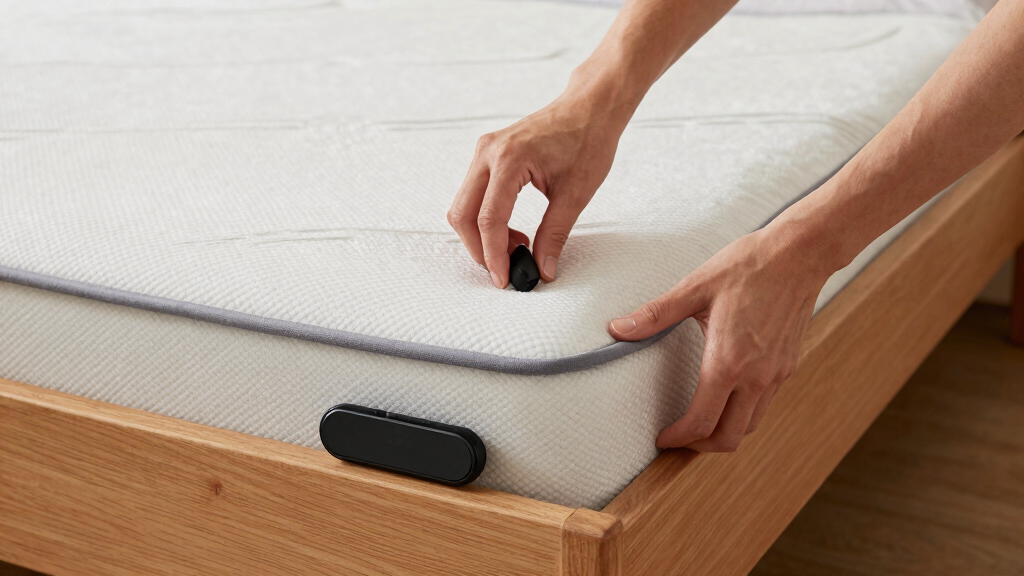
This under-mattress tracker stands out for its privacy-friendly operation, avoiding cameras and microphones, unlike some competitors like Withings Sleep which relies on Wi-Fi connectivity. Its ability to monitor sleep, heart rate, breathing, and snoring in the background makes it ideal for those who want detailed insights without constant app interaction. The inclusion of adaptive soundscapes and smart alarms adds convenience, but setup can be finicky—proper placement under the sheet is essential for accurate tracking, which may frustrate less diligent users. Compared to Withings Sleep, this device is more privacy-focused but may require more effort to calibrate initially. Its no-subscription model and real-time alerts are a plus for those wary of ongoing fees, yet the lack of detailed movement analysis limits its depth. Overall, this pick makes the most sense for families or caregivers prioritizing privacy and straightforward sleep insights.
Pros:- Privacy-friendly with no cameras or microphones
- Real-time alerts for bed exits and health changes
- No subscription fees, full control over data
Cons:- Setup and calibration can be tricky and time-consuming
- Initial sleep tracking can be inconsistent without proper placement
Best for: Privacy-conscious families or caregivers who want detailed sleep monitoring without cameras or subscriptions
Not ideal for: Light sleepers or those who prefer plug-and-play setup, as placement and calibration require diligence
- Monitoring Features:Sleep stages, heart rate, breathing, snoring, movement
- Connectivity:Bluetooth
- Subscription:None
- Privacy:No cameras, no microphones
- Alarm Type:Smart alarm with sound and vibration
- Setup:Place under sheet, calibration required
Bottom line: Ideal for users prioritizing privacy and detailed sleep data without ongoing costs, provided they are comfortable with setup effort.
Withings Sleep – Sleep Tracking Pad Under The Mattress with Sleep Cycle Analysis
This sleep pad offers a straightforward way to track sleep cycles, snoring, and heart rate, and it integrates seamlessly with the Health Mate app, making it comparable to other under-mattress options like Lunderg’s alarms. Its one-time setup and Wi-Fi sync make it user-friendly, but it can be inconsistent in sleep detection if the mattress thickness varies or if placement isn’t ideal. Unlike the more privacy-centric OZI Sleep, this device relies on Wi-Fi, which could raise concerns for privacy-minded users. Its ability to analyze sleep stages and detect disturbances makes it suitable for those seeking a comprehensive picture, yet it lacks advanced real-time alerts or personalized coaching. For users who prefer easy setup and app integration over detailed background monitoring, this is a strong choice, especially in a smart home ecosystem.
Pros:- Easy to set up and syncs automatically via Wi-Fi
- Analyzes sleep stages, snoring, and heart rate
- Integrates with health apps and smart home devices
Cons:- Can have inconsistent tracking depending on mattress thickness
- Limited real-time alerts or personalized feedback
Best for: Users seeking simple setup with reliable app integration for overall sleep analysis
Not ideal for: Privacy-focused users who dislike Wi-Fi connectivity or detailed data sharing
- Monitoring Features:Sleep cycles, snoring, heart rate, breathing
- Connectivity:Wi-Fi
- App Integration:Health Mate app
- Setup:One-time placement under mattress
- Sleep Data Reports:Daily, weekly, monthly
- Sleep Stage Analysis:Deep, light, REM
Bottom line: Best suited for users who want a hassle-free, integrated sleep analysis experience without complex calibration.
Withings Sleep – Sleep Tracking Pad Under The Mattress With Sleep Cycle Analysis
As the first under-mattress sensor with advanced features, this Withings model excels at analyzing sleep phases, snoring, and detecting breathing disturbances, making it ideal for users concerned about cardiovascular health or sleep apnea. Its pneumatic sensor offers high-precision heart rate monitoring, outperforming many competitors like Lunderg’s alarm pads, which focus solely on bed exit detection. However, setup requires careful placement, and some users report inconsistent sleep tracking if the mattress exceeds recommended thickness. Unlike the privacy-focused OZI Sleep, this device’s reliance on Wi-Fi and app connectivity might be a concern. Its detailed analysis supports proactive health management, but it’s less suited for individuals seeking quick, simple sleep insights. This product is best for health-conscious users willing to invest in detailed sleep health monitoring.
Pros:- High-precision heart rate and snoring detection
- Analyzes sleep phases and disturbances
- Proactive health insights and recommendations
Cons:- Setup can be sensitive to mattress thickness
- Requires Wi-Fi and app connectivity, raising privacy concerns
Best for: Health-aware users interested in cardiovascular and snoring analysis
Not ideal for: Users seeking a simple, non-connected device or privacy-focused monitoring
- Monitoring Features:Sleep phases, snoring, breathing disturbances, heart rate
- Sensor Type:Pneumatic sensor
- Connectivity:Wi-Fi
- App Support:Health Mate
- Setup:Under mattress, careful placement
- Special Features:Snore detection, sleep disturbance analysis
Bottom line: Ideal for users prioritizing health insights and cardiovascular monitoring over simplicity.
Lunderg Under Mattress Bed Alarm Pad – Pager NOT Included – Wireless Under Mattress Sensor Pad – Replacement or Extra Pad
This under-mattress sensor pad is designed specifically for fall prevention and elderly care, with a focus on early detection of bed exits. Compared to the more comprehensive sleep tracking options like Withings Sleep, this device emphasizes immediate safety alerts rather than detailed sleep analytics. Its wireless connection offers a long range of up to 300 feet, making it suitable for caregivers managing multiple rooms. However, missing the pager can be a drawback unless purchased separately, and setup requires ensuring the mattress thickness is within the specified limits. While it excels at early alerts and fall prevention, it offers little to no insight into sleep quality or health metrics. This pick is best for those who want a simple, reliable safety device rather than detailed sleep data.
Pros:- Long wireless range up to 300 feet
- Early detection of bed exits, preventing falls
- Easy to install and use
Cons:- Pager not included, additional purchase needed
- Limited to safety alerts, no sleep data analysis
Best for: Caregivers and families focused on fall prevention and safety alerts for elderly or dementia patients
Not ideal for: Users wanting detailed sleep tracking or health monitoring
- Range:Up to 300 feet
- Sensor Type:Pressure sensor
- Connectivity:Wireless
- Alarm Type:Bed exit alert
- Battery:2 AA batteries
- Special Feature:Early detection before standing
Bottom line: Best for caregivers prioritizing early bed exit alerts over detailed sleep insights.
Lunderg Under Mattress Bed Alarm for Elderly Adults – Wireless Sensor Pad with Early Alert & Pager – Bed Alarms and Fall Prevention for Elderly and Dementia Patients
This comprehensive bed alarm system combines a wireless pressure sensor with an included pager, making it ideal for elderly or dementia care. Its early alert system detects movement before the patient gets out of bed, providing ample response time for caregivers. Unlike simpler fall prevention devices, this kit integrates a pager with adjustable volume, ensuring alerts are heard even in deep sleep. The setup requires a mattress less than 13 inches thick, which could limit compatibility with some mattresses. While it excels at safety and fall prevention, it doesn’t provide sleep quality insights like Withings or OZI Sleep. This makes it perfect for those needing reliable fall prevention with immediate notification capabilities, especially in high-risk environments.
Pros:- Includes a pager with adjustable volume and vibration
- Detects movement early, before patient stands
- Reliable wireless connection up to 300 ft.
Cons:- Mattress thickness must be 13 inches or less
- No sleep quality or health metrics provided
Best for: Families and caregivers requiring dependable fall prevention and immediate alerts
Not ideal for: Users seeking detailed sleep tracking or cardiovascular health data
- Range:Up to 300 feet
- Sensor Type:Pressure sensor
- Connectivity:Wireless
- Alarm Type:Early alert with pager
- Batteries:2 AA batteries
- Special Feature:Pre-stand movement detection
Bottom line: Perfect for fall prevention and immediate caregiver notification, but lacks sleep health insights.
Beautyrest Sleeptracker Monitor – Wearable-Free Sleep Tracker – Intuitive App and Alexa Enabled
The Beautyrest Sleeptracker stands out for its ability to analyze sleep without requiring a wearable device, making it ideal for those who dislike or cannot wear sensors. Compared to the Withings Sleep pad, this model offers independent sleep data for two sleepers, a feature that sets it apart for couples seeking personalized insights. It uses sophisticated sensors to monitor respiration, heart rate, and sleep behaviors, translating this into detailed, actionable reports via an intuitive app. While it excels in providing consistent, useful feedback, it does have some drawbacks: the lack of live support can be frustrating for users needing quick assistance, and setup on a WIFI network with 2.4 GHz can be challenging for some. Its ability to integrate with Alexa enhances smart home compatibility, adding convenience. However, accuracy isn’t medical-grade, so it’s best seen as a sleep aid rather than a diagnostic device. The app’s non-rotating display on tablets can be awkward, and ongoing support relies solely on email responses. Overall, this product makes the most sense for users who want a non-wearable, customizable sleep tracker with smart home integration and are comfortable with some minor setup quirks.Pros:- Non-wearable, seamless integration with any mattress or bedding
- Independent sleep tracking for two sleepers, ideal for couples
- AI-powered analysis with personalized coaching and detailed reports
- Alexa-enabled for smart home integration
Cons:- No live support, only email responses, which can delay troubleshooting
- Setup can be problematic on 2.4 GHz WIFI networks for some users
- Not certified as medical-grade, so data is for guidance only
Best for: Couples or individuals wanting detailed sleep insights without wearing devices, especially those with smart home setups.
Not ideal for: People seeking medical-grade sleep data or live customer support, or those uncomfortable with WIFI setup issues.
- Compatibility:Smartphones
- Sensor Type:Non-wearable sensors
- App:Intuitive, detailed sleep reports
- Connectivity:WiFi 2.4GHz
- Sleep Monitoring:Respiration, heart rate, sleep stages
- Multi-user:Yes, separate data for two sleepers
- Smart Home Integration:Alexa enabled
- Warranty:1 year limited
- Installation:Easy setup, no wearables
Bottom line: This pick is perfect for users who want a non-intrusive, customizable sleep tracker with smart home features and don’t require immediate customer support.
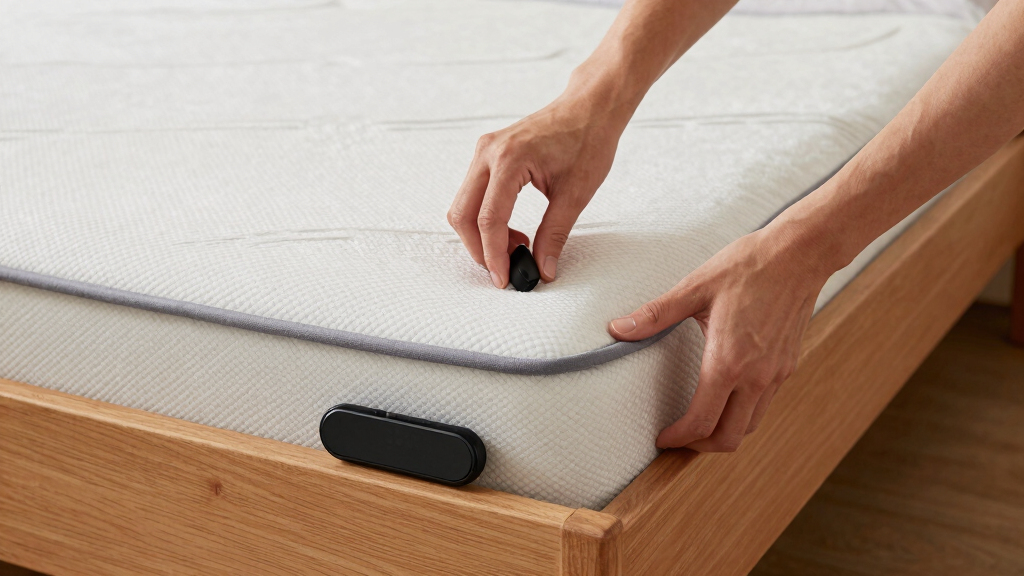
How We Picked
These products were evaluated based on accuracy of sleep detection, ease of installation, user interface, and additional features like alerts or health insights. We also considered build quality, value for money, and versatility for different user needs. Devices with proven reliability and positive user feedback ranked higher, especially those offering comprehensive data without requiring subscriptions. The ranking reflects a balance between feature set and affordability, prioritizing options that serve both casual sleepers and those seeking detailed insights.Factors to Consider When Choosing Best Smart Sleep Tracker Under Mattress
Choosing the best smart sleep tracker under mattress involves weighing several factors to match your specific sleep goals and lifestyle. The right device should provide accurate data, be easy to set up, and integrate smoothly with your existing routines. Beyond features, consider how comfortable and unobtrusive the device is, and whether the data provided aligns with your health priorities. Being aware of common pitfalls, such as overpaying for unnecessary features or opting for devices with poor app support, can help you make a smarter purchase.Accuracy of Sleep Tracking
Look for devices with proven sleep detection algorithms and validation studies, especially if you rely on precise data for health reasons. Non-wearable sensors that monitor heart rate, breathing, and movement tend to be more accurate than basic mattress pads that only detect motion. Keep in mind that even the best sensors can have limitations—so consider how critical pinpoint accuracy is for your goals. Devices offering sleep cycle analysis usually provide more actionable insights, but may be slightly less reliable if they depend on indirect measurements.
Ease of Installation and Use
Many sleep trackers under mattress require minimal setup, but some models demand careful placement or calibration. Non-wearable sensors are generally straightforward—simply position under the mattress or sheet. However, devices with additional features like alarms or app integrations might need more configuration. Think about your comfort level with technology and whether you prefer a plug-and-play device or one with customizable options. Remember, a complicated setup can discourage consistent use, defeating the purpose of monitoring your sleep.
Data Depth and Insights
Some devices focus purely on basic sleep duration, while others provide detailed breakdowns of REM, deep sleep, and light sleep stages. Consider how much detail you need—casual sleepers might be satisfied with simple summaries, whereas health-conscious users may want comprehensive trends over time. Devices with sleep cycle analysis can help identify patterns and disruptions, but may require more complex interpretation. Balance your desire for data richness against the potential for information overload or misinterpretation.
Additional Features and Alerts
Features like early fall detection, sleep alarms, or integration with smart home systems can enhance the device’s value, especially for elderly users or those with specific health concerns. However, extra features often come with higher price tags and increased complexity. Assess whether these additions genuinely improve your sleep quality or safety, or if they are just bells and whistles. Reliable alerts that don’t generate false alarms are especially important for fall prevention or health monitoring scenarios.
Cost and Long-Term Value
Price varies widely among mattress-based sleep trackers, from budget-friendly options to premium devices with extensive features. Consider whether the extra investment will provide meaningful benefits aligned with your sleep goals. Some models with subscription-free monitoring offer excellent value, while others might require ongoing payments for full features. Evaluate the longevity and durability of the device, as well as compatibility with your existing smart home or health ecosystem, for the best long-term investment.
Frequently Asked Questions
Can I use a sleep tracker under my mattress if I sleep with a partner?
Yes, many under-mattress sleep trackers are designed to monitor individual sleep patterns without interference from a partner. Devices that detect motion or physiological signals can typically distinguish between two sleepers, especially if they are positioned correctly. However, some models may have reduced accuracy if the bed is shared or if movement from one person affects the sensors. It’s worth checking product specifications and user reviews for confirmation on dual occupancy scenarios.
Are these sleep trackers suitable for elderly or dementia patients?
Some under-mattress sensors, especially those with alert functions, are well-suited for elderly or dementia patients by offering fall detection and early warning alerts. Devices like the Lunderg Under Mattress Bed Alarm are designed specifically for safety and fall prevention, not detailed sleep analysis. It’s important to choose a model that prioritizes reliability and ease of use, with minimal false alarms, to ensure safety without causing unnecessary stress or disruption.
Do under-mattress sleep trackers require ongoing subscriptions?
Many models do not require ongoing subscriptions, offering free app access and data storage. However, some higher-end devices or those providing advanced insights might charge a recurring fee for premium features or detailed reports. Always verify whether the device has hidden costs before purchasing—free, subscription-free options tend to be more economical over time, especially if you prefer simple monitoring without added expenses.
How accurate are non-wearable sleep trackers compared to wearable devices?
Non-wearable sleep trackers, especially those using sensors embedded in the mattress, generally provide good accuracy for sleep duration and basic stages but may be less precise than high-quality wearable devices that monitor heart rate and movement directly. They excel in convenience and comfort, avoiding the hassle of wearing a device, but can sometimes misinterpret motion or physiological signals. For most users, they strike a good balance between ease and reliability, but professional health monitoring may still prefer dedicated wearables.
What features should I prioritize if I want to improve my sleep hygiene?
Focus on devices that offer detailed sleep stage analysis, sleep trend tracking, and personalized insights. Features like sleep quality scores, tips for better rest, or integration with smart home devices can support healthier sleep habits. Alerts for wake-up times aligned with sleep cycles can help optimize your sleep schedule. Avoid models that lack clear data or those with overly complicated interfaces—simplicity and actionable insights are key for making meaningful improvements.
Conclusion
The choice depends on your specific needs: the Withings Sleep offers a balanced mix of detailed insights and ease of use, making it ideal for most average users. If you want a reliable, no-fuss device with strong safety features, the Lunderg Under Mattress Bed Alarm is best suited for elderly or fall prevention needs. For those seeking a premium experience with advanced data and smart home integration, the Beautyrest Sleeptracker Monitor makes a compelling case. Beginners or casual sleepers should prioritize simple, subscription-free models, while health-focused users may prefer devices with comprehensive sleep analysis capabilities. Choose the option that aligns with your sleep goals and daily routine for the best results.